Literary Hub publishes essay on origins of the letter W
1 Sep 20 1:55 PM · 3d ago · 1 article · 2 posts · 3 sources · development 1 of 1
An essay traces the letter W's emergence to the fifth-century fall of the Western Roman Empire, when Germanic-speaking peoples gained power and Latin scribes needed to represent unfamiliar sounds in their names.
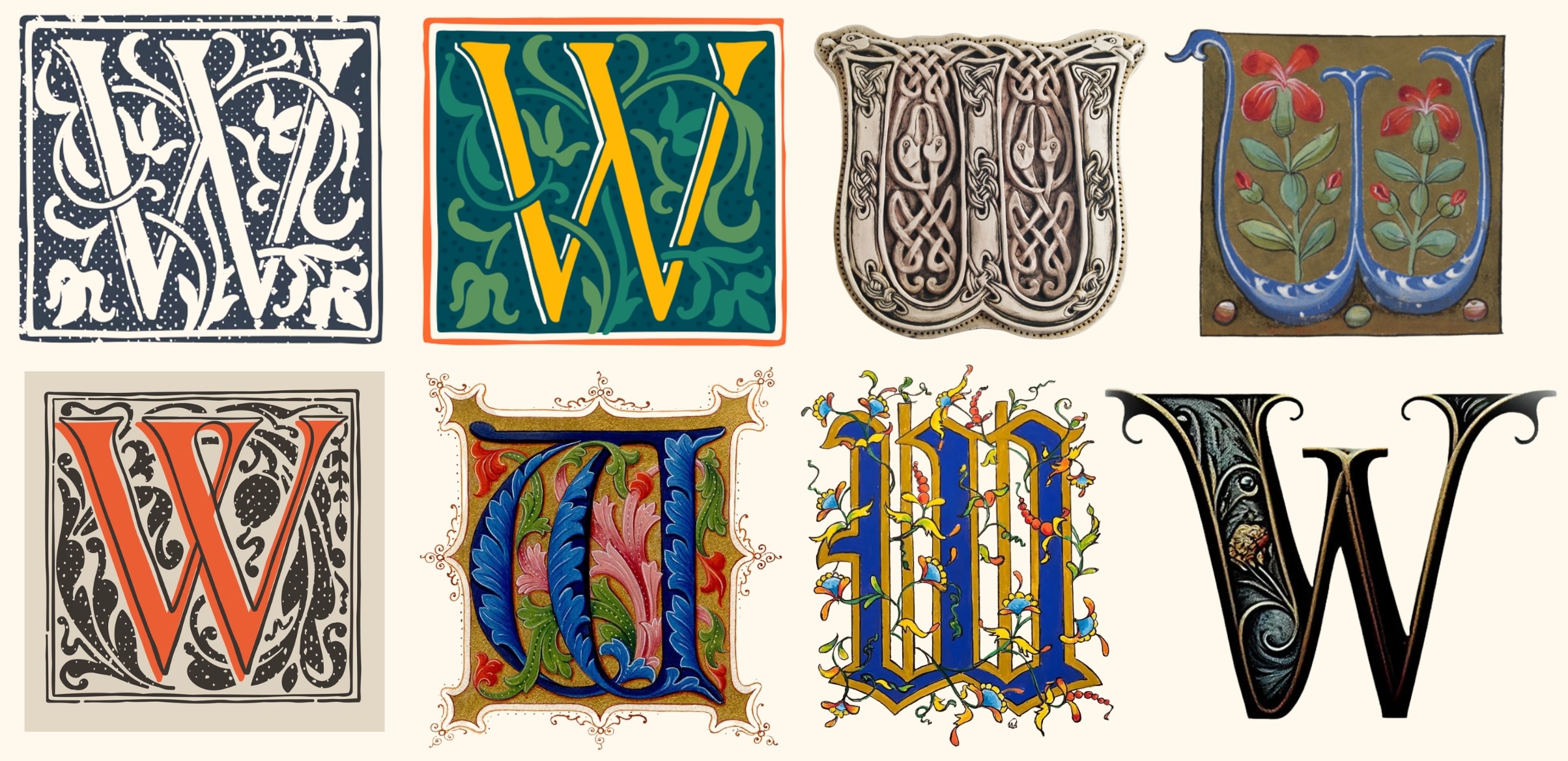
“The letter W is a child of the fall of Rome. In the fifth century CE, the western half of the Roman Empire disintegrated into a patchwork of new kingdoms and new rulers.”
Literary Hub essay · hn ↗Literary Hub Publisher
The whole story articlesposts the bright band is this development · numbered dots are the others · click one to jump
Reported in the same hours no headline names this development itself — these 1 claim were published in its stretch
-
first by HN Frontpage, 3d ago
What people said 15 voices · best of 16 · verbatim
-
 J
J
„They were foederati—peoples bound by treaty to fight Rome’s enemies in return for land and food. It was only with the help of the foederati (a Latin word related to English federation) that the Romans were able to see off the threat of Attila the Hun in 451. Yet the more power these regional leaders had, the less authority the emperor and the…
-
The history of W in Finnish is interesting (for some values of "interesting"). Mikael Agricola [1], a Lutheran clergyman, essentially created literary Finnish from scratch in the 1500s (before that, Finnish had existed solely as a spoken, vernacular language, with official business conducted in Swedish (or German), and until the reformation, the…
-
The most irritating way in which W is odd is that it requires three syllables to name, while all the other English letters are monosyllabic. This leads to many unfortunate situations where it takes substantially longer to say the acronym of a title than to say the title itself. Take for example, the World Wildlife Fund, which contains four…
-
I live in a French speaking part of Canada but am originally from the Netherlands. My name starts with a W (Willem). In Dutch W sounds a lot like a V, just a bit less fricative. When someone asks me how my name is pronounced, and hears me say it, they go "ooohh, so it's pronounced with a V". Sometimes I demonstrate the difference by pronouncing my…
-
I have a Question about the matter of opinion reGarding the oddity of the letter 'W'. What Quickly and Gainfully comes to mind are other letters that combine curvature and rectilinear chanGe which seem to reflect oddity much more saliently than 'W'. Also 'W' arguably is a simple transposition of the letter 'M'. How was 'W' chosen in the face of…
-
We should bring back the name of "Wynn". Every other letter in the alphabet is pronounced one syllable until you get to the accursed "W". This even bugged me a tiny bit as a little kid when singing the alphabet song, just this nagging feeling that the letter didn't belong. Not even a real letter, just "double u".Thorn would also be nice to see…
-
Finnish W is inherently tied to Swedish W. Historically, V and W were the same letter, and they could be used interchangeably. W was generally preferred in Fraktur and V in Antiqua. In the 19th century, the orthography changed to use V everywhere, except in some proper names. This happened a bit earlier in Swedish than in Finnish. And, recently, V…
-
> harm and warmThere were a couple of things in the article which i struggled with, this being one of them, and the other being:> Quartz doesn’t rhyme with parts, but rather shorts.This made me realize that in both these cases, I sometimes say it one way and sometimes the other. Probably depending on context. And probably because I'm Canadian.
-
I'm surprised this article doesn't mention that classical latin pronunciation actually had V realized as W or U depending on context.Latin didn't have two letters to distinguish V and U. You can still find inscriptions with VVA (modern spelling UVA)Later that sound morphed to a voiced labiodental fricative which is what we think of V now
-
Ye is really Þe (Þ = thorn) and it seems that printers, back in the day, used y instead, probably to save money. So it was probably considered old school when printing became popular and wasn't worth getting excited about.Agricola means farmer in Latin, is that an incidental? You mention Lutherian, so perhaps an affectation.
-
English is at best my 3rd language. I have always found the huge discrepancy between pronunciation and spelling really nonsensical (keep in mind that I even speak French). But this article really helps see all that in a new light. Nothing is a-historical, not even phonetics. Newfound respect for the English language.
-
Fun fact. You can see that W is kind of the oddball when looking at the Braille alphabet. XYZ used to align with MNO, until W was added as the 23th letter, which breaks the symmetry.⠁⠃⠉⠙⠑⠋⠛⠓⠊⠚ (abcdefghij)⠅⠇⠍⠝⠕⠏⠟⠗⠎⠞ (klmnopqrst)⠥⠧⠺⠭⠽⠵ (uvwxyz)
-
Maybe it's just me, but I've never met a German in real life who turned 'w's into 'v's. German has about a zillion vowel sounds and a sound like a 'w' shows up in words like 'Bauer'.
-
I first read the title as "oldest letter", and kept waiting for an explanation or twist in the article, getting increasingly confused. I just felt like sharing this, thanks for reading my comment.
-
Always found "double-u" ironic for a single letter. At least it's visually distinctive in code, unlike `l` and `1`.
All 1 developments of Essay traces letter W's origins to fall of Rome and… →
MastodonHacker NewsNewswires