Research demonstrates in vivo safety and performance in swine models
1 Sep 21 · 2d ago · 1 article · 2 posts · 3 sources · development 1 of 1
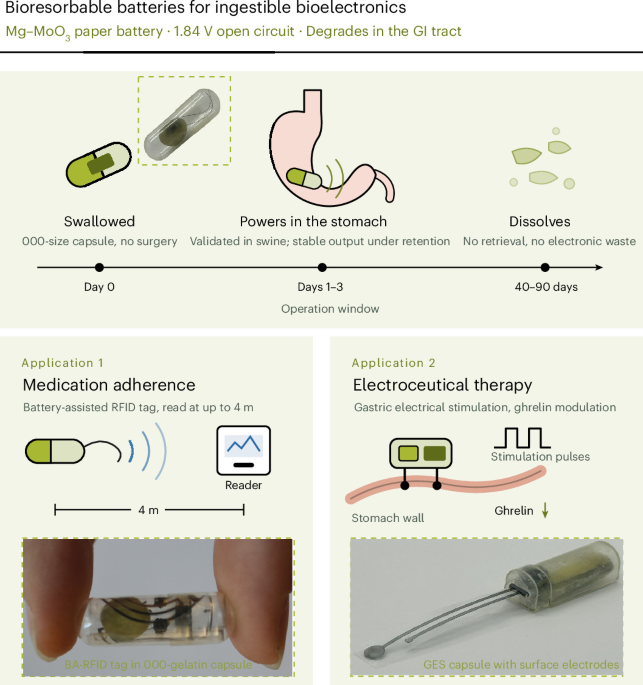
In vivo studies in swine models confirm the batteries operate robustly within the gastrointestinal tract and are compatible with clinically relevant medical applications. The bioresorbable design eliminates risks from conventional battery failure and toxic leakage.
“Those materials are known to be relatively safe. That was the biggest driver, thinking about materials that can be tolerated by humans.”
Traverso, Senior author, MIT researcher · mastodon ↗Mehmet Girayhan Say Lead author, former MIT postdocTraverso Senior author, MIT researcher
The whole story articlesposts the bright band is this development · numbered dots are the others · click one to jump
Reported in the same hours no headline names this development itself — these 1 claim were published in its stretch
-
first by Nature, 2d ago
What people said 1 voice · verbatim
-
 S
S
Bioresorbable batteries are miniature, ingestible power sources constructed from biocompatible materials designed to operate electronic devices within the human body before safely dissolving. They generate necessary electrical currents within the gastrointestinal tract and are fully absorbed or excreted without causing heavy metal toxicity. #…
All 1 developments of MIT researchers develop bioresorbable batteries for… →
MastodonHacker NewsGoogle News