MIT researchers develop bioresorbable batteries for ingestible medical devices
New magnesium-molybdenum trioxide batteries safely power diagnostic and therapeutic capsules before dissolving in the body.
What to know
- MIT researchers have developed magnesium-molybdenum trioxide batteries that safely power ingestible medical devices and completely biodegrade within weeks.
- The new design eliminates toxic leakage risks from conventional lithium or silver oxide batteries if their casings fail inside the body.
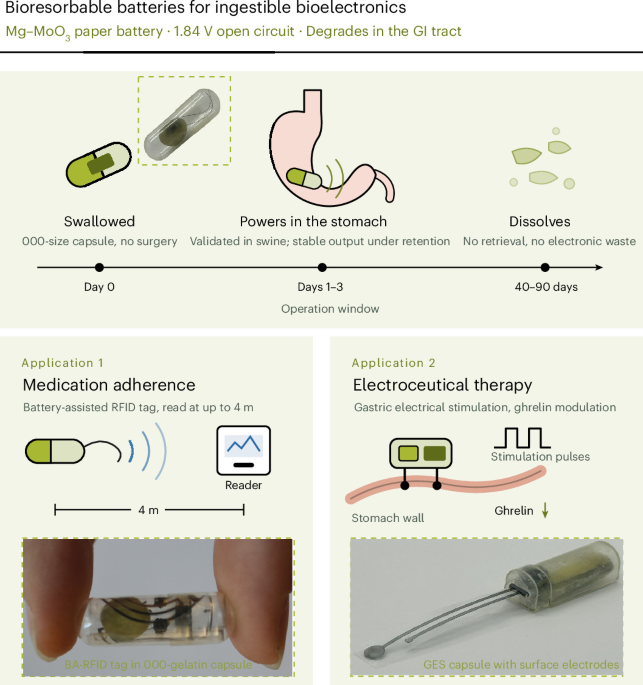
- The batteries generate 1.84 volts and function normally in gastric acid for three days, enabling applications in wireless medication tracking and electroceutical therapy.
- Clinical trials for SAFARI RFID medication-monitoring capsules are planned for 2028, marking the first major medical application of the technology.
Mehmet Girayhan Say Lead author, former MIT postdocTraverso Senior author, MIT researcher
How it unfolded 1 development · click the chart to see its coverage articlesposts
-
1
Research demonstrates in vivo safety and performance in swine models
In vivo studies in swine models confirm the batteries operate robustly within the gastrointestinal tract and are compatible with clinically relevant medical applications. The bioresorbable design eliminates risks from conventional battery failure and toxic leakage.
“Those materials are known to be relatively safe. That was the biggest driver, thinking about materials that can be tolerated by humans.”
— Traverso, Senior author, MIT researcher · source -
 S
S
Bioresorbable batteries are miniature, ingestible power sources constructed from biocompatible materials designed to operate electronic devices within the human body before safely dissolving. They generate necessary electrical currents within the gastrointestinal tract and are fully absorbed or excreted without causing heavy metal toxicity. #…
-
-
background
MIT team publishes bioresorbable battery design in Nature Chemical Engineering — Researchers led by Mehmet Girayhan Say and senior author Traverso unveil a magnesium-molybdenum trioxide paper battery designed for ingestible bioelectronics. The battery achieves 1.84 V peak open-circuit voltage and operates normally in gastric acid for three days before degrading over several weeks.