Commenter explains what a 'light-day' distance actually means
6 Nov 2 12:47 PM · 5d ago · 4 posts · 2 sources · development 6 of 6
A social media user shares context clarifying that a light-day is a distance (about 16 billion miles/26 billion km), not a span of time, comparing it to the Earth-Moon and Earth-Sun distances.
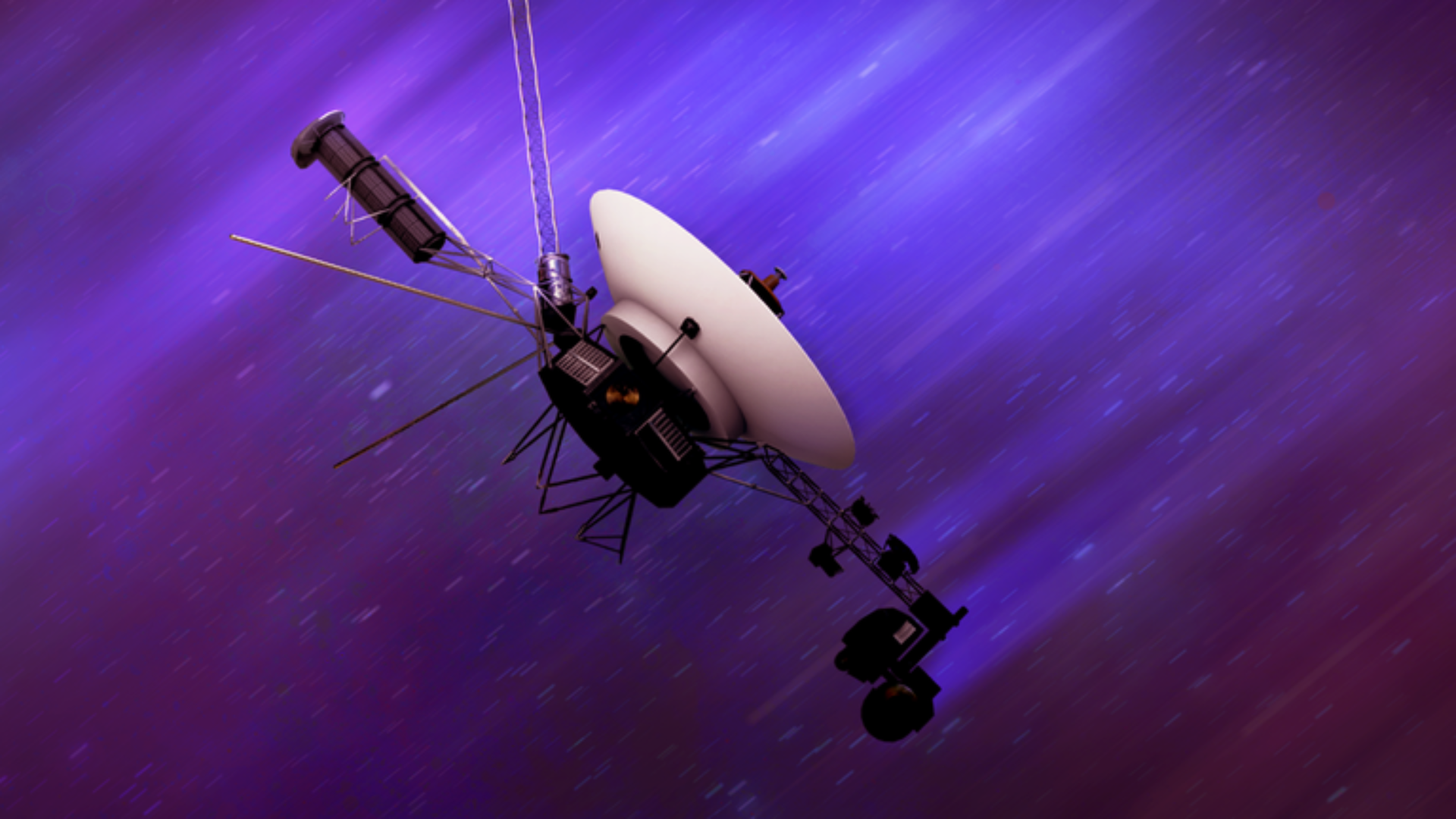
“One light-day isn’t a span of time, but the distance it takes for light to travel in 24 hours.”
@BenjaminHCCarr@hachyderm.ioNASA Operator of the Voyager programVoyager 1 Interstellar space probe, launched 1977Voyager 2 Sister spacecraft
The whole story articlesposts the bright band is this development · numbered dots are the others · click one to jump
Reported in the same hours no headline names this development itself — these 1 claim were published in its stretch
-
first by BBC Sky at Night Magazine, 5d ago · also GK Today, Science Daily
2 more headlines
- Voyager 1 Nears One Light-Day from Earth GK Today · 5d ago
- NASA’s Voyager 1 is about to reach a historic one-light-day milestone Science Daily · 5d ago
What people said 3 voices · verbatim
-
 S
"The Voyager 1 spacecraft, which was designed for a five-year mission to observe Jupiter and Saturn, is about to reach a distance of one light-day from Earth after nearly 50 years in flight." https://www. tomshardware.com/tech-industry…
-
 N
Sister ship Voyager 1 is currently ~23h 57m 58s of light travel time from Earth (2026:307:120000:1L)
-
Voyager1 probe to hit historic one light-day distance from Earth in 17 days — 49-year-old # spacecraft travels 16 billion miles and survives nearly ten times the length of its original five-year mission One light-day isn’t a span of time, but the distance it takes for light to travel in 24 hours. That’s a distance of about 16 billion miles or 26…
All 6 developments of Voyager 1 nears one-light-day distance from Earth after 49… →
MastodonNewswiresGoogle NewsBlueskyHacker News