Voyager 1 nears one-light-day distance from Earth after 49 years
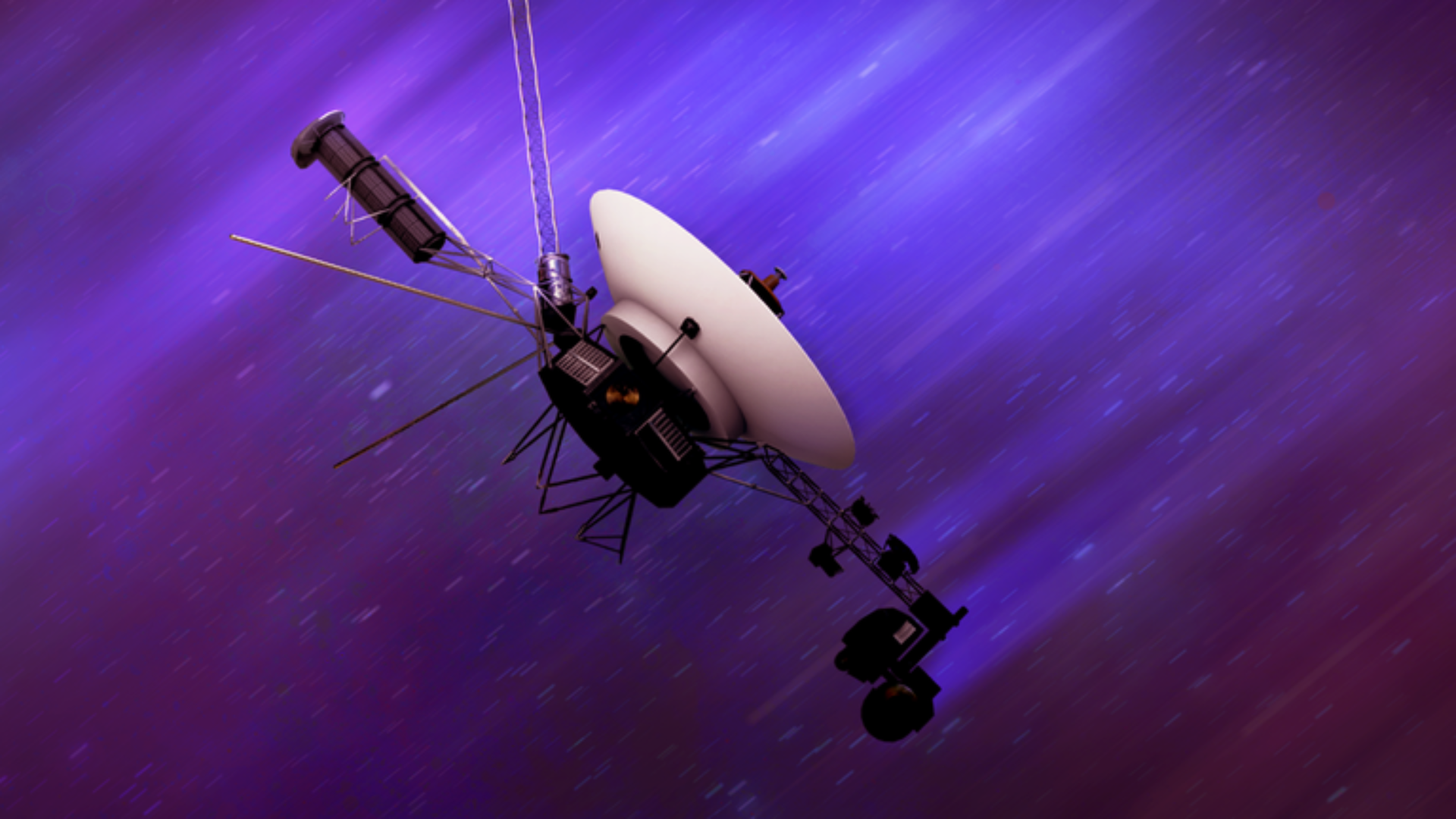
NASA's Voyager 1 probe, launched for a five-year mission in 1977, is about to become the first human-made object a full light-day from Earth.
What to know
- Voyager 1, launched in 1977 on a planned five-year mission to Jupiter and Saturn, is about to become the first human-made object one light-day from Earth.
- One light-day equals the distance light travels in 24 hours — roughly 16 billion miles (26 billion km).
- As of early November 2026 reports, the spacecraft was 16-17 days away from crossing that threshold, having already traveled about 16 billion miles.
- The milestone has circulated widely across tech and space outlets and social media as a marker of Voyager 1's nearly 50-year operational longevity.
NASA Operator of the Voyager programVoyager 1 Interstellar space probe, launched 1977Voyager 2 Sister spacecraft
How it unfolded 6 developments, newest first · click a bar or a number to jump articlesposts
-
6
Commenter explains what a 'light-day' distance actually means
A social media user shares context clarifying that a light-day is a distance (about 16 billion miles/26 billion km), not a span of time, comparing it to the Earth-Moon and Earth-Sun distances.
“One light-day isn’t a span of time, but the distance it takes for light to travel in 24 hours.”
— @BenjaminHCCarr@hachyderm.io -
 S
"The Voyager 1 spacecraft, which was designed for a five-year mission to observe Jupiter and Saturn, is about to reach a distance of one light-day from Earth after nearly 50 years in flight." https://www. tomshardware.com/tech-industry…
2 more of the top 3 · 3 posts in this stretch
-
 N
Sister ship Voyager 1 is currently ~23h 57m 58s of light travel time from Earth (2026:307:120000:1L)
-
Voyager1 probe to hit historic one light-day distance from Earth in 17 days — 49-year-old # spacecraft travels 16 billion miles and survives nearly ten times the length of its original five-year mission One light-day isn’t a span of time, but the distance it takes for light to travel in 24 hours. That’s a distance of about 16 billion miles or 26…
-
-
5
Additional outlets and forums pick up the milestone story
Tech Explorist and IFLScience publish their own writeups of the approaching distance record, and the story surfaces on Hacker News.
-
4
Milestone announcement spreads widely on social media
A bluesky post noting the approaching milestone draws unusually heavy engagement (540 points, 18 comments) compared to other coverage of the story.
“Voyager to be almost 1 light day from home this month…”
— @warspitefella.eurosky.social -
3
Tom's Hardware reports Voyager 1 is 17 days from one light-day
Tom's Hardware publishes a report (widely syndicated via Google News and Yahoo) stating Voyager 1, launched for a five-year Jupiter/Saturn mission, will hit one light-day from Earth in 17 days after nearly 50 years in flight and 16 billion miles traveled.
“The Voyager 1 spacecraft, which was designed for a five-year mission to observe Jupiter and Saturn, is about to reach a distance of one light-day from Earth after nearly 50 years in flight.”
— Tom's Hardware -
2 outlets first by Yahoo Tech, 7d ago · also Tom's Hardware · read ↗
-
first by Tech Explorist, 6d ago
-
- 2 days quiet
-
2
NASA Eyes data pegs milestone at just under 20 days away
Using NASA's Eyes on the Solar System tool, a tracker posts that Voyager 1 is 25.85 billion km (16.06 billion miles) from Earth and will reach the one-light-day mark in 19 days, 18 hours, with Voyager 2 trailing at 21.65 billion km.
“Voyager 1 is 25.85 billion km/16.06 billion miles away from Earth and will reach 1 light-day from Earth in 19 days, 18 hours…”
— @voyagers@stefanbohacek.online -
first by BBC Sky at Night Magazine, 5d ago · also GK Today, Science Daily
2 more headlines
- Voyager 1 Nears One Light-Day from Earth GK Today · 5d ago
- NASA’s Voyager 1 is about to reach a historic one-light-day milestone Science Daily · 5d ago
-
 V
Voyager 1 is 25.85 billion km/16.06 billion miles away from Earth and will reach 1 light-day from Earth in 19 days, 18 hours: https:// eyes.nasa.gov/apps/solar-syste m/#/sc_voyager_1/distance?to=earth Voyager 2 is 21.65 billion km/13.45 billion miles away from Earth: https:// eyes.nasa.gov/apps/solar-syste m/#/sc_voyager_2/distance?to=earth #…
-
- 1 day quiet
-
1
Tracking account logs Voyager 1 nearing 24-hour light delay
A Voyager-tracking account posts that Voyager 1 is about 23 hours, 56 minutes, 53 seconds of light travel time from Earth, or roughly 25.85 billion km (16.06 billion miles / 172.77 AU) out.
“Sister ship Voyager 1 is currently ~23h 56m 53s of light travel time from Earth, or 25,846,000,000 km / 16,060,000,000 mi / 172.770 AU…”
— NSFVoyager2 -
N
Sister ship Voyager 1 is currently ~23h 56m 53s of light travel time from Earth, or 25,846,000,000 km / 16,060,000,000 mi / 172.770 AU (2026:300:120000:1L)
-