Scientists release largest-ever 2D map of universe with 5.6 trillion pixels
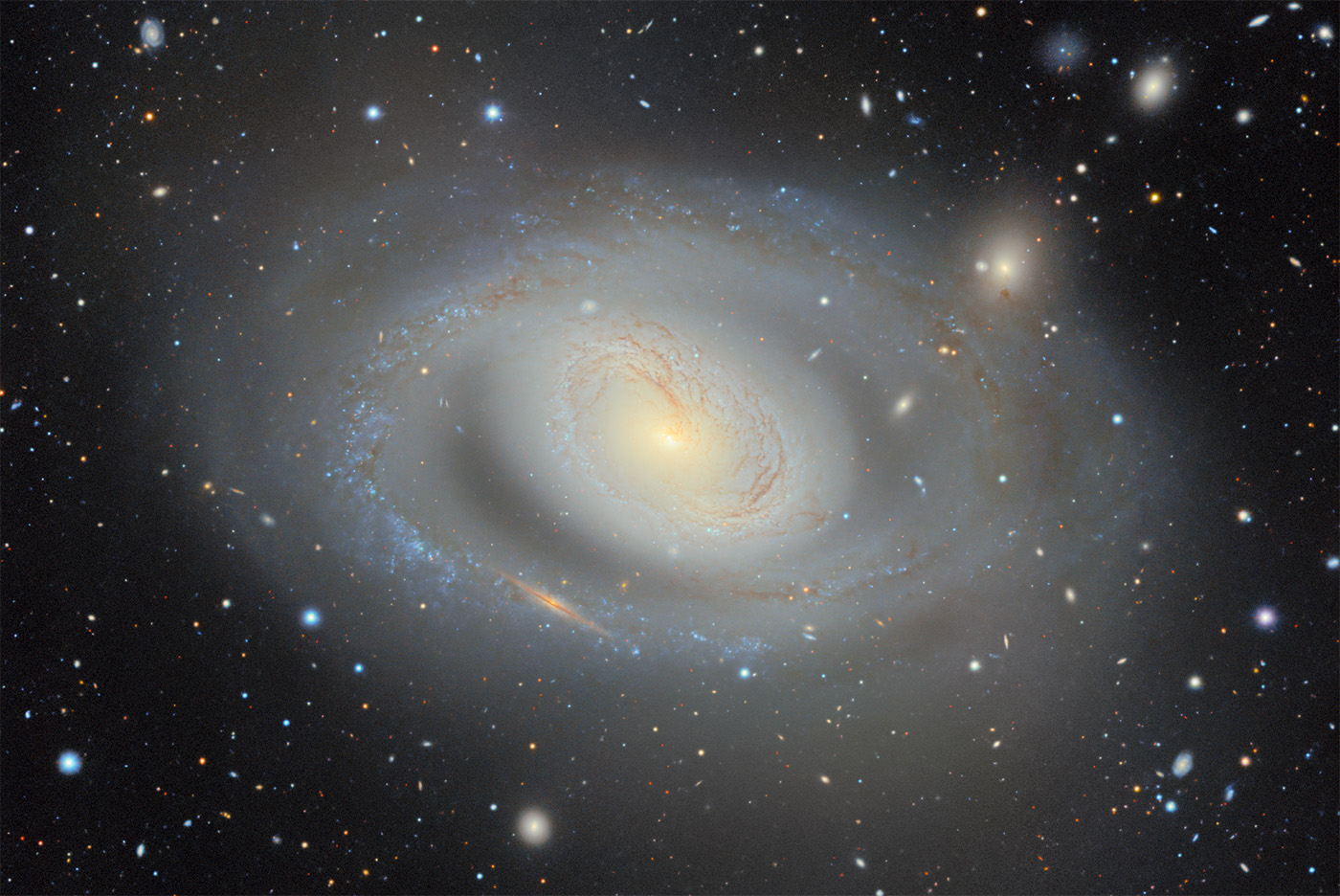
DESI Legacy Imaging Surveys combines 263,000 telescope exposures covering 75% of the sky to create a publicly available map of nearly 4 billion celestial objects.
What to know
- Scientists released a 5.6-trillion-pixel map of the universe containing nearly 4 billion celestial objects across 75% of the visible and near-infrared sky.
- The map combines 263,407 telescope exposures from three ground-based observatories and NASA satellite data, and is publicly available through the Legacy Survey Sky Viewer.
- The data serves as the foundation for the Dark Energy Spectroscopic Instrument (DESI) survey to investigate dark energy and dark matter in 3D.
- Over 1,800 peer-reviewed papers already cite earlier Legacy Surveys data, establishing it as foundational to modern astronomy research.
“Hold on to your telescopes: the DESI Legacy Imaging Surveys team has released the largest-ever 2D color map of the universe.”
Lawrence Berkeley National Laboratory, Research institution · Lawrence Berkeley National Laboratory news center
David Schlegel Co-lead of Legacy Surveys, Lawrence Berkeley Lab scientistArjun Dey Co-lead of Legacy Surveys, NSF NOIRLab astronomerDESI Legacy Imaging Surveys team Map creators and data producers
The record 1 articles and posts · last 30 days
What people are saying 10 voices from 1 site · best of 15 · verbatim
- Aug 22
-
I'm surprised the current US federal government is allowing its employees to publish anything with evidence the universe is >6000 years old.
- Aug 21
-
Telescope design, funding, and construction is a long long process, longer than any administration, and there are some truly wonderful telescopes coming online right now.The Nancy Grace Roman telescope is scheduled to launch in 9 days, on August 30. She was known as the Mother of the Hubble telescope, and the Roman telescope will be able to cover…
-
> deteriorating strategic situation. The big money will be going into defense and economic sovereigntyThat's not incidental, but a situation pushed for by people that will benefit from defense spending and from giving ordinary people's money (via taxes and protectionism) to wealthy, second-rate corporations.It's obviously undesirable to the great…
-
Telescopes are related to spy satellites, something that will remain in high demand. The telescopes provide a good cover story for international press.
-
Researchers expect it will remain the most comprehensive 2D map of our universe for years to come.Most likely. I doubt there is going to be any serious investment in astronomy over the next decade given economic headwinds and a deteriorating strategic situation. The big money will be going into defense and economic sovereignty and…
-
I've got some crazy feelings browsing this.Are there any particularily detailed areas? But maybe the humbling reality is just: The closer we look, the more galaxies appear where we thought was black void…
-
I read the article but didn't watch the videos yet, but I'm curious as to what would be needed to make this a 3D map. That is, I'm assuming this 2D map records the position of all of these objects in the sky, but not the distance from Earth. But I thought that calculating the distance of objects is relatively straightforward, e.g. you hear all the…
-
For 2001 fans, Atmosphères by Ligeti[1] also works very well while doom scrolling the endless canvas that is the Universe.[1]
-
Seems like some of the most interesting objects are missing or have weird red/green artifacts, why is that?
-
That's impressive. Though I think there's too much space on this plane. I'm wondering whether it is actually a 2D view since it obviously isn't planar.To paraphrase Samuel L Jackson - "I have had it with this m'f'ing space on a plane! Everybody strap in I'm about to open some f'in' windows."Proceeds to crank open an array of telescopes to get…