Researchers Find Evidence of Data Tampering in Influential Procrastination Study
A 2002 paper by Dan Ariely and Klaus Wertenbroch on deadline effects, cited over 2,100 times, shows signs of fraud.
What to know
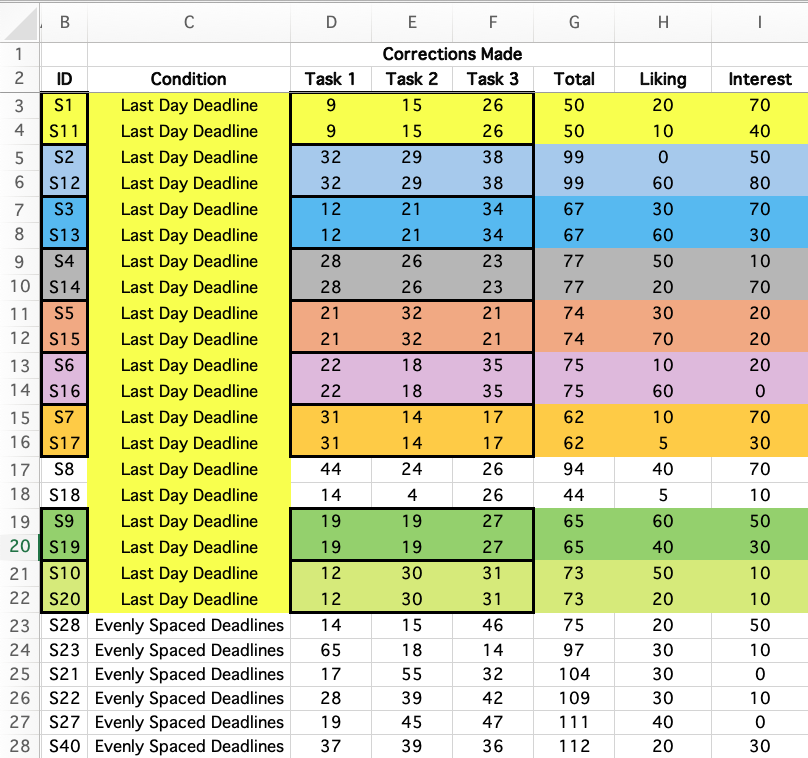
- A 2002 study on deadlines and procrastination by Dan Ariely and Klaus Wertenbroch—cited over 2,100 times and assigned in hundreds of courses—shows forensic evidence of data tampering in Studies 1 and 2.
- When a replication attempt failed and Ariely refused to provide original data files for verification, researchers conducted a detailed analysis of the archived files and concluded they were manipulated.
- Both Ariely and Wertenbroch have requested retraction of the article from Psychological Science; the retraction process is ongoing.
“The paper has had a lasting influence. It has been assigned reading in many economics and psychology courses, and has more than 2,100 citations on Google Scholar.”
Datacolada researchers · Datacolada blog post
 Dan Ariely Co-author of original 2002 studyKlaus Wertenbroch Co-author of original 2002 studyKyle Hyndman Replication researcherAlberto Bisin Co-author of replication studyDatacolada researchers Forensic analysis team
The record 2 articles and posts · last 24 days
What people are saying 24 voices from 2 sites · best of 269 · verbatim
- Sep 2
-
Yes, it's true. No more firewalls. Go read the article I originally linked, here it is again:https://apnews.com/article/science-business-arts-and-enterta...Some key paragraphs are:> The Associated Press said Tuesday that it is assigning more than two dozen journalists across the world to cover climate issues, in the news organization’s largest…
- Sep 1
-
If the theory is that advertising makes conflicts of interest more transparent, I don't think I agree. Advertisers can be stakeholders across diverse ranges of concerns - conflicts of interest are often indirect. They can influence what doesn't get written, as much as what does. The real bad actors can even just disguise ads as content. We still…
-
There certainly are problems, but the biggest is that reality puts two other factors ahead of publishing the truth:1) People don't like having their beliefs challenged. This will slant all news organizations towards the biases of their readers. We see this at all levels. The shorter and more personalized the feedback loop the faster it happens…
-
I think ads were better because everyone was aware of the conflict of interest issues and took steps to manage it. They admitted it could be an issue and would have internal firewalls where ad sales weren't allowed to talk to the journalists, things like that. Advertisers accepted it because their goal wasn't to manipulate news reporting.The…
-
News reporting and journalism has always mostly been a for-profit enterprise. And no matter what business model one might choose (ads, subs, charity, etc) there will be perverse incentives working in conflict with pure truth seeking and newsworthiness. Audience capture, pleasing advertisers, the politics/interests of the owners, etc.I'm sure…
-
The conclusion is faulty given that it was derived from faulty data. The 2002 paper had two pilot studies and 2 bigger studies. The replication of study 2 failed[1], and the original data has substantial concerning features the rest of the datacolada article lays out. This has two unfortunate implications.First, if study 2 was not necessary to…
-
Feel free to not engage, but for anyone reading the Nepal flash flood was caused by bedrock giving way, which isn't climate related.https://www.theweek.in/news/world/2026/08/28/new-satellite-i...The two links I give show the problem in action. In 2013 the IPCC was concerned because temperatures had gone sideways for a decade. Der Spiegel's first…
-
As we all know, oeer review is not a very reliable signal about the veridicity of the claims, it is merely an approximate quality gate indicating that a study was done following appropriate standards. There needs to be more awareness of this. Nonetheless, in some fields peer review have been public for a long time, and more and more journals are…
-
IANAL, but it seems the suit against Harvard is still in progress, as far as I can tell: Harvard is seeking a summary judgement, and on August 5 the judge granted Gino's request to file "a renewed Statement of Additional Material Facts that complies with the Federal Rules of Civil Procedure and the Court's Standing Order, including the…
-
There are multiple accounts that describe severe pain and the New Zealand government has paid out compensation for the torture that it was. What was being done here was most definitely intended to be painful torture, so maybe isn’t a fair comparison with clinical ECT for actual treatment?‘Bryon Nichol spent six months in the Lake Alice unit at the…
-
Disagree, those two fields are extremely unreliable. It takes a lot of things happening simultaneously to be scientific. Yes, those two do make testable predictions, sort of. But that isn't enough.Modern (computational) epidemiology is rife with unscientific practices. They ignore data that shows a model was invalidated so the fact they make…
-
This is unnecessarily cynical.> The core problem is people conflating science with Science™.You fell into the same trap by criticizing scientific institutions and the human spirit in an attempt to criticize the scientific method.> What exactly is the scientific method?What a ridiculous argument. What exactly is a hamburger? Just ask around and you…
-
The situation of [2] is crazy. Because both the author of [2] and the people using Ferguson’s model are wrong. And the author's advice in one of the last paragraphs of we just need better programmers is also wrong.The issue is that pandemics are extremely fat-tailed in terms of fatalities [3]. You need to collect a shit tons of data to estimate…
-
Whilst I weakly agree with this characterisation, it's not at all fair or accurate to put epidemiology and climatology in the same category as your other examples. Yes they have some weaknesses in replication practices (especially for purely computational work), yes the feedback loop for self-correction can be slow, but it would be a mistake to…
-
They might not care even then.Journalism is an interesting case study. Their revenues went into sharp decline around the start of the century, dropping by more than 50% in some cases. Concurrently polls showed trust in journalism was plummeting, that people were tuning out because they felt that what they read wasn't reliable.Journalism didn't…
-
You'd think so. I used to believe this too. Surely you try and build on a result which creates an implicit replication study, then your experiments don't work and the problem is discovered pretty quick. Hence, self correction.It often doesn't happen. The reasons seem to vary by field. We do see it in a few very hard fields like materials…
-
The problem in my view is that everything can be measured like hard science in the first place (not to mention the issue with fraud you point out in hard science).I am think the idea that a thing is only a science if and only if it's empirical is actually harmful, science used to refer to a more generalized idea of study 'scientia' this could also…
-
Replication is overrated. There's no point in doing more of it. You'd just replicate a ton of bad science:https://blog.plan99.net/replication-studies-cant-fix-science...N.B. nobody needed to replicate this study. It only took basic sanity checks to spot that it was very unlikely to be true (and thus, very unlikely to replicate). And they went much…
-
Science is self-correcting, but sometimes, the correction mechanism it is very slow and inconsequential enough that people are incentivized to just publish anything. Peer review is merely a quality check—and not a very good one. Just the other day, I ran into a paper in my field that claims to have solved a central problem that scientists have…
-
> leaving insular academic institutions to self-policeI'm not convinced that academic institutions are actually self-policing, it may not even be correct to assume they each act as one coherent entity. There are a lot of incentives in play which may not be obvious from the outside.<apologies for yet another anecdote from way back when>Many decades…
-
It is interesting how all these famous non-replicating psych paper results feel reasonably intuitive to me. Like I can buy that having a more structured and detailed deadline helps you procrastinate less. I can even buy that doing a goofy little "power pose" exercise kind of hypes yourself up to give some self confidence and do better on an…
- Aug 31
-
Well, no, he was not a pleasant person. Back in the day he was a management consultant, best known for an essay which rustled many programmer jimmies at the time: "Theory P: The Philosophy of Managing Programmers" (2005):https://web.archive.org/web/20190416200125/https://it.toolbo...Theory P advances the thesis that because programmers are lazy…
-
There is no alternative to deadlines because time is money, and those downstream of you can ill afford to wait on your deliverables. Part of management's job is to determine how much time it should take so a reasonable timetable that stakeholders can agree to can be set, and then hold you accountable for delivering within that time frame.I wish we…
-
 A
A
[138] Artificial Deadlines (Part 1): Evidence of Fraud in an Influential Study About Procrastination