Moon may have formed in just 5 hours, new simulations suggest
University of Arizona and SwRI researchers model the ancient Earth-Theia collision with geological properties, finding faster moon formation than previously thought.
What to know
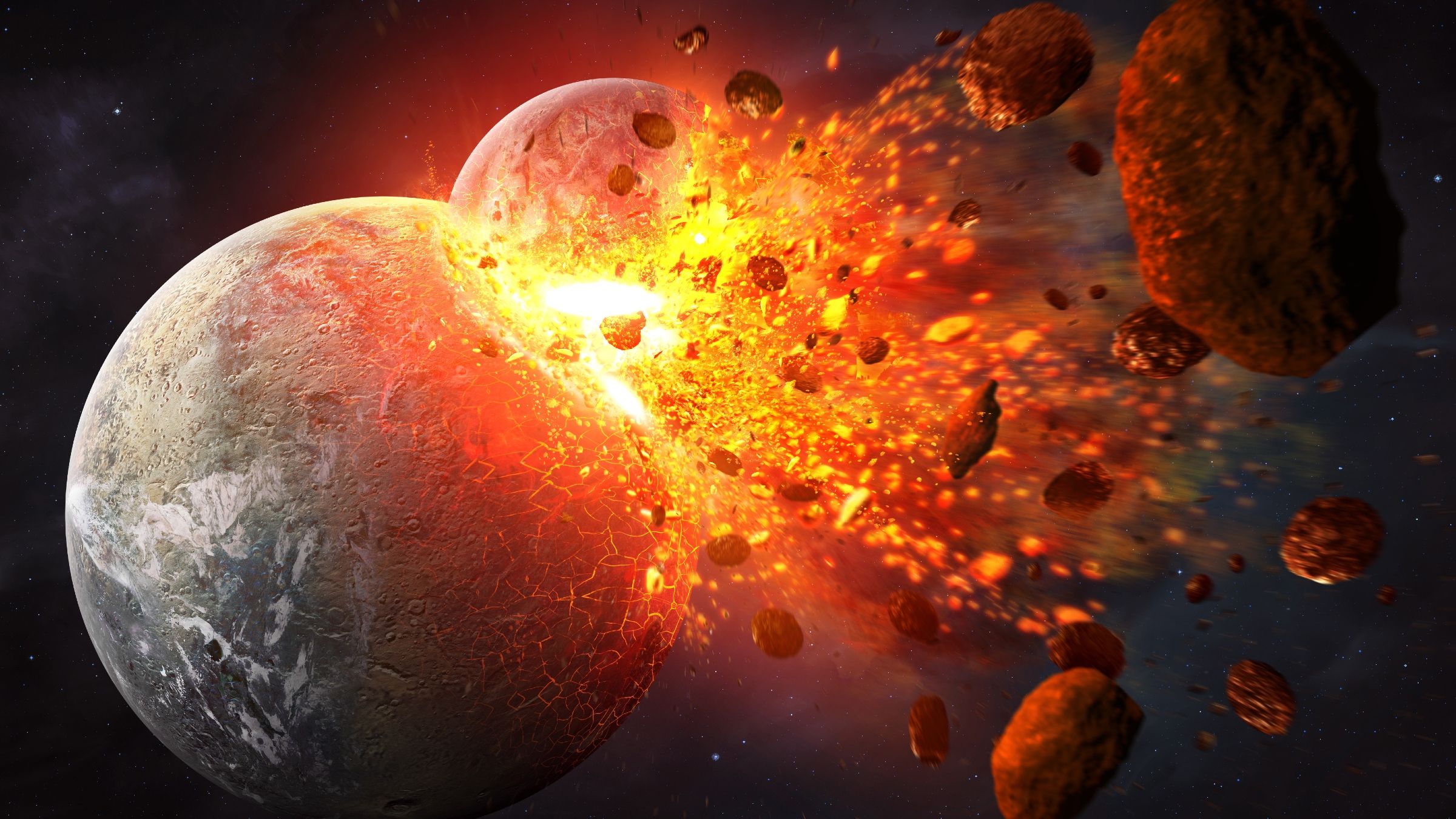
- New computational simulations suggest the moon formed in as little as 5 hours after Earth collided with the Mars-sized protoplanet Theia 4.5 billion years ago—far faster than the previously estimated 10 years.
- This faster formation is possible only if Earth and Theia's surfaces were around 3,140°F (hot but not fully melted) at impact, allowing them to behave as solid rock rather than fluids.
- The research incorporates material strength and geological properties into collision models for the first time, changing how scientists understand the moon's formation mechanism.
Adeene Denton Lead author, Southwest Research InstituteUniversity of Arizona and Southwest Research Institute Research institutions
How it unfolded 2 developments, newest first · click a bar or a number to jump articlesposts
-
2
Nautilus publishes detailed breakdown of methodology and implications
Science writer David Nield explains how the new model's inclusion of material strength changes moon formation understanding, noting that previous simulations treated colliding bodies as fluids rather than solid rock.
“When you simulate the Earth and the moon as colliding bodies with geologic properties, it changes how the moon forms out of that impact—that's something we considered unnecessary before.”
— Adeene Denton -
first by Nautilus, 13d ago · also The Cool Down, SciTechDaily, Nautilus | Science Connected
2 more headlines
- New simulations suggest the moon formed just 5 hours after Earth slammed into protoplanet Theia The Cool Down · 11d ago
- Scientists Discover the Moon May Have Formed in Just Five Hours SciTechDaily · 9d ago
-
- 1 day quiet
-
1
Live Science and media outlets report findings of faster moon formation
Coverage of the study spreads across multiple outlets including Live Science and India Today, highlighting that the moon could have formed in as few as five hours under the right conditions.
-
first by Martin Cid Magazine, 15d ago · also Live Science
2 more headlines
- The moon may have formed in just 5 hours, new simulations suggest Live Science · 15d ago
- How long did it take to make the moon? Maybe just 5 hours, new simulations suggest Live Science · 15d ago
-
-
background
University of Arizona and SwRI publish moon formation study in Astrophysical Journal Letters — Researchers released computational simulations reassessing how the moon formed after Earth's collision with Theia, incorporating geological properties and material strength for the first time in such models.