Physicist finds Star Trek's Picard maneuver even more sophisticated than the show realized
A Brazilian physicist analyzing the warp-speed trick discovers the show missed a detail that actually makes the tactic more impressive.
What to know
- A physicist's analysis reveals Star Trek: TNG's Picard maneuver was based on real faster-than-light physics but missed a crucial detail about acceleration.
- The show predicted two visible images of the starship; correct physics yields three, making the tactical trick even more effective.
- Though faster-than-light travel remains purely theoretical, the math underpins real phenomena like Cherenkov radiation in nuclear reactors and research into the memory effect in relativity.
Níckolas de Aguiar Alves Physicist, Federal University of ABCJean-Luc Picard Fictional starship captain, Star Trek: TNG
How it unfolded 1 development · click the chart to see its coverage articlesposts
-
1
The maneuver's error makes it more tactically effective, not less
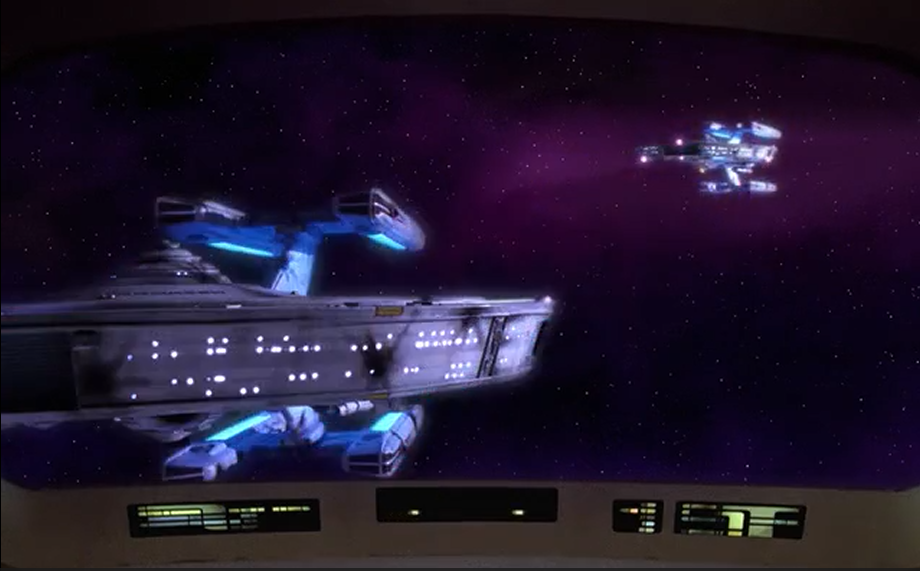
De Aguiar Alves found that the show's depiction, though incomplete, actually strengthens rather than weakens the maneuver's tactical advantage. By accelerating twice—first to warp speed, then stopping near the enemy—Picard's ship creates three observable images instead of two, expanding the confusion an opponent faces when deciding which target to fire upon.
“The main thing they got perfectly, and I think it is a great illustration.”
— Níckolas de Aguiar Alves -
J
Physicist does the math on Star Trek: TNG's “Picard Maneuver”
2 more of the top 3 · 15 posts in this stretch
-
 F
F
A physicist does the maths on Star Trek's Picard Manoeuvre — and finds it would work even better in reality https:// arstechnica.com/science/2026/0 9/physicist-does-the-math-on-star-treks-picard-maneuver/ # science # physics # scifi
-
T
I know this is a medicine account, but for all you super nerds here is a physicist explaining how the Picard Maneuver is actually even more brilliant than Starfleet Academy would have you realize
-
-
background
Physicist analyzes Star Trek's Picard maneuver and finds physics detail the show missed — Níckolas de Aguiar Alves, a physicist at the Federal University of ABC in Brazil, worked through the mathematics of the warp-speed tactical maneuver from Star Trek: The Next Generation's first-season episode "The Battle." He discovered that while the show correctly captured the core idea of a faster-than-light object leaving multiple images, the specific scenario would produce three images rather than the two the episode depicted.
Also covered reported alongside — the timeline has no entry for these yet
-
first by Ars Technica, 13d ago · also Gadget Review, Newser, Ars Science
3 more headlines
- A physicist has found a surprising flaw in Star Trek’s Picard Maneuver economictimes.com · 9d ago
- A Physicist Ran The Math On Star Trek’s “Picard Maneuver” Gadget Review · 9d ago
- Physicist: Famed 'Picard Maneuver' on Star Trek Works Newser · 9d ago
What people are saying 4 voices from 2 sites · best of 15 · verbatim
- Sep 13
-
 W
W
It turns out Jean-Luc Picard was an even better starship helmsman than the writers knew. A physicist has gone through the details of a warp-speed trick from the first season of Star Trek: The Next Generation and found a subtlety the show missed. But instead of a plot hole, the detail he found actually makes the maneuver more impressive. https://…
- Sep 11
-
 U
U
Um, actually, the Picard maneuver would have produced three images of the ship, not two: https:// arxiv.org/abs/2608.23624 (This is real physics done by real physicists!) # StarTrek
-
 P
P
Found this interesting: Physicist does the math on Star Trek’s “Picard maneuver” https:// arstechnica.com/science/2026/0 9/physicist-does-the-math-on-star-treks-picard-maneuver/
- Sep 10
-
D
If STAR TREK could predict the cell phone, I see no reason why it couldn't predict the future of starship combat.