Chinese doctors find 36mm needle embedded in patient's heart
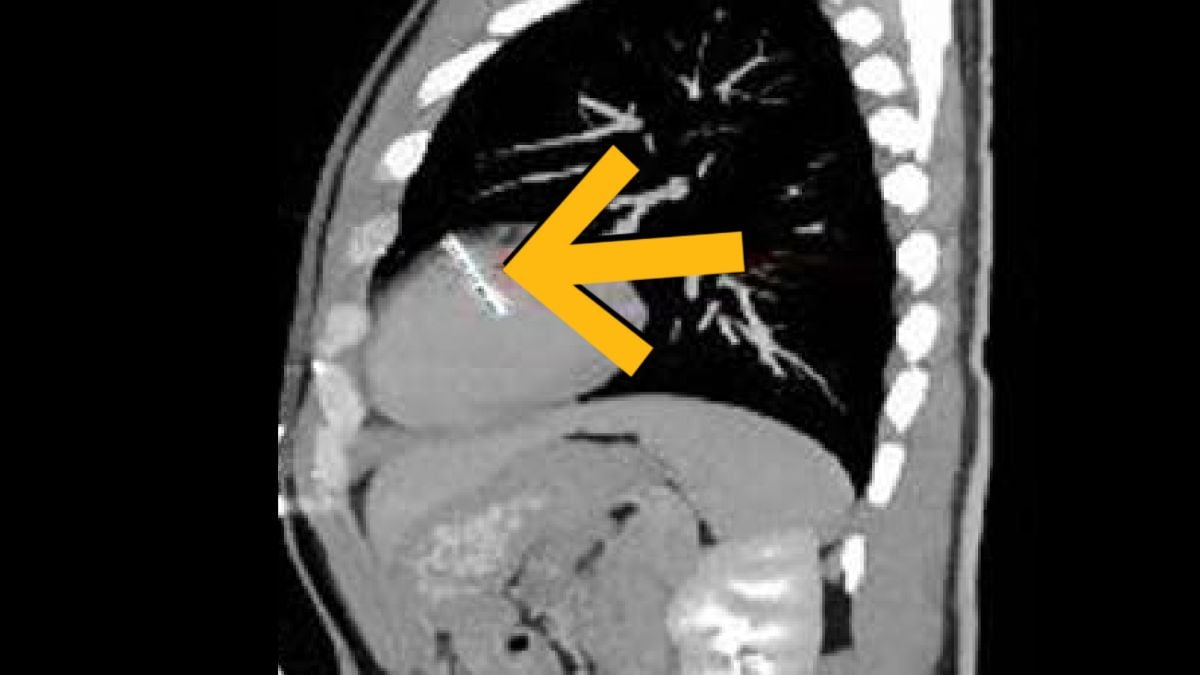
A 35-year-old man with intellectual disability arrived at hospital with urinary symptoms; imaging revealed multiple needles throughout his body, one lodged in his left ventricle.
What to know
- A 36mm sewing needle was found embedded in a 35-year-old man's left ventricle at a Chinese hospital; the patient presented initially with urinary symptoms, not cardiac complaints.
- Multiple metallic foreign bodies were discovered throughout the patient's body, suggesting possible self-embedding behavior linked to intellectual disability and potential mental health disorders.
- Only 34 cases of self-embedded heart needles have been reported globally since 1967, making diagnosis extremely challenging when patients have no heart symptoms.
- The patient recovered well after surgical removal, though the origin of the needles and whether insertion was deliberate remain unclear.
“Presumed self-insertion of cardiac foreign bodies in patients with cognitive impairment can be clinically occult, requiring a high index of clinical suspicion when a definitive history is difficult to obtain.”
Doctors at Hunan Provincial People's Hospital · ScienceAlert ↗
35-year-old patient Patient with intellectual disabilityHunan Provincial People's Hospital Medical institution
How it unfolded 2 developments, newest first · click a bar or a number to jump articlesposts
-
2
Case study published in BMC Cardiovascular Disorders with patient consent
The case was published in BMC Cardiovascular Disorders with written informed consent from the patient's father. The patient's history suggests possible prior self-embedding behavior—two years earlier, two needle-like objects had been removed from his abdomen—though it remains unclear whether those prior objects were deliberately or accidentally inserted.
-
1
Surgical team removes needle from heart, postpones bladder needle extraction
Fearing the needle could migrate, rupture tissue, or cause infection, surgeons prioritized removal of the needle from the patient's left ventricle. Needles in the bladder wall showed stone-like encrustations and posed risk of severe bleeding or urinary leakage, prompting a staged approach with bladder needle removal at a later date.
“Although multiple systemic needles were confirmed, neither the patient nor his family could clarify their origin.”
— Doctors at Hunan Provincial People's Hospital · source -
background
Doctors discover 36mm needle in patient's left ventricle during cardiac imaging — A 35-year-old man with intellectual disability presented to Hunan Provincial People's Hospital with painful urination and hematuria. CT imaging revealed a 36-millimeter sewing needle lodged in his left ventricle, along with multiple other metallic foreign bodies in his abdomen, pelvis, bladder wall, hip bone, hip muscle, and penis.
-
background
Medical review documents only 34 prior cases of self-embedded heart needles since 1967 — A 2024 medical review identified just 34 reported cases worldwide since 1967 of needles being deliberately introduced into the heart as a form of self-injury, highlighting the extreme rarity of this condition.