CERN recreates cosmic ray collisions to validate atmospheric models
Physicists used the Large Hadron Collider to simulate cosmic ray showers in the lab for the first time, testing competing computer models.
What to know
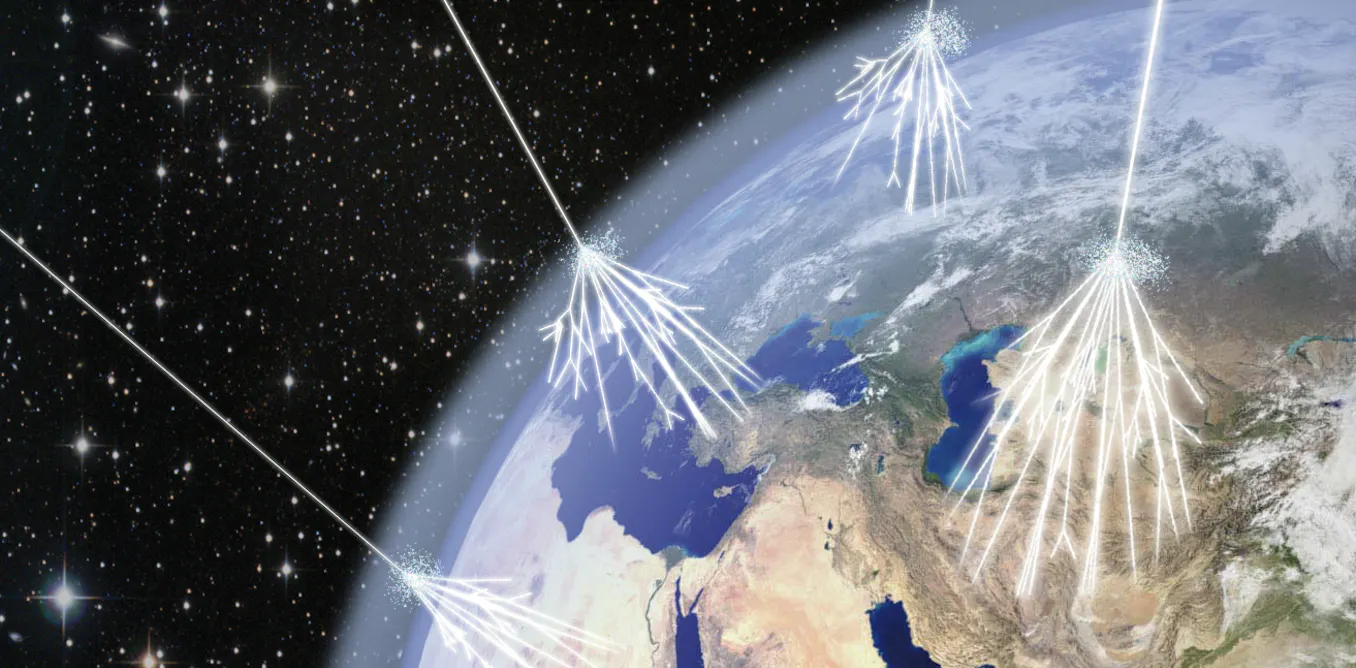
- CERN conducted the first-ever laboratory simulation of cosmic ray particle showers by colliding oxygen atoms with protons, bridging a gap between theory and direct observation.
- Competing computer models predict different outcomes for how cosmic rays break apart atmospheric atoms; the experiment tests which model, if any, accurately describes real collisions.
- The work resolves a century-old gap in cosmic ray science: while outdoor telescope arrays detect cosmic rays, they cannot observe the birth of particle showers directly—only lab recreation can now provide that data.
“No previous experiment has zoomed into the birth of these particle showers, so for several years I collaborated with physicist Lydia Beresford to make the case for reconfiguring our existing instruments at the CERN particle collider to study cosmic rays.”
Jesse Liu, Lead researcher · The Conversation US ↗
Jesse Liu Assistant Professor of Physics, NYU; lead researcherLydia Beresford Physicist, CERN collaboratorCERN Research institution operating the Large Hadron Collider
How it unfolded 1 development · click the chart to see its coverage articlesposts
-
1
Study results published in Physical Review Letters
Jesse Liu and collaborators published their findings from the CERN experiment, which aimed to validate competing computer models that predict how particle showers form when cosmic rays strike atmospheric atoms.
“We used the world's first laboratory collisions of oxygen atoms with protons to simulate cosmic rays in the lab. Our results are now published in Physical Review Letters.”
— Jesse Liu -
 T
T
Cosmic rays have puzzled scientists for over a century, but a new experiment at CERN's Large Hadron Collider is providing the first precise measurements of how these particle showers actually form. A particle physicist explains: https:// theconversation.com/physicists -zoom-into-the-birth-of-cosmic-rainstorms-with-new-cern-study-280890
-
-
background
CERN performs first oxygen-proton collisions to simulate cosmic rays — Scientists at CERN's Large Hadron Collider conducted the world's first laboratory collisions of oxygen atoms with protons, pioneering a new method to study how cosmic ray showers are born in Earth's atmosphere.
Also covered reported alongside — the timeline has no entry for these yet
-
first by The Daily Galaxy, 8d ago · also Yahoo News Canada, The Conversation
1 more headline
- Physicists zoom into the birth of cosmic rainstorms with new CERN study Yahoo News Canada · 8d ago
and 1 smaller piece