ScienceQuiet 10d · day 10
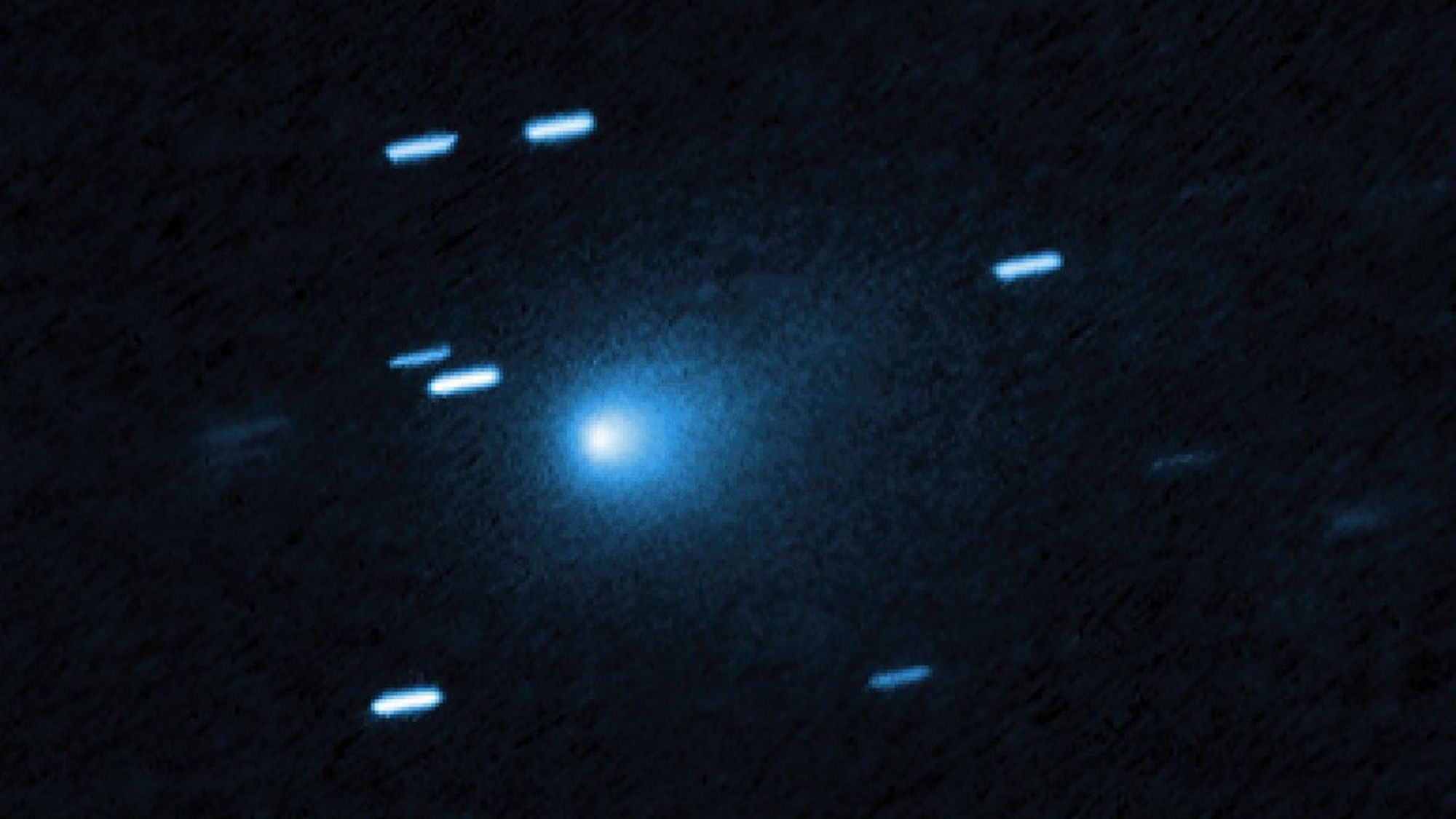
Interstellar comet 3I/ATLAS formed in frigid darkness, nitrogen analysis shows
Astronomers study the comet's ion tail for the first time, revealing it formed far from starlight in extremely cold conditions.
What to know
- Spectroscopic analysis of 3I/ATLAS's ion tail reveals nitrogen concentrations higher than solar system comets, indicating formation in extreme cold far from starlight.
- The WEAVE instrument, operational since 2023, is sensitive enough to identify ions in comet tails—a task that eluded astronomers studying interstellar comet 2I/Borisov in 2019.
- The finding adds to understanding of how exoplanetary systems form by revealing conditions in distant star systems where interstellar objects originate.
“Every one of these objects we study helps us understand a little more about how planets form around other stars.”
Unnamed astronomer, Researcher · Space.com ↗
Lea Ferellec Research fellow at Northumbria University
How it unfolded 1 development · click the chart to see its coverage articlesposts
Sep 15Sep 16Sep 17Sep 18Sep 19Sep 20Sep 21Sep 22now · 6:44 AM ET
-
1
Astronomers identify nitrogen-rich composition in 3I/ATLAS tail using WEAVE spectroscopy
For the first time, researchers analyzed charged particles in the ion tail of interstellar comet 3I/ATLAS using the WEAVE instrument on the William Herschel Telescope. The spectroscopic analysis revealed the comet contains more nitrogen than typical solar system comets, indicating it formed in extremely cold conditions far from its home star.
“Finding that it's so rich in nitrogen tells us it likely formed in extremely cold conditions, far from its home star.”
— Lea Ferellec -
first by Space, 9d ago
-