Scientists identify water-trapping minerals 1,800 miles beneath Earth's surface
Lab experiments reveal iron oxyhydroxides that could lock away vast amounts of water in Earth's lower mantle, reshaping understanding of the planet's water cycle.
What to know
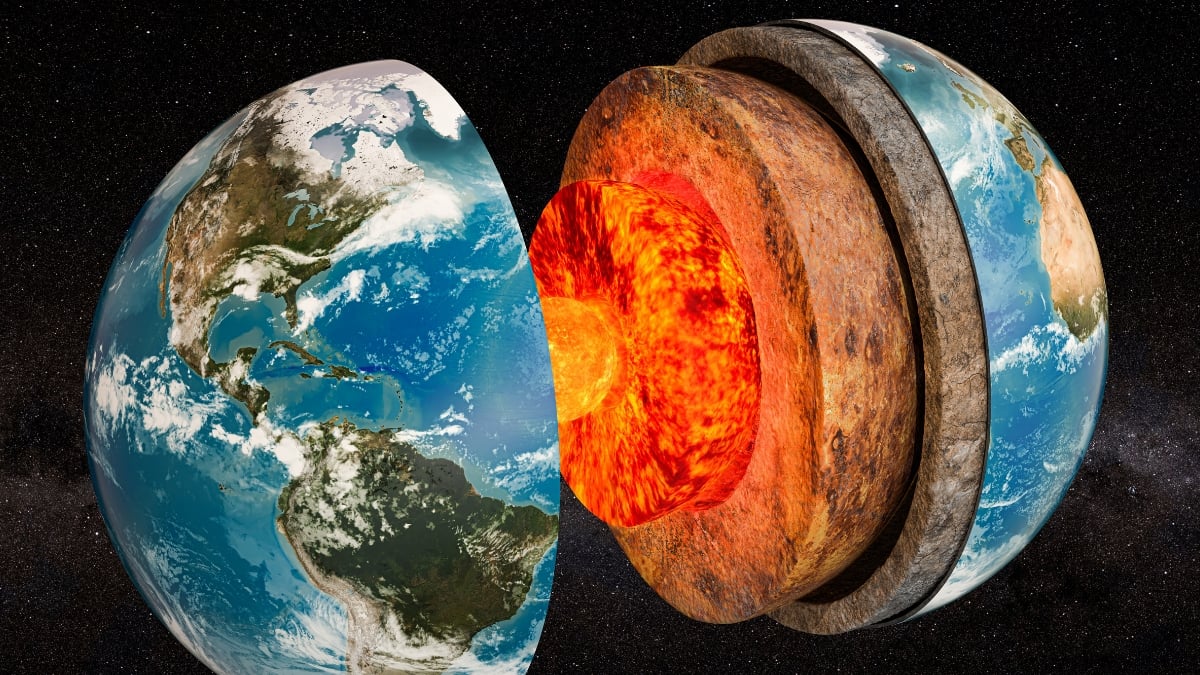
- Scientists identified two previously unknown iron oxyhydroxides that can trap vast amounts of water at extreme mantle temperatures and pressures, 660–2,900 kilometers beneath Earth's surface.
- The minerals remain stable even in water-scarce conditions, suggesting enormous water reserves may be locked into Earth's deep interior near the core-mantle boundary.
- This hidden water plays a crucial role in lubricating mantle circulation, enabling tectonics and the recycling of volatile compounds that regulate long-term climate and planetary habitability.
“It's also a key component in lubricating the super-slow movement of Earth's mantle layer, hydrating those rock layers enough for them to ooze and slide past each other.”
ScienceAlert, Science publication · ScienceAlert ↗
Alfred Wilson Geoscientist, University of Leeds
How it unfolded 1 development · click the chart to see its coverage articlesposts
-
1
Deep-mantle water plays crucial role in planetary habitability and tectonics
Alfred Wilson, geoscientist at the University of Leeds, notes in accompanying commentary that this water is essential for lubricating the slow movement of Earth's mantle layers, enabling tectonic circulation and the recycling of volatile compounds. The water-bearing minerals may release their water as material is dragged upward through mantle circulation, potentially returning water to the surface through mantle plumes and volcanism.
“Liquid water is the key component of Earth's habitability.”
— Alfred Wilson -
background
Water likely concentrated near core-mantle boundary in ultralow velocity zones — The research suggests that water in Earth's deep interior is predominantly located near the boundary between the mantle and liquid outer core, where seismic tests have previously detected mysterious 'ultralow velocity zones.' The water-bearing minerals could have formed during Earth's early history when a primordial molten basal magma ocean cooled and crystallized, then sunk toward the core-mantle boundary due to their density.
-
background
Scientists identify water-bearing minerals in deep-mantle experiments — Researchers using laser-heated diamond anvil cells recreated the extreme pressures and temperatures of Earth's lower mantle and identified two previously unknown iron oxyhydroxides that can lock away water under deep-mantle conditions. The minerals remain stable even when water is extremely scarce, with experiments showing that material containing less than 0.1 percent water was sufficient to stabilize the new phases.