ESA launches Sentinel-3C and Flex satellites for climate monitoring
European Space Agency deploys two Earth observation satellites to track vegetation health and ocean conditions amid climate change.
What to know
- ESA successfully launched Sentinel-3C and Flex satellites on September 14–15 to enhance climate and environmental monitoring for Europe.
- Flex tracks plant photosynthesis fluorescence to measure vegetation stress and ecosystem health; Sentinel-3C monitors oceans, land use, and crop productivity to prevent food crises.
- Social media users question the carbon footprint and ecological cost of satellite launches themselves, even as they serve climate science.
The dispute Whether the ecological and climate costs of launching and eventually deorbiting satellites outweigh their value for climate monitoring. · positions read across 2 posts and comments
The satellites are valuable tools for understanding and addressing climate change.
-
“ESA has just send 2 Satellites to look closer at climate change”
nullexistent@mstdn.social · Mastodon ↗
Satellite launches have significant environmental and climate costs that must be weighed against their monitoring benefits.
-
“These two # satellites may be good things, but their launch - & eventual return to # Earth - aren't without # ecological # cost .”
rmblaber1956@mastodon.social · Mastodon ↗
European Space Agency (ESA) Space agency launching the satellitesSimonetta Cheli Director of Earth Observation Programmes at ESA
How it unfolded 2 developments, newest first · click a bar or a number to jump articlesposts
-
2
ESA describes missions as essential for climate understanding
Simonetta Cheli, director of Earth Observation Programmes at the ESA, characterized the satellite missions as critical tools for addressing the climate crisis.
“essential in helping with the climate change we are experiencing…”
— Simonetta Cheli -
first by Mastodon, 9d ago · also Deutsche Welle EN
-
-
background
Sentinel-3C will track ocean conditions and agricultural productivity — Sentinel-3C, part of the EU's Copernicus Earth observation program, will collect marine data including temperature, wave height, and ocean currents, plus monitor land use and land cover to optimize yields and prevent food crises.
-
background
Flex satellite will monitor plant health via photosynthesis fluorescence — The Flex (Fluorescence Explorer) satellite measures faint fluorescence emitted by plants during photosynthesis to assess vegetation efficiency and the impact of heat waves. It will orbit Earth 14 times daily and revisit locations every 27 days.
-
1
Concerns raised about environmental cost of satellite launches
Social media discussion emerges questioning the climate and ecological impact of the Vega-C rocket launch and eventual satellite reentry, noting trade-offs between climate monitoring benefits and launch emissions.
“What was the # climate & # environmental # impact of the Vega-C # rocket # launch & that of the rocket's # flight into # Space ? These two # satellites may be good things, but their launch - & eventual return to # Earth - aren't without # ecological # cost .”
— rmblaber1956@mastodon.social -
 R
R
https://www. dw.com/en/europe-launches-two- climate-observation-satellites/a-79268705 . What was the # climate & # environmental # impact of the Vega-C # rocket # launch & that of the rocket's # flight into # Space ? These two # satellites may be good things, but their launch - & eventual return to # Earth - aren't without # ecological # cost .
1 more of the top 2 · 2 posts in this stretch
-
 N
N
ESA has just send 2 Satellites to look closer at climate change: - The Flex (Fluorescence Explorer) Monitoring the very faint fluorescence emitted by plants when they carry out photosynthesis. - The Sentinel-3C satellite Monitoring the marine environment, on temperature, wave height and ocean currents, land use and land cover on farm yields. OC…
-
-
background
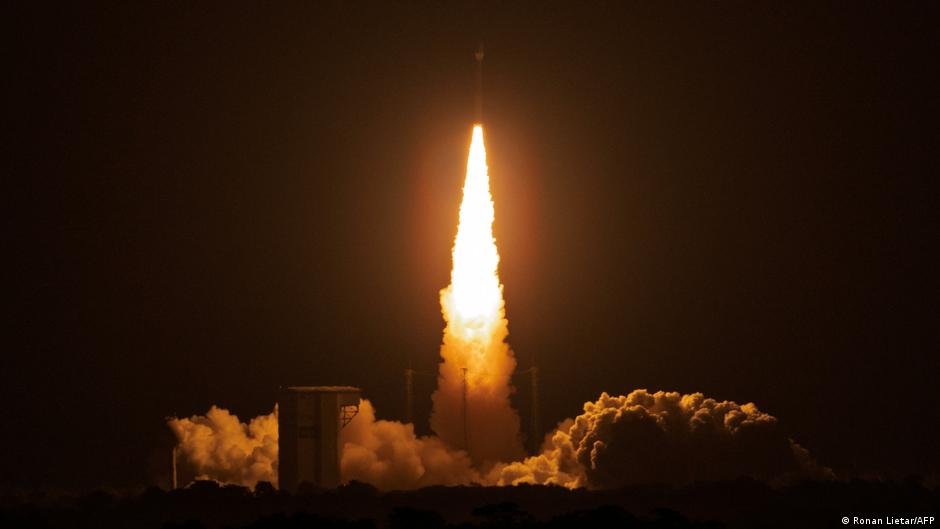
ESA launches Sentinel-3C and Flex satellites on Vega-C rocket — The Vega-C rocket carrying the two satellites lifted off from Kourou space center in French Guiana at 10:21 p.m. Monday (0121 GMT Tuesday), with both spacecraft entering sun-synchronous orbit within two hours.
What people are saying 0 voices from 0 sites · best of 2 · verbatim
- What are the full lifecycle carbon and environmental costs of satellite launches and eventual reentry?
- How do the emissions from Vega-C launches compare to the climate benefits of improved monitoring?