47-year satellite record shows Greenland and Antarctica lost 12.5 trillion tons of ice
Researchers find five-sixths of polar ice loss driven by faster-flowing glaciers, not surface melting, raising sea levels 1.2 inches since 1979.
What to know
- Greenland and Antarctica have lost 11.3–12.5 trillion tons of ice over 47 years, raising global sea levels by 3.1 centimeters; the longest satellite record ever assembled shows this accelerating trend.
- Five-sixths of ice loss comes from faster-flowing glaciers pushed into the ocean by warming waters, not from surface melting—a dynamic process that intensified sharply in the 2010s.
- Ice sheet changes lag global warming by decades, meaning significant additional melting will occur even if emissions stop immediately.
- Coastal flooding risk is acute: each centimeter of sea level rise exposes 2–3 million people to annual inundation.
“There is a clear trend that the ice sheets are losing more mass and it has been increasing from decade to decade, especially if you look at the ice being discharged to the ocean. And that's quite clear that there's a link to climate change.”
Ines Otosaka, Lead study author, ice scientist at Northumbria University · Philadelphia Inquirer ↗
Ines Otosaka Lead study author, ice scientist at Northumbria UniversityEric Rignot Study co-author, ice scientist at UC IrvineAndrew Shepherd Study co-author, ice scientist at Northumbria UniversityEuropean Space Agency Lead organization of international collaboration
How it unfolded 2 developments, newest first · click a bar or a number to jump articlesposts
-
2
Scientists warn ice loss will continue for decades even if global warming stops
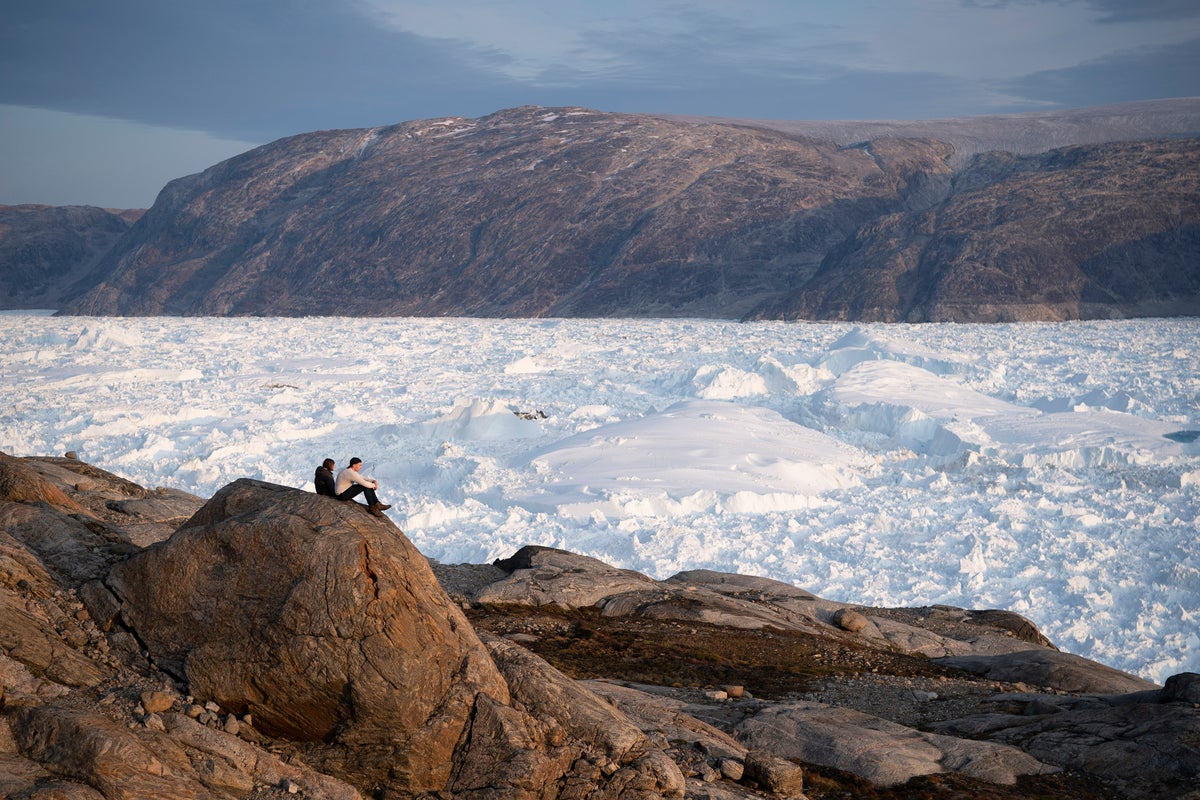
Lead author Ines Otosaka highlights that the Jakobshavn glacier in Greenland is now retreating up to 50 meters per day. Co-author Andrew Shepherd warns that changes in ice sheets lag global warming by decades, meaning continued loss is inevitable even with emissions halted. The accelerating trend has resumed after the 2020–2023 pause.
“That's something to be concerned about as it shows that the changes are tracking decades behind global warming, which means we can expect them to continue for decades more — even if we are able to stop heating the planet.”
— Andrew Shepherd -
C
Since 1979, around 12.5 trillion U.S. tons of ice have disappeared from Greenland and Antarctica. That equals 11.3 trillion metric tons. If that mass were spread evenly across the continental United States, it would cover the country in a layer of ice about 5 feet thick.
2 more of the top 3 · 28 posts in this stretch
-
 F
F
“We are now as a society smart enough to know the future, but not prudent enough to act upon the knowledge.” https://www. nbcnews.com/science/climate-ch ange/satellites-show-earth-lost-12-trillion-tons-ice-greenland-antarctica-rcna598084
-
It WAY WAY WAY cheaper than you would think or what it WILL cost if we don't do it. But like always, people in power only care about staying in power. Why spend taxes on something that no one will notice while they could do something that people see immediatly and brings in votes? Politicians should have a max number of terms, so they have nothing…
-
-
1
Study published12.5 trillion tons of ice lost since 1979, five-sixths from glacier acceleration
The study, published in Scientific Data, concludes that Greenland and Antarctica have lost 11.3–12.5 trillion tons of ice over 47 years, raising global sea levels by 3.1 centimeters. Five-sixths of the loss comes from glaciers flowing faster into the ocean due to warmer waters, not surface melting from hotter air.
“The ice sheets are melting away fast. We are melting the polar regions, sea level is rising worldwide and will exacerbate the vulnerability of coastal regions.”
— Eric Rignot -
first by PBS NewsHour, 7d ago · also Gulf Coast News and Weather, Daily Sabah, The Grand Island Independent, Reuters, Straits Times, Channel News Asia +8
6 more headlines
- 'Threat is crystal clear': Over 12 trillion tons of ice from Greenland, Antarctica lost in 47 years Gulf Coast News and Weather · 7d ago
- Satellite data shows accelerating ice loss in Greenland, Antarctica Daily Sabah · 6d ago
- Satellite data shows major ice losses for Greenland and Antarctica The Grand Island Independent · 5d ago
- Greenland and Antarctica have lost more than 11 trillion tons of ice since 1979 The Brighter Side of News · 3d ago
- Satellites show Earth lost more than 12 trillion tons of ice from Greenland, Antarctica in 47 years KSL News · 3d ago
- We've Lost 12 Trillion Tons of Ice From Earth's Major Ice Sheets in Just 47 Years, Satellites Reveal ScienceAlert · 1d ago
-
first by Times of India, 7d ago · also The Times of India, Yahoo News Canada, Euronews, Yahoo News Australia, ThePrint
5 more headlines
- Greenland and Antarctica have lost 11,309 billion tonnes of ice between 1979 and 2023, raising sea levels by 31.4 mm; glaciers drive 84% of loss, surface melting 16% The Times of India · 7d ago
- 'Earth has lost over 12 trillion tonnes of ice in 47 years' economictimes.com · 6d ago
- Greenland and Antarctica have lost 12 trillion tonnes of ice since 1979 Yahoo News Canada · 6d ago
- 11 trillion tonnes lost since the 1970s: Ice sheet decline mainly due to accelerated glacier movement sonnenseite.com · 3d ago
- Greenland, Antarctica have lost 11.3 trillion tonnes of ice since the 1970s ThePrint · 2d ago
-
-
background
Three-year deceleration in ice loss reflects weather variation, not trend reversal — From 2020 to 2023, the accelerating numbers appeared to pause, but researchers attribute this to short-term weather variations rather than a reversal of long-term climate-driven melting. In Antarctica, record snowfall in East Antarctica masked rapid melting in the West Antarctic Ice Sheet.
-
background
Satellite record of polar ice begins — The longest satellite record assembled begins tracking Greenland and Antarctica ice sheet volumes, incorporating data from 1972 onward for Greenland and 1979 for Antarctica. An international collaboration headed by the European Space Agency, later incorporating NASA satellites, creates the dataset.

What people are saying 21 voices from 3 sites · best of 28 · verbatim
- Sep 20
-
 U
U
https://www. europesays.com/us/1075358/ Satellites show Earth lost more than 12 trillion tons of ice from Greenland, Antarctica in 47 years # cars # classifieds # Environment # homes # jobs # local # News # radio # SaltLake # Science # Sports # television # traffic # UnitedStates # UnitedStates # US # utah # weather
- Sep 18
-
J
Via US ARC - Satellite data shows major ice losses for Greenland and Antarctica - Will DUNHAM, Rosalba O'BRIEN @reuters.com
-
 E
E
https://www. europesays.com/3258532/ Greenland and Antarctica have lost 11.3 trillion tons of ice since 1979, according to satellite data # Antarctica # Conflicts # Danmark # denmark # glaciers # Greenland # science # thawing
-
 P
P
16-Sep-2026 Speeding # glaciers drive half a century of polar ice loss The longest # satellite record ever assembled shows that # Greenland and # Antarctica have lost 11.3 trillion tonnes of ice since the 1970s, raising global sea levels by more than 3 centimeters https://www. eurekalert.org/news-releases/1 143572 # science # climateCatastrophe #…
-
 S
S
"About 12.5 trillion tons (11.3 trillion metric tons) of ice from glaciers in Greenland and Antarctica have melted since 1979, which is enough frozen water to stack ice 5 feet (1.5 meters) deep across the continental United States, according to a major scientific report." https:// apnews.com/article/climate-cha…
-
 R
R
🧊 The IMBIE project has stitched together data from 27 satellite missions (CryoSat, Sentinels, GRACE, Landsat) and 42 independent surveys — the record reaches back to 1972. Greenland and Antarctica have since lost 11.3 trillion tonnes of ice, raising sea level 3.14 cm. 84% went out via faster glaciers. 📅 16 Sep 2026 🔗 https://www…
- Sep 17
-
E
https://www. europesays.com/3256798/ Greenland and Antarctica Lost 11.3 Trillion Tons of Ice # Conflicts # Danmark # denmark # drought # Greenland # IceLoss # PowerGridInvestment # wildfire
-
 F
F
Satellites revealing Earth has lost over 12 trillion tons of ice from Greenland and Antarctica since 1979 is a terrifying reality check. Warm ocean waters eating away at ice sheets accelerate global sea level rise. Why ignore the physical evidence? 🤔 # ClimateCrisis https:// apnews.com/article/climate-cha…
-
 B
B
# ClimateChange # IceMelt # Antarctica # Greenland Satellites show Earth lost more than 12 trillion tons of ice from Greenland, Antarctica in 47 years https:// apnews.com/article/climate-cha nge-ice-sheet-antarctica-greenland-melting-4721be25690317bc8f7bd9699b6f41f1?utm_source=app&utm_medium=iOS_share&utm_campaign=more_org_joinmastodon_app_shareact…
-
A
About 12.5 trillion tons (11.3 trillion tonnes) of ice from glaciers in Greenland and Antarctica have melted since 1979, which is enough frozen water to stack ice 5 feet (1.5 meters) deep across the continental United States, according to a major scientific report. (AP)
-
 D
D
The water will come… https://www. nbcnews.com/science/climate-ch ange/satellites-show-earth-lost-12-trillion-tons-ice-greenland-antarctica-rcna598084
- Sep 16
-
 T
T
And it’s accelerating: “About 12.5 trillion tons (11.3 trillion metric tons) of ice from glaciers in Greenland and Antarctica have melted since 1979, which is enough frozen water to stack ice five feet deep across the continental United States.” @NBCNews https://www. nbcnews.com/science/climate-ch…
-
P
About 12.5 trillion tons of ice from glaciers in Greenland and Antarctica have melted since 1979, which is enough frozen water to stack ice 5 feet deep across the continental United States, according to a major scientific report.
-
Imagine if some ancient virus was thawed out of those ice and is on its way to infect the entire world heh...
-
 L
L
# ClimateCrisis # Greenland # Antarctica "More than 12 trillion tons of ice lost as climate change accelerates polar melt More than 12 trillion tons of ice have been lost from Greenland and Antarctica since 1979, according to a major scientific study tracking decades of changes in the world's two largest ice sheets. The research, published in…
-
We lost the ice? Where did it go? Did it fall off the edge of the Earth? Is the wall melting?!?!
-
Well, I would say our inability to forcefully fight Climate Change is driving the loss.
-
 V
V
From AP: More than 12 trillion tons of ice lost in climate change's big melt https://www. youtube.com/shorts/JJNjiIRot3w ?utm_source=dlvr.it&utm_medium=mastodon * VSN-GDPM c1996 # news # SupportIndependentMedia # vsn
-
P
Ice melt and sea-level rise are accelerating due to #climatechange and impacts of flooding are worsening.
-
 T
T
REPORT: “About 12.5 trillion tons (11.3 trillion metric tons) of ice from glaciers in Greenland and Antarctica have melted since 1979, which is enough frozen water to stack ice 5 feet (1.5 meters) deep across the continental US” # ClimateAction https:// apnews.com/article/climate-cha…
-
 S
S
A comprehensive synthesis of satellite data reveals that the Greenland and Antarctic ice sheets lost a combined 11,309 billion metric tons of ice between 1979 and 2023. # EarthScience # PhysicalGeography # Climatology # Glaciology # Oceanography # sflorg https://www. sflorg.com/2026/09/es09162601. html