Study warns England's engineered Fens may not survive climate change
New academic risk analysis and an Environment Agency review find compounding flood, drought and heat risks threaten the low-lying Fens' long-term survival.
What to know
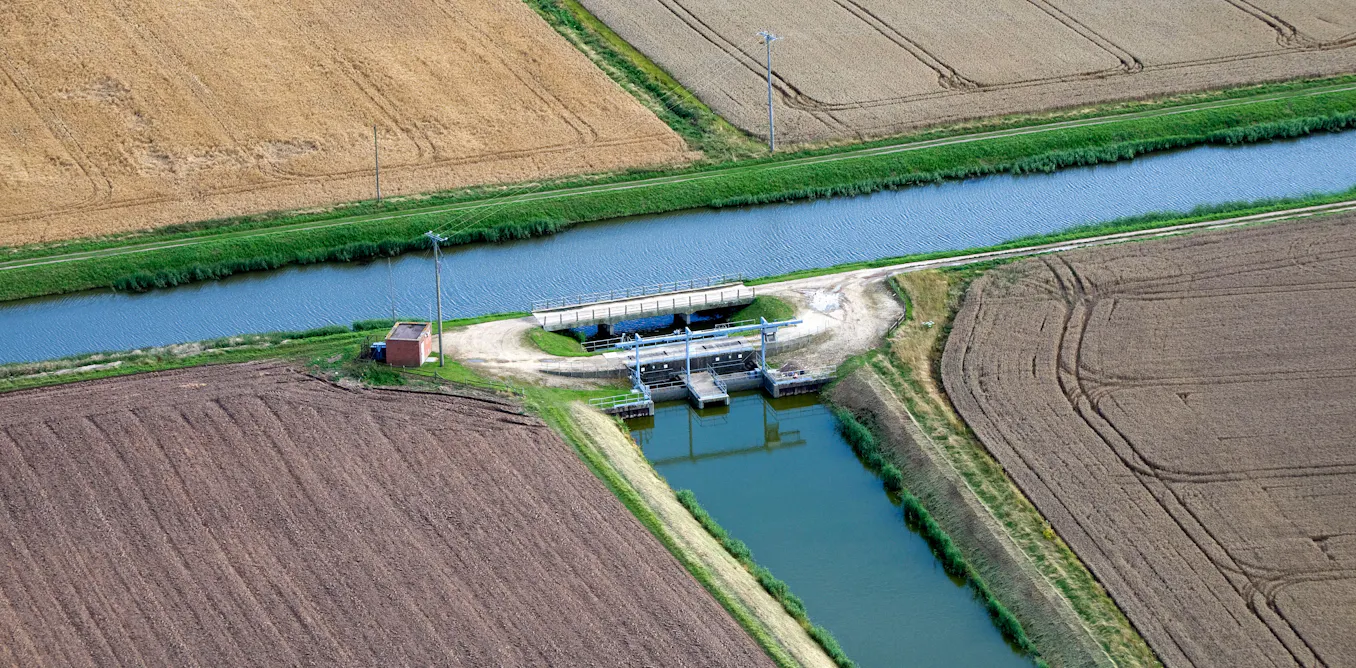
- The Fens produce a third of the UK's vegetables but lie mostly below sea level or the highest spring tides, kept dry only by pumps, embankments and drainage.
- A new integrated risk assessment finds flooding, drought, heat and biodiversity loss will increasingly compound each other as the climate warms.
- Under a 4°C warming scenario, annual flood damages could rise from £16 million today to £250 million by 2100, with parts of the region potentially uninhabitable without major investment.
- Sea-level rise is described as an existential, centuries-long risk that will continue even if global temperatures stabilise, requiring adaptation planning to start now.
Environment Agency UK flood risk management authorityThe Conversation (article authors) Climate risk researchers
How it unfolded 3 developments, newest first · click a bar or a number to jump articlesposts
-
3
Article circulates further on social platforms
The piece continues to be shared and reposted across Mastodon and bridged Bluesky accounts under climate-change hashtags.
-
B
🌧️ Floods. ☀️ Drought. 🌊 Rising seas. The Fens produce a third of England’s vegetables – but the engineered landscape that makes that possible faces climate threats from every direction. New research asks how Britain’s most artificial landscape can adapt to survive. @eastangliabylines.co.uk
2 more of the top 3 · 3 posts in this stretch
-
theconversation.com/britains-mos... #climatechange Britain’s most artificial land...
-
E
The Fens produce a third of England’s vegetables, write Katie Jenkins and Robert James Nicholls. But climate change is putting this vital landscape under growing pressure. Flooding, drought, heat and biodiversity loss are increasingly overlapping risks. #ClimateChange #Fens
-
-
2
Phys.org republishes the Fens climate risk analysis
Phys.org carries the same findings, extending reach of the warning about the Fens' vulnerability to compounding climate hazards.
-
1
The Conversation warns Fens landscape may not survive climate change
Article synthesises the research, stating that under a 4°C warming scenario by 2100 annual flood damages could rise from £16 million to £250 million and parts of the region could become uninhabitable without major infrastructure investment.
“This is an existential risk for the low-lying Fens, meaning that more radical adaptation approaches will be needed in the long term.”
— The Conversation (article authors) -
1 outlet first by Mastodon, 6d ago · read ↗
-
 S
S
# food # Britain # UK The Fens face several climate threats that reinforce one another. Rising sea levels, heavier downpours, hotter summers, longer droughts and biodiversity loss are all expected to intensify over the coming decades. These are all serious challenges, and in the Fens they will play out within one tightly interconnected system…
-
-
background
Researchers publish integrated climate risk analysis of the Fens — An academic study examines flood risk from rivers, surface water and the sea alongside drought, water scarcity, heat, biodiversity loss and agricultural productivity, finding these hazards increasingly overlap as the climate warms.
-
background
Environment Agency publishes Fens 2100+ flood infrastructure review — The programme catalogues around 17,000 flood risk management assets in the Fens, including 318 pumping stations, embankments and tidal defences, estimated to provide £58.8 billion in benefits.