Paradromics' wireless brain implant lets paralyzed woman speak via thought
A 68-year-old Michigan patient with primary lateral sclerosis used the Connexus device to hold real-time conversations and phone calls with family.
What to know
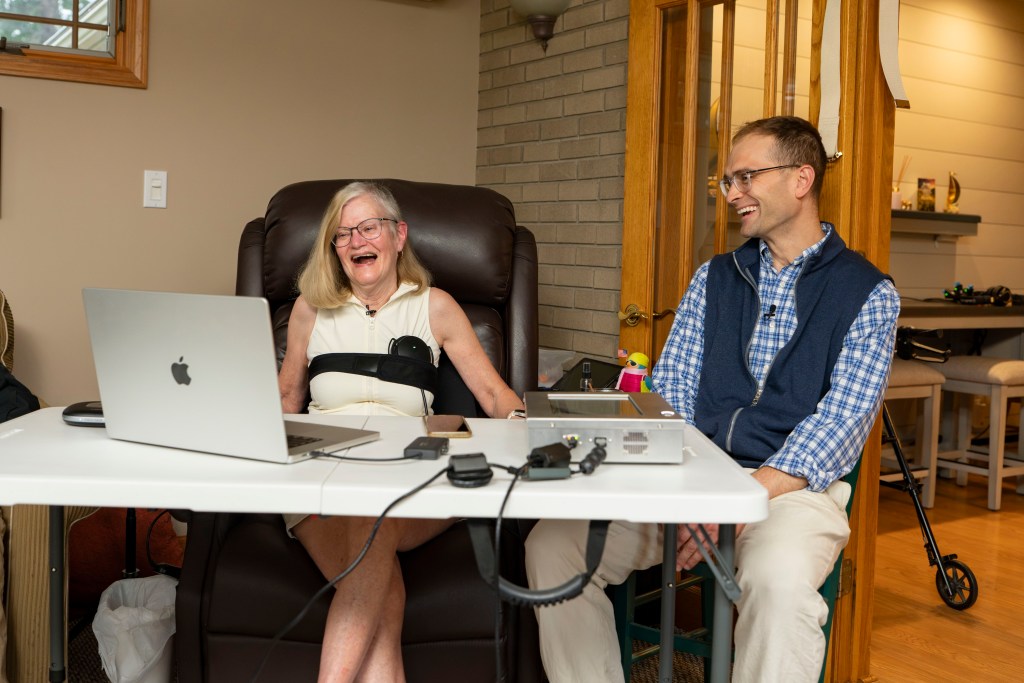
- A 68-year-old woman with primary lateral sclerosis successfully used Paradromics' wireless Connexus brain implant to hold real-time conversations and phone calls with family using a computer-generated voice.
- The implant detected her brain activity whether she attempted to speak, imagined speaking, or simply listened, translating signals via AI into intelligible words without requiring a physical cable connection.
- The wireless design represents a major practical advance for brain-computer interfaces; Paradromics plans to expand trials to 10 patients nationwide with conditions including stroke and ALS.
“We can see the representation of words and phonemes whether she tries to say it, she imagines it or even if she just listens to it.”
Matt Angle, Paradromics CEO · Entrepreneur / New York Times ↗ · Sep 16
Matt Angle CEO and founder of ParadromicsDr. William Marks Chief clinical officer, ParadromicsDr. Edward Chang Chairman of neurological surgery, UCSFParadromics Neurotechnology startup
How it unfolded 2 developments, newest first · click a bar or a number to jump articlesposts
-
2
Paradromics plans nationwide trial with 10 additional patients
The company announced plans to expand its clinical trial to 10 patients nationwide, enrolling people with conditions including stroke and amyotrophic lateral sclerosis that cause paralysis and speech difficulties.
“Okay, I have a lot to say.”
— Unnamed Michigan patient, First Connexus implant recipient · source -
1
UCSF neurologist praises breakthrough as step toward clinical reality
Dr. Edward Chang, chairman of neurological surgery at UCSF, lauded Paradromics' work on brain-computer interfaces for restoring speech to people with severe paralysis, though he was not involved in the trial.
“Their demonstration gets us one step closer to clinical reality for restoring speech communication for people with severe paralysis.”
— Dr. Edward Chang -
background
Patient demonstrates wireless speech synthesis using brain signals — Paradromics announced the patient successfully held real-time conversations via a computer-generated voice, including phone calls with her grandchildren. The system translated her brain activity—detected whether she attempted speech, imagined it, or merely listened—without requiring a physical cord to a computer.
-
background
Paradromics implants Connexus device in first trial patient — Doctors at University of Michigan Health implanted the Connexus brain-computer interface, containing over 400 electrodes, in a 68-year-old woman with primary lateral sclerosis who had lost most of her ability to speak.