Feast of San Gennaro turns 100, marking Italian-American assimilation
New York's Little Italy festival celebrates a century of blending medieval Neapolitan traditions with American immigrant experience.
What to know
- The Feast of San Gennaro reaches its 100th anniversary in 2026, having been founded in 1926 by Italian-American parishioners seeking to honor St. Januarius, a 4th-century martyr central to Neapolitan identity.
- The festival embodies how Italian immigrants who arrived between 1881 and 1920 transformed ancient religious traditions from southern Italy into American cultural practice, overcoming initial discrimination from Irish Catholics and Protestants who viewed their practices as insufficiently "Christian."
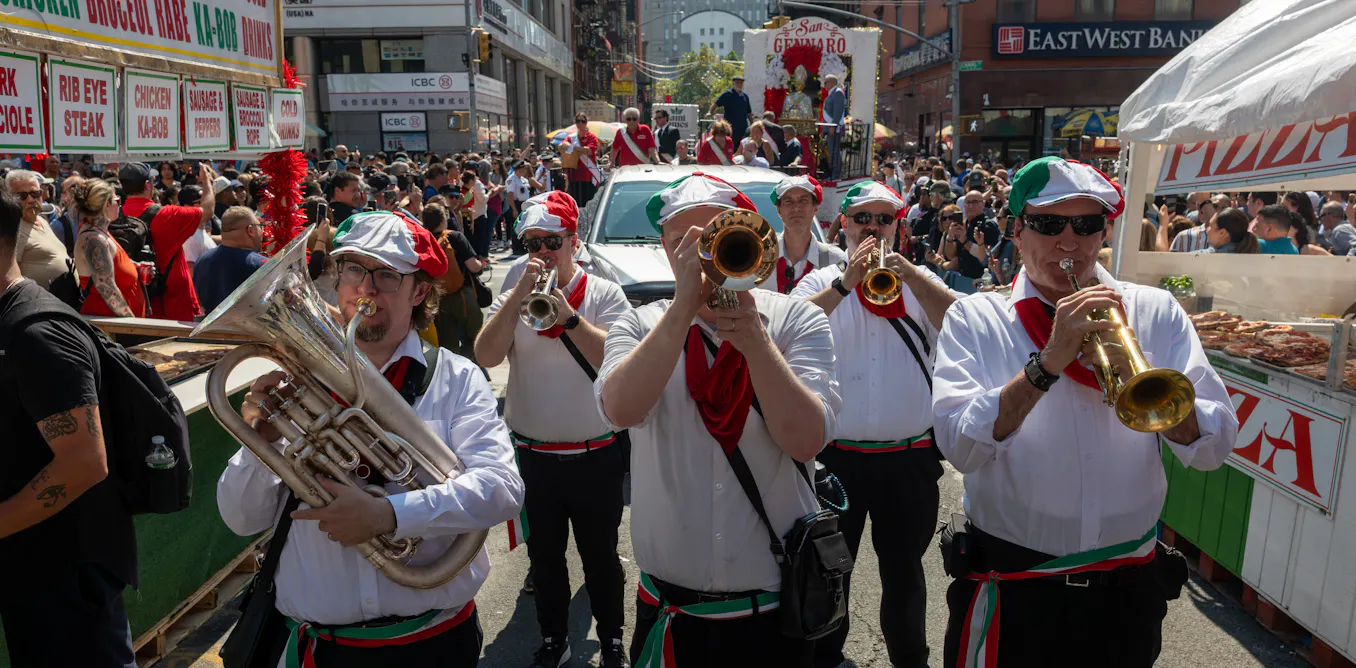
- Medieval traditions—including veneration since 1389 of vials believed to contain the saint's blood and centuries-old Neapolitan feast customs—coexist in modern New York with Americanized commercialism, from Frank Sinatra impersonators to vendors selling Godfather merchandise.
“These "huddled masses" faced all sorts of difficulties: overcrowded tenements, trouble finding work, racial discrimination and suspicion of their southern Italian Catholic practices.”
Clare Whitton, PhD Candidate in Medieval History, University of Oxford · The Conversation US ↗
Alexander Tisi Founder of San Gennaro FeastSt. Januarius (San Gennaro) Subject of venerationClare Whitton Medieval historian and analyst
How it unfolded 1 development · click the chart to see its coverage articlesposts
-
1
Medieval historian traces festival's roots to 1,700-year-old traditions
Clare Whitton, a PhD candidate in Medieval History at Oxford, publishes analysis showing how the Feast of San Gennaro reflects centuries-old Neapolitan religious practices, including veneration since 1389 of vials believed to contain St. Januarius's blood that liquefy on his feast day—a phenomenon southern Italians interpreted as a sign of the saint's protection or warning of disaster.
“If anything, the fact that centuries-old rituals coexist with sweet Italian sausages and big, floppy pizza slices speaks to a lengthy, strenuous and beautiful process of cultural assimilation.”
— Clare Whitton -
 T
T
Come for the sausage and peppers, stay for the 700 years of history 🇮🇹 New York’s Feast of San Gennaro turns 100 this year. Its story, how ancient traditions became Little Italy street parties, is also the story of how Italian immigrants became Italian Americans. https:// theconversation.com/the-story-…
-
-
background
Feast of San Gennaro founded by parishioners — Alexander Tisi leads a group from the Church of the Most Precious Blood in organizing a tribute to St. Januarius (San Gennaro), one of the most popular holy figures from southern Italy. The festival becomes the largest and longest-running Italian festival in the United States.
-
background
Church of the Most Precious Blood built in Little Italy — Italian communities grow large enough to fund their own Italian-speaking parish on Baxter Street, enabling them to maintain religious traditions from southern Italy.
Also covered reported alongside — the timeline has no entry for these yet
-
first by Phys.org, 4d ago · also NY Post, The Conversation US