Yale scientists convert CO2 into jet fuel using plasma and electricity
Researchers develop a plasma-electrocatalysis system that transforms carbon dioxide into valuable chemicals including sustainable aviation fuel precursors.
What to know
- Yale researchers developed a plasma-electrocatalysis system that converts CO2 into multi-carbon chemicals including sustainable aviation fuel precursors and methanol.
- The breakthrough uses a three-phase interface design to prevent water from neutralizing reactive plasma species, overcoming a longstanding technical challenge.
- The method achieves record production rates for three- and four-carbon alcohols usable in fuels, pharmaceuticals, and industrial chemicals.
- Real-world viability depends on whether the electricity powering the system comes from renewable sources rather than fossil fuel-based utilities.
The dispute Whether the plasma-electrocatalysis process represents a meaningful advance over existing CO2 conversion approaches or merely an incremental improvement facing the same fundamental scalability challenges. · positions read across 2 posts and comments
The technology is valuable but depends critically on renewable energy sources to be environmentally and economically sensible.
-
“If the electricity utilized is gotten from renewable sources and not say utilities plugged into gas or Coal… Then it makes sense. Otherwise, whether financially or environmentally, it's not pragmatic or practical.”
OffSidesByALot · Reddit ↗
Converting electricity to liquid fuel offers real advantages over batteries due to energy density, but CO2 dilution from air remains a fundamental challenge.
-
“A process that turns current into liquid fuel is very valuable. Liquid fuel is more energy dense than batteries, for now. Though, this is a better mousetrap, not a new one. The trouble is usually condensing the CO2 enough.”
upvotechemistry · Reddit ↗
Lea Winter Assistant professor, Yale UniversityYale University Research institution
How it unfolded 1 development · click the chart to see its coverage postscomments
-
1
System achieves record production rates for multi-carbon alcohols
The plasma-electrocatalysis method achieved some of the highest production rates yet for valuable three- and four-carbon alcohols that can be used for liquid fuels, pharmaceuticals, and other commercial products. The team plans to next optimize the catalyst and conduct further experiments.
“The sorts of multi-carbon products we generate with this approach are really useful for a lot of chemical industries.”
— Lea Winter, Yale assistant professor · source -
A process that turns current into liquid fuel is very valuable. Liquid fuel is more energy dense than batteries, for now. If it makes current, you could make fuel, including PV. Though, this is a better mousetrap, not a new one. The trouble is usually condensing the CO2 enough. Even in the "we all die of global warming" scenario, that is only like…
1 more of the top 2 · 2 posts in this stretch
-
If the electricity utilized is gotten from renewable sources and not say utilities plugged into gas or Coal… Then it makes sense. Otherwise, whether financially or environmentally, it’s not pragmatic or practical.
-
-
background
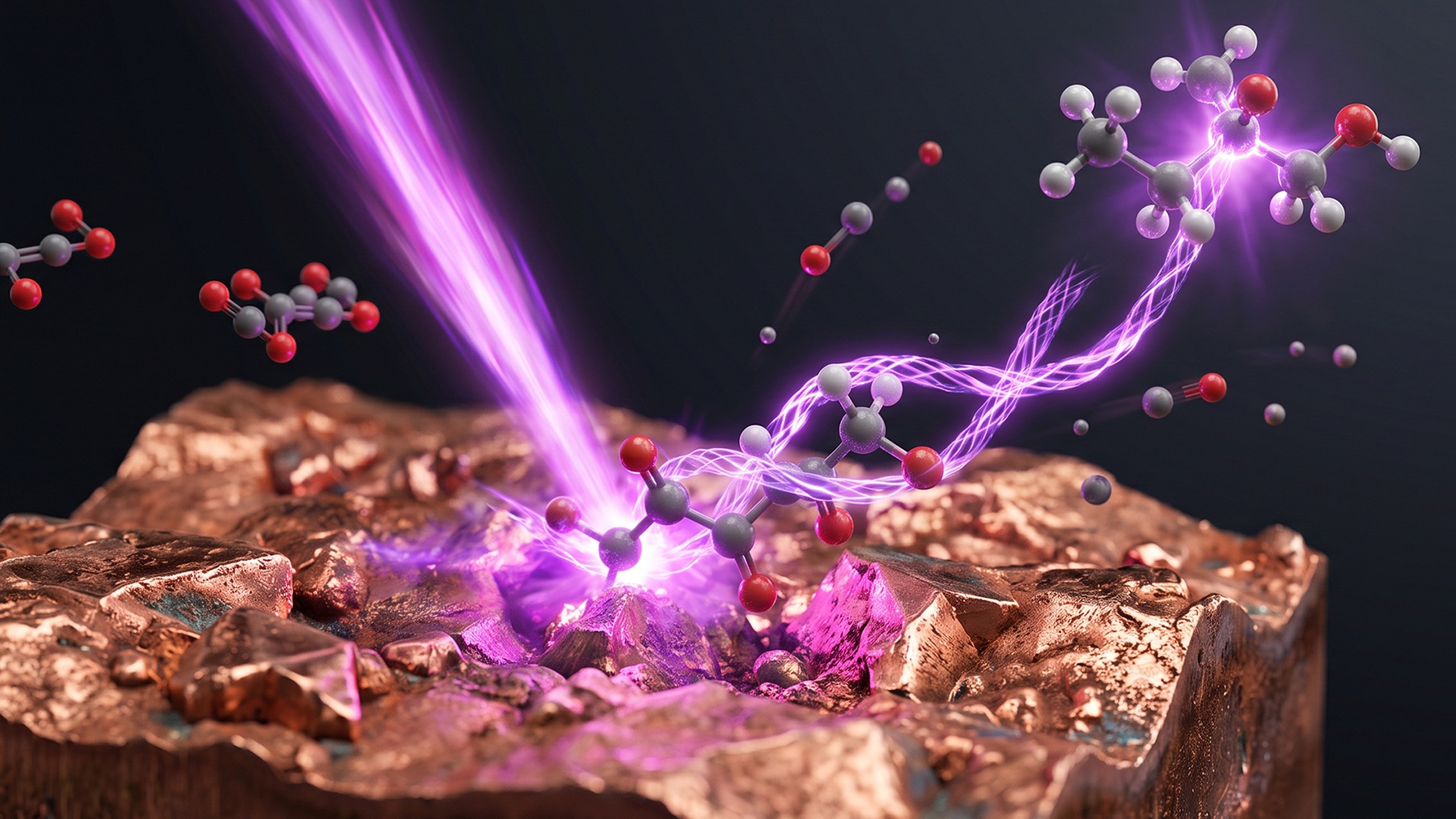
Team overcomes water interface challenge with three-phase design — The researchers solved a critical problem where water would neutralize reactive plasma species before they reached the catalyst. They developed a three-phase interface using a gas diffusion electrode—a membrane made of non-stick cookware material with a thin copper coating—that allows plasma particles to pass through while keeping them separated from water, enabling the chemical reactions to proceed.
-
background
Yale team develops plasma-electrocatalysis system for CO2 conversion — Scientists at Yale University, led by Lea Winter, PhD, an assistant professor of chemical and environmental engineering, created a system coupling plasma with electrocatalysis to transform carbon dioxide into valuable chemicals. The approach produces methanol, butane, and precursor chemicals for sustainable aviation fuel by using highly energetic electrons in plasma to excite CO2 molecules and weaken their bonds before they reach the electrocatalyst.
What people are saying 0 voices from 0 sites · best of 2 · verbatim
- Can this process be scaled economically to produce jet fuel at commercial quantities?
- How does the energy input required compare to the energy output of the resulting fuel?