AI coding agents hit reality: 'dubious code' and disappointed ROI
Developer advocates argue agents can build software faster if given better environments, but early experiments with autonomous coding have underperformed expectations.
What to know
- AI coding agents have underperformed expectations in practice—organizations that deployed agents to codebases in 2026 generated poor-quality code with weak business returns despite early hype.
- The bottleneck is not AI model capability but the development environment: agents need cloud environments that let them test code realistically (catching race conditions, not just surface bugs) before deployment.
- As automation improves, human engineers will shift from writing code to conceiving ideas—loop configuration will become cheap infrastructure, not a high-value skill.
The dispute Whether agent unreliability stems from insufficient model capability (requiring new generations of AI) or from incomplete development infrastructure and oversight systems (fixable within current tools). · positions read across 19 posts and comments
Current agents are too unreliable and inconsistent; they need fundamentally more capable models to work reliably.
-
“I don't see how this could work, right now, since every failing I've had was just generic stupidity of the AI, which is brilliant one minute, and a complete idiot the next.”
nomel · Hacker News ↗
Infrastructure and governance processes—not just better models—are the real missing pieces; existing practices like CAPA, code review, and incident management can be adapted for agents.
-
“We just need to adapt these designs the best we can to AIs. AI have a lot of advantages over humans like speed, controllability, good defaults (e.g. Claude will write helpful comments unprompted which is better than most engineers).”
2001zhaozhao · Hacker News ↗
Detail.dev Software development platform / author
How it unfolded 1 development · click the chart to see its coverage articlespostscomments
-
1
Author predicts human engineers will focus on idea generation, not loop setup
Counter to the prevailing view that engineers will spend time configuring agent loops and writing goal prompts, the author argues that future engineering value lies in conceiving novel ideas and high-upside problems. Loop configuration will eventually become cheap and easy once tooling matures, making idea generation the scarce resource.
“Rather, the most valuable engineering work is going to be having good ideas. The important ideas are still coming from outside the software factory.”
— Detail.dev -
In the end, we already have processes that work for humans and we know the types of testing, verification and review that makes a codebase grow healthily. We just need to adapt these designs the best we can to AIs.AI have a lot of advantages over humans like speed, controllability, good defaults (e.g. Claude will write helpful comments unprompted…
2 more of the top 3 · 19 posts in this stretch
-
 H
H
Towards Self-Driving Codebases L: https:// blog.detail.dev/posts/towards- self-driving-codebases/ C: https:// news.ycombinator.com/item?id=4 9743527 posted on 2026.09.17 at 12:58:31 (c=0, p=3)
-
Every place I've worked at has positioned their SEV review process as 'blameless' with respect to the engineers who created the code, processes, etc that led to the incident. On paper, it's not about pointing fingers (though I've found this to be somewhat idealistic), but about finding faults in the processes that let bad code slip through the…
-
-
background
Author argues development environment, not model capability, is bottleneck — The post contends that agents are capable enough to handle more work if operating environments improve. The limiting factor is not the models or harnesses themselves, but cloud development environments that allow agents to exercise code in realistic ways before deployment—catching bugs that agents cannot currently perceive, such as race conditions.
-
background
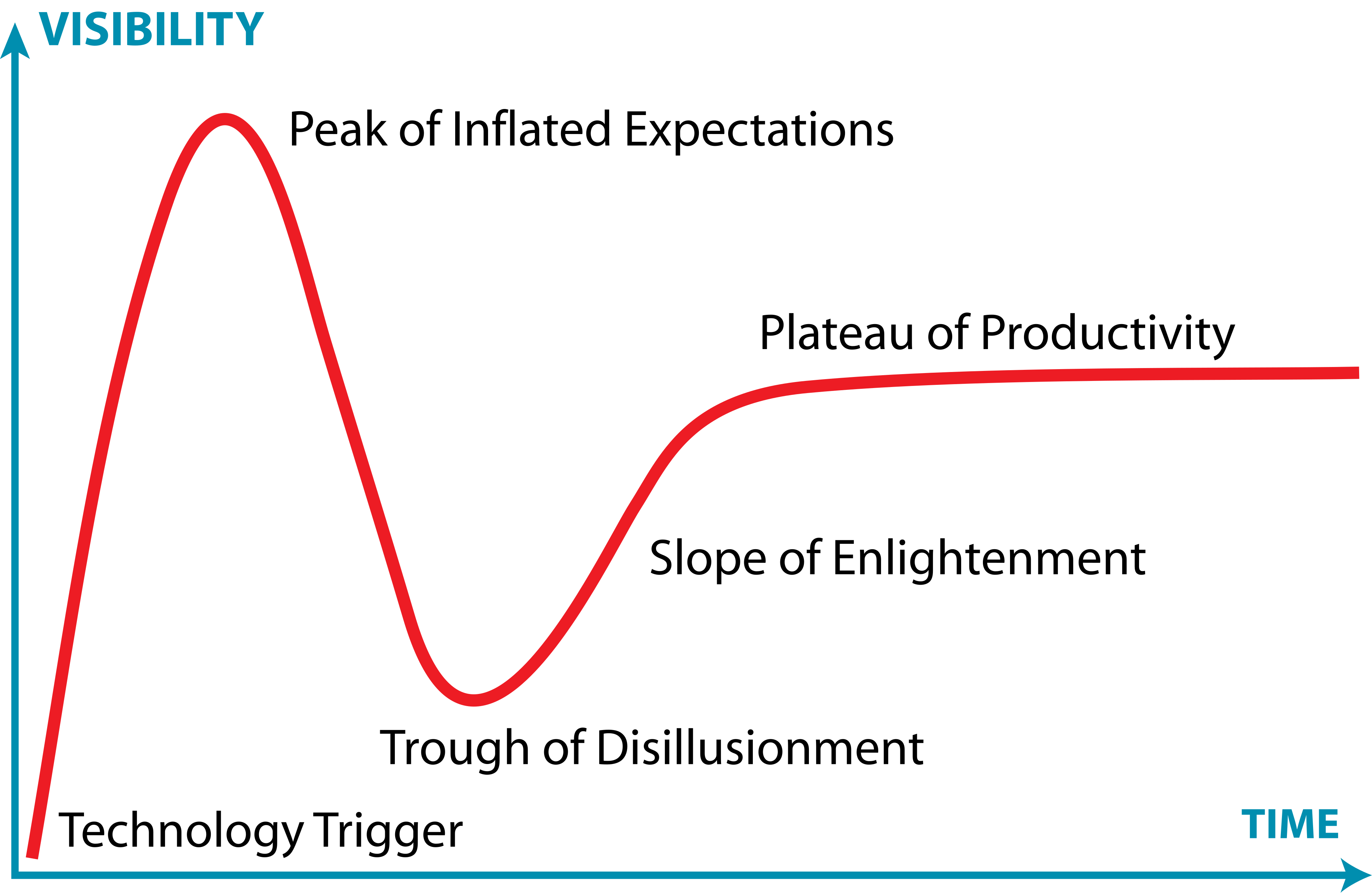
Author positions agents in 'trough of disillusionment' phase — The post frames the current state of AI coding agents within Gartner's hype cycle, arguing the field is in the trough of disillusionment—a phase where utopian visions from months earlier are proving unworkable in practice, but where the next breakthrough will come from establishing best practices and building necessary tooling.
-
background
Detail.dev publishes post on shortcomings of autonomous code agents — A blog post titled "Towards Self-Driving Codebases" argues that despite initial enthusiasm, autonomous agents have largely disappointed when tasked with real software work. The author notes that engineering organizations spent significant effort deploying agents and adversarial loops in the first half of 2026, but results were poor—generating 'mountains of dubious code' without meaningful improvements in software quality or business outcomes.
What people are saying 16 voices from 1 site · best of 19 · verbatim
- Sep 18
-
> Put another way: Detail’s secret plan is to create a product that bootstraps its own work, and then use that work to help engineering teams know what investments to make and how well they’re working. Sorry, guys, I still don't understand what are you selling. Prompts? Design manual for building testable system? In which way agent-friendly dev…
- Sep 17
-
the history of assembly lines would be instructive. I don't think we have achieved a fully automated assembly line yet, but certainly they are much more automated than they were when Ford set up the first one.
-
I don't see how this could work, right now, since every failing I've had was just generic stupidity of the AI, which is brilliant one minute, and a complete idiot the next.I think correction actions still require the ability to execute them, which (in all the cases I've had) would require more capable models.Long term, I think you're probably…
-
That has been a part of post mortems everywhere I work, there was never a name for it though. Just someone would say: “how do we prevent this in the future?” which usually spawns a few tasks that the person who caused the issue or others will pick up.
-
Is our fate to become more and more product designers and less and less software engineers?I feel that way.But I'm now able to actually create and release things. Before, I used to obsess over code architecture, optimizing every single line. I could and can craft beautiful code. And then I always burned out and lost interest (gemini). Now I don't…
-
Kind of feels like we're in a similar place with AI programming as we are with self driving vehicles. Good enough for the typical case, maybe even better than most humans, but bad when dealing with novel situations or situations which require a really cohesive model of the system (code, business requirements, physical world, whatever).
-
Sorry to get hung up on what is probably just flavor text, but the first sentence.. "Agents can oneshot games that are actually fun", uhhh such as?Would love to be proven wrong here, feels like I've just seen the same basic one-level kart racer in like 3 model announcements. Not even sure if they were one-shotted, I certainly would not describe…
-
The more important question - how would you actually get LLM agents to follow the instructions in your ever-growing CAPA reliably?It’s all very well having a list of actions to avoid but that doesn’t help if your agents won’t reliably follow it.
-
It's a losing proposition. Self-driving cars go from point A to point B, and it's really easy to specify point B. My experience so far using agentic AI 24/7 for almost a year has been the AI can drive almost anywhere, so the whole problem is specifying where to drive. This doesn't get solved with faster, better AI, because all that will do is…
-
If you have a logo in the top left corner of your company blog the logo should route to the home page so I can see what product you're actually building.
-
Makes sense to me - I see it going down two separate routes in parallel:One is to take the human out the OODA loop for cyber defense. Servlet libs (for example) are going to become fluid, self-modifying things w/ contracts that operate much differenlty from how they do today. The engineering practice around these things will need to change.The…
-
> Should it be fully agentic? Should there be human intervention here to approve the CAPA? Open questions to be answered.I think a point we are grappling with is, what necessitates human intervention, like philosophically. Is it accountability? I was thinking about this in terms of code review and it's not like we would fire someone if they broke…
-
This would be more convincing if there were a simple stat on the home page of the dispositions of the reported bugs (fixed/no-repro/won't-fix).As a random sample of one, I looked at one of the bugs this reported on Tailscale (first thing on the homepage) [0], and the pull request ends with "Apologies for the lack of due diligence here. I'll go…
-
Author here, hello! Happy to expand on how we're thinking about this if any of it is unclear.We wrote this post as part of a launch, which you can check out here:
-
> It’s actually fine if agents make a lot of boneheaded mistakes. What’s not ok is if they keep making the same mistakes. I worked in life sciences for a bit. There is a process in clinical trials called corrective and preventative actions (CAPA). You'll also find this in other areas where failure tolerance is low (e.g. aircraft).It's simple: when…
-
My bet is that we'll see a second layer of harness emerge, as self-driving codebases become the target. There will be an application facing harness, orthogonal to the agent facing harness. The app harness will represent the software factory that is emergent for the specific application being developed.Anyway, here's mine, still wip: