Berkeley scientists burn modern scrolls to decode 2,000-year-old Herculaneum texts
Researchers created and carbonized replica papyrus to develop methods for reading ancient scrolls buried by Vesuvius.
What to know
- UC Berkeley researchers burned modern replica papyrus scrolls to develop techniques for reading 2,000-year-old Herculaneum texts buried by Vesuvius.
- X-ray tomography of the burned replicas revealed that leaded ink significantly improves readability of carbonized ancient manuscripts.
- The team created synthetic scroll models to develop text-detection algorithms for recovering lost text from the fragile original scrolls.
Douglas Seiler UC Berkeley researcherUC Berkeley Research institution
How it unfolded 3 developments, newest first · click a bar or a number to jump articlesposts
-
3
Researchers develop text-detection algorithms from synthetic scroll models
Using the carbonized replica scrolls, researchers created synthetic models and adapted advanced software to achieve layer separation and develop algorithms for detecting and recovering text from the actual Herculaneum scrolls.
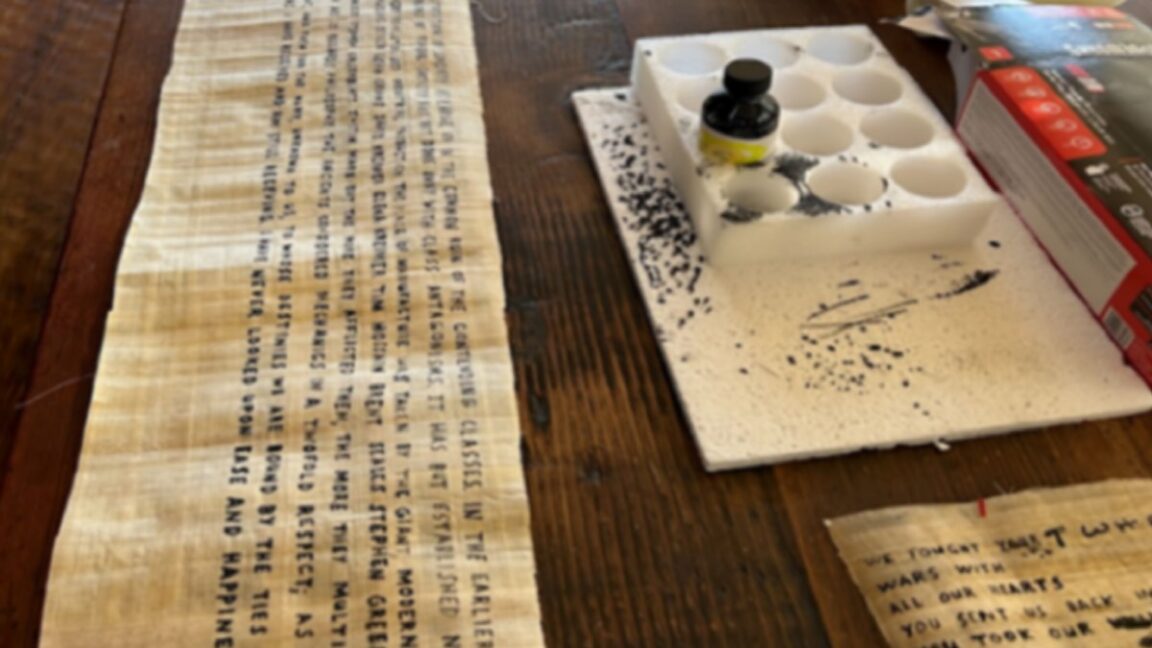
“Douglas Seiler painstakingly sourced papyrus and reed pens from Egypt and traditional lampblack ink from Japan, then paid some high school students to inscribe the papyrus with lines from Star Wars and the Bible and a quote from the '60s sci-fi TV show The Outer Limits.”
— Phys.org · source -
background
Douglas Seiler sources materials and directs creation of experimental scrolls — Douglas Seiler sourced papyrus and reed pens from Egypt and traditional lampblack ink from Japan, then had high school students inscribe the replicas with lines from Star Wars, the Bible, and The Outer Limits before burning them for analysis.
-
2
X-ray analysis reveals leaded ink improves readability of burned scrolls
X-ray tomography of the burned replica scrolls demonstrated that leaded ink significantly improves the ability to read carbonized text, providing a crucial insight for recovering ancient manuscripts.
“The innovative use of leaded ink was highlighted through X-ray scans, providing insights into fragile scrolls from Herculaneum.”
— Times of India -
first by The Times of India, 6d ago · also Times of India
1 more headline
- Scientists burn modern papyrus to help read 2,000-year-old Vesuvius scrolls Times of India · 6d ago
-
- 1 day quiet
-
1
UC Berkeley researchers burn replica papyrus scrolls to study carbonization
Scientists at the University of California, Berkeley created modern papyrus scrolls inscribed with text and burned them to better understand how to read ancient carbonized documents from Herculaneum.
-
first by NewsBytes, 8d ago · also Archaeology News Online Magazine, EurekAlert!, Discover Magazine
4 more headlines
- Scientists burn their own scrolls to help read 2,000-year-old Herculaneum papyri Archaeology News Online Magazine · 8d ago
- To Read 2,000-Year-Old Burned Papyrus Scrolls, Scientists Make And Burn Their Own eurasiareview.com · 8d ago
- Can "burning scrolls" help read a 2,000-year-old secret? Scientists try an unusual experiment Moneycontrol.com · 8d ago
- A Retired Inventor Burned Homemade Scrolls to Help Read 2,000-Year-Old Texts Buried by Mount Vesuvius Discover Magazine · 8d ago
-
first by phys.org, 6d ago · also CP24, University of California, Berkeley
1 more headline
-
J
Scientists made their own model charred papyri to develop new method for deciphering ancient Herculaneum scrolls. Even a handheld XRF scanner is sufficient to determine most promising scrolls for further analysis by detecting if there is lead-based ink.
-