ScienceQuiet 2d · day 4
Birds sing in regional dialects, with accents shaped by learning
Research shows bird species develop geographical variations in song, learned from parents and neighbors rather than innate.
What to know
- Birds of the same species develop distinct regional dialects in their songs, learned from parents and neighbors rather than innate.
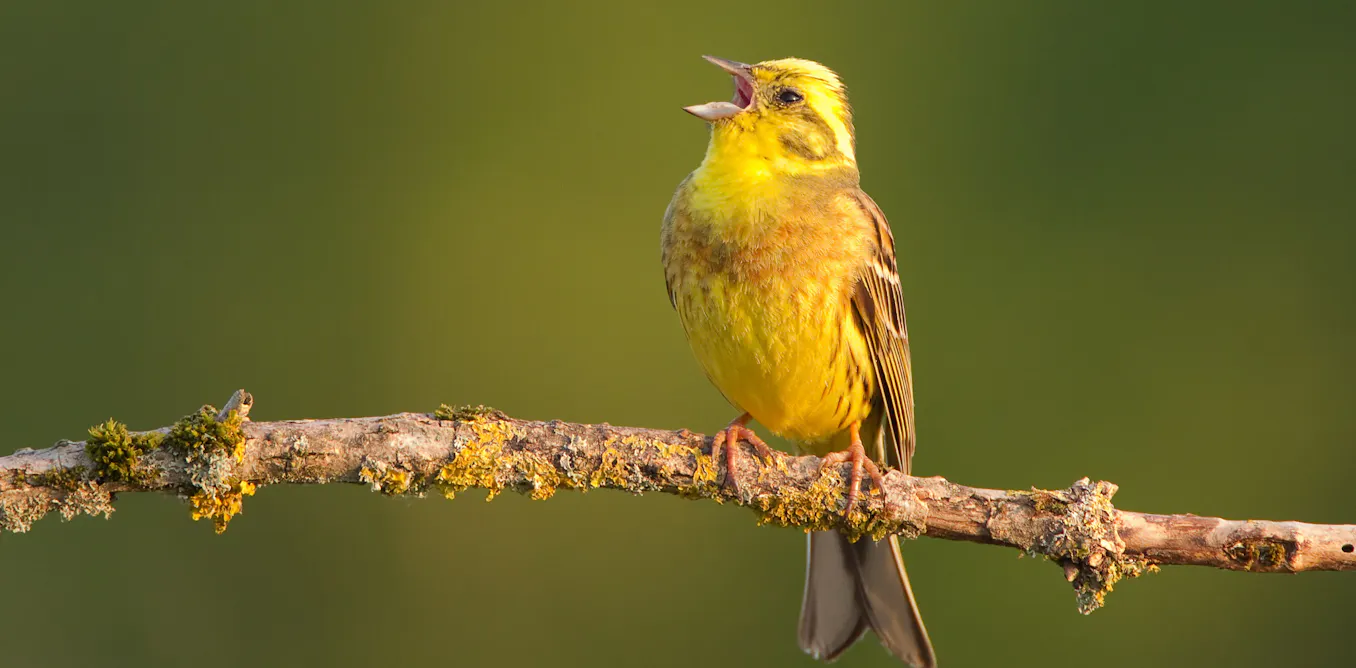
- UK bird species show clear geographical variations: yellowhammers have two dialects separated by pitch differences in the south vs. east, woodpigeons vary syllable content by region.
- New Zealand yellowhammers retain seven dialects from 19th-century British populations that have since disappeared in the UK, preserved in isolation.
- Species with complex songs must learn their dialects in early life and refine details through territorial contact with neighbors.
The Conversation Publisher
How it unfolded 1 development · click the chart to see its coverage articlesposts
Sep 21Sep 22yesterdaynow · 12:59 AM ET
-
1
The Conversation publishes feature on regional bird song dialects
An article examining how birds develop regional accents in song, using examples from UK bird species including blue tits, woodpigeons, yellowhammers, blackbirds, and great tits. The piece notes that birds sing most effectively around dawn and that dialects are learned from parents and neighbors rather than innate.
“Some blue tits sang their classic song, which sounds a bit like they are saying " he-llo, I'm a little blue tit ". Some sang a more elaborate "he-llo, I'm a little blue tit, blue tit", and some only bothered with "he-llo".”
— The Conversation author, Ornithology expert · source -
first by HN Frontpage, 3d ago
1 more headline
- Do birds have accents? The fascinating regional differences in birdsong Mastodon · 2d ago
-
 E
E
"Even in the same neighbourhood, birds of the same species don’t always sound exactly alike." https:// theconversation.com/do-birds-h ave-accents-the-fascinating-regional-differences-in-birdsong-278108
-