Raspberry Pi confirms firmware locks RAM to factory-shipped capacity
The company says the lockout on newer boards targets resellers who swap in cheaper RAM chips and resell modified units as higher-capacity models.
What to know
- Raspberry Pi confirms newer boards can be firmware-locked to their factory-shipped RAM capacity, blocking hardware upgrades even by skilled users doing BGA rework.
- The company says the goal is stopping resellers from swapping in cheap or QA-reject RAM chips and passing modified boards off as higher-capacity SKUs, which generates support and RMA burden.
- Firmware now encodes memory density, organisation, and timing parameters, so even legitimate same-capacity chip swaps aren't guaranteed to work — going beyond simple capacity tracking.
- The disclosure reignited broader community debate about Raspberry Pi's shift toward commercial/anti-repair practices, alongside prior complaints about reliability, pricing, and codec licensing.
The dispute Whether Raspberry Pi's fraud-prevention justification is a legitimate response to a real reseller problem or a pretext for locking down hardware that owners should be free to modify. · positions read across 45 posts and comments
This is an anti-consumer, anti-repair restriction that punishes owners for third-party fraud they had no part in.
-
“I love how we think we own our hardware, but secretly we don't. Surprised though that even a Raspberry Pi now thinks this as well. They grew big _because_ of tinkering...”
jorritposthuma · Hacker News ↗
The lock is a reasonable, if imperfect, response to real reseller fraud that dumped support costs on Raspberry Pi.
-
“There were sellers buying the smallest RAM units, changing the RAM chips, and then reselling them as the higher RAM SKUs. The sellers who do this don't always care to use good RAM chips and may even use QA reject parts.”
Aurornis · Hacker News ↗
A hard lock is the wrong fix — a warning, warranty-void notice, or serial lookup system would solve the problem without bricking legitimate upgrades.
-
“Just make the RAM mismatch a warning that voids warranty rather than a hard error. This is no excuse for forcing hardware pairing”
renonce · Hacker News ↗
PhilE Raspberry Pi engineer and forum moderatorRaspberry Pi (company) Hardware maker whose firmware enforces the lock Jeff Geerling YouTuber / Raspberry Pi hardware reviewer
How it unfolded 5 developments, newest first · click a bar or a number to jump articlespostscomments
-
5
Tech press details the anti-cloning rationale and mechanics
Notebookcheck reports that Raspberry Pi frames the lock as fraud prevention against third parties reselling boards with swapped-in cheap RAM, and explains that firmware now encodes memory density, organisation, and timing parameters beyond just capacity, so even same-capacity chip swaps aren't guaranteed to work.
-
> The whole ethos with Pi was you can tinker on it Not really. The hardware was always locked down. You could play on the GPIO header all you wanted, but the hardware was always off-limits. It's up to you to decide if a company choosing not to support hardware that someone else has modded is a problem or not.
2 more of the top 3 · 24 posts in this stretch
-
 A
A
It's always the paying customer/user that gets fucked the most. https://www. tomshardware.com/raspberry-pi/ raspberry-pi-locks-boards-to-factory-ram-capacities-in-firmware-engineer-tells-diy-modders-dont-waste-your-time-trying-repairs-or-upgrades-company-cites-shady-reseller-scams # tech # technology # raspberrypi # pi # computers # news # linux #…
-
They frame this as fraud-prevention but I don't really buy it.I think of I this way. As a casual/hobbyist user, maybe I'm happy to accept a 10% risk of the device failing prematurely in exchange for saving $20 on a memory upgrade. Ok, so these unscrupulous sellers will never tell me that info up-front...but this defective-by-design system doesn't…
-
-
4
Critics link the policy to broader complaints about Raspberry Pi
Some commenters tie the RAM lock to prior grievances — SD-card reliability issues, price hikes, and trademark disputes — arguing it further erodes trust in the company as it becomes more commercial.
“Between the notorious unreliability, crazy price hikes, trademark or whatever disputes, and this anti consumer ewaste generating policy, I can't think of any reason I'd ever patronize them again…”
— akersten -
> When the unit doesn’t work correctly, the anger and RMA requests are directed back at the Raspberry Pi foundation.They don't need the resellers help for that! I've already been burned twice thinking "I'll use a raspberry pi for this small project" and having it die within a month because reliably reading/writing to an SD card is hard or…
2 more of the top 3 · 4 posts in this stretch
-
What if the manufacturer charged no markup on RAM price, wouldn't it make "illegal upgrading" pointless because they couldn't compete on price? The manufacturer buys RAM in bulk and has better pricing.
-
They should make a form where you input the serial number and apply for a key, applying that key in config.txt disables the hardware verification checks on the bootrom.
-
-
3
Jeff Geerling publicizes the RAM lockdown in a video
Tech YouTuber and Raspberry Pi commentator Jeff Geerling posted a video flagging that Raspberry Pi is locking down RAM upgrades in firmware, driving wider attention to the forum disclosure.
“Raspberry Pi is locking down RAM upgrades in firmware…”
— geerlingguy -
Curiously NVIDIA have long allowed consumer GPUs to be upgraded with larger memory chips - they could very easily reject booting those configurations. This is something done almost exclusively by unsavory Chinese actors who then sell on the bare retail PCBs (core removed, since they use different PCBs and heatsinks) to various scammers that foist…
2 more of the top 3 · 5 posts in this stretch
-
Oh no, there were bad actors on the market, let's lock the hardware so cheaper but genuine options can't emerge.> When the unit doesn’t work correctly, the anger and RMA requests are directed back at the Raspberry PiIt's not their problem then, the seller is responsible for it and I think we can assume the user has a brain so they knew they could…
-
Raspberry Pi been scummy for a while e.g. locking codecs behind extra payments. It seems they've gone full mask off at last.Got here via Jeff Geerling coverage[0].0.
-
-
2
Commenters split over whether the lock is justified anti-fraud measure
A large Hacker News thread forms around the disclosure, with one camp citing documented reseller fraud with QA-reject RAM chips as justification, and another calling the fix defective-by-design and anti-repair.
“There were sellers buying the smallest RAM units, changing the RAM chips, and then reselling them as the higher RAM SKUs.”
— Aurornis -
The user friendly option would be to print the amount of RAM in very large letters on the PCB. There happens to be a lot of suitable surface on the PCB to the right of the text "Raspberry Pi 5" on the PCB anyway (§). Right now the amount of RAM is hard to read and easy to modify (move a little tiny SMD resistor).Drawback: You need different…
2 more of the top 3 · 12 posts in this stretch
-
I think they should instead just introduce a clear system for verifying that a Raspberry Pi is genuine. For example, a code printed directly on the device. If you enter that code on the website, you can see exactly which model it belongs to and how often it has been used. That way, you could determine whether a Raspberry Pi is new or used and…
-
Reading through the EEPROM repo issue[1] makes me a little more sympathetic to the "feature", but I still don't like it at all.It might help in the short term to stop dodgy resellers who mod the boards with cheap upgraded RAM to make a buck or two...But the Pi itself is always taking one step forward, one step back in terms of firmware. I've been…
-
-
1
Raspberry Pi forum moderator confirms RAM capacity lock
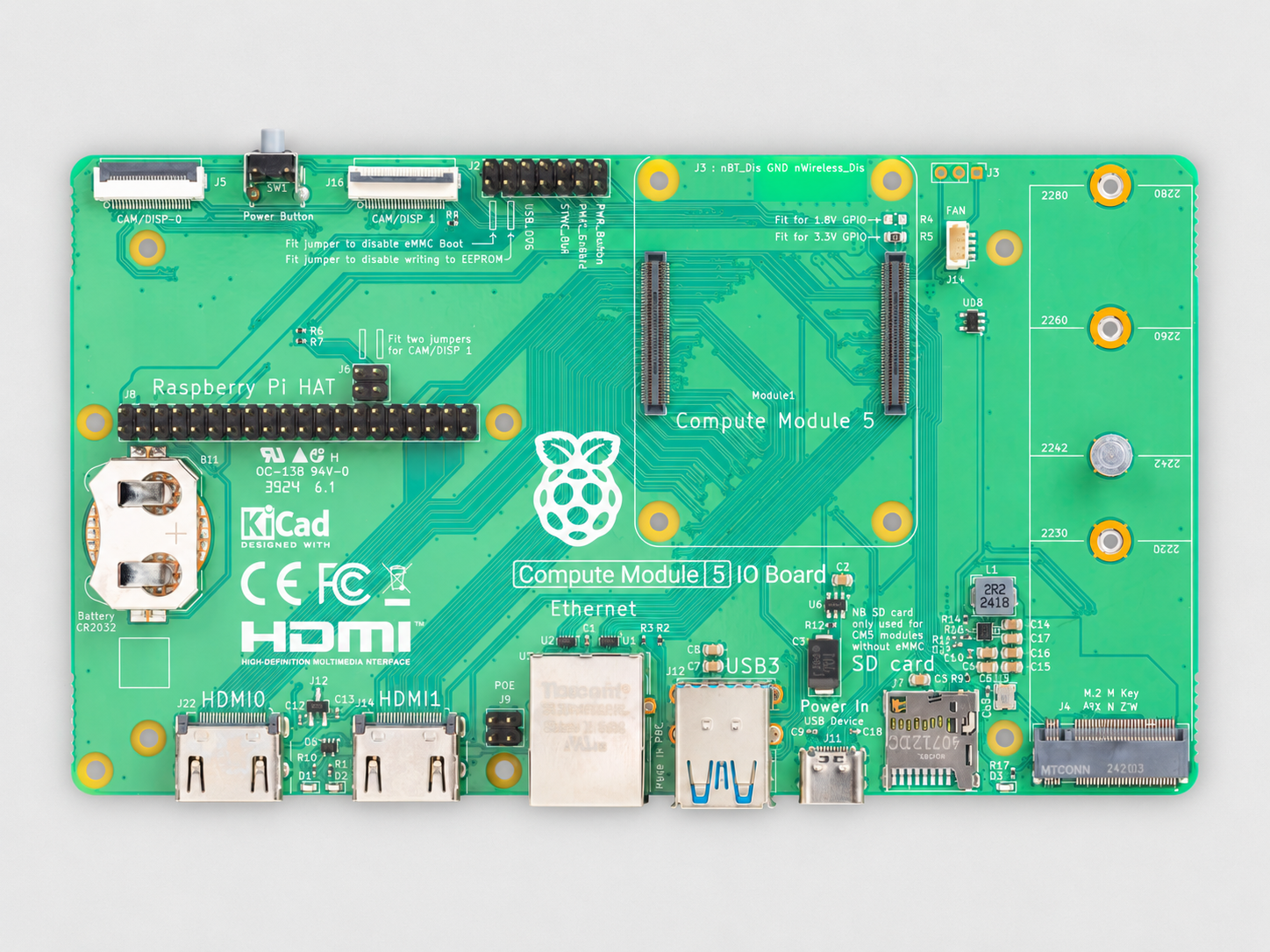
Responding to a user who replaced a Compute Module 5's soldered 2GB memory with a known-good 4GB chip from another CM5 (which the system still read as 2GB), Raspberry Pi engineer and forum moderator PhilE explained that newer devices are deliberately locked to their factory-shipped RAM capacity.
-
first by TechPowerUp, 1d ago · also Tom's Hardware, Hackaday
2 more headlines
-
first by HN Frontpage, 2d ago
-
What people are saying 13 voices from 3 sites · best of 45 · verbatim
- Has the reseller-fraud allegation actually been substantiated with evidence, or is it conjecture?
- What would it take to build a fully open-source firmware for the Pi to avoid this kind of lock-in?
- Why was the restriction pushed via a firmware update that can brick previously working, already-modified devices?
- Yesterday
-
But it isn't like an individual would be able to pull off a legitimate RAM swap at a price less than Raspberry Pi Ltd* were already doing it for. So if you're getting a suspiciously cheap Raspberry Pi that's had a RAM swap and it doesn't work correctly, it's on you. The machines have a fixed, known price from approved resellers (ARs). This is…
-
“The firmware update that disabled RAM swaps was actually from late 2024, two years ago. So you can't blame the RAM pricing situation for this.” But did the reselling problem go back that far? I really doubt this was aimed at user upgrades of RAM. They may be an unfortunate casualty, but I suspect it was really due to support problems and dealing…
- Sep 22
-
Drilling holes to prevent RAM upgrades? What is this, a [Commodore PET](
-
> Warn how? They somehow get undervolt warnings through to the headless OS, I'm sure they can find a mechanism to warn about unauthorized RAM
-
Warn how? The last time I actually had a monitor plugged into a Pi was probably a decade ago. Don't get me wrong, I very much appreciate the unfortunate situation that you're in with not being able to do the RAM swap. I also appreciate the situation they're in where there's a bunch of resellers who are doing questionable mods to products and…
-
If they really consider aftermarket ram swaps to be a consumer-facing issue (as opposed to a their-profit-margins-facing issue), they can just warn instead of blocking it outright. I have a 1GB Pi5, and despite the fact that I have spare electrically-compatible RAM ICs lying around, I can't swap it.
-
The wrinkle is that end users don't currently have a good way to know that that's what they're buying. One suggestion I saw was that the pi foundation could start writing "2GB" in large letters on the boards that they ship, so at least an end user who gets an 8GB board that says 2GB *knows* that the board they've got isn't direct from the pi…
-
> It's up to you to decide if a company choosing not to support hardware that someone else has modded is a problem or not. That's not what people are taking issue with. That's the pi foundation's publicly stated reason for blocking ram swaps, which people *are* taking issue with. And it seems like a thin excuse to me.
-
 I
I
A resurfacing firmware lock is catching out new buyers and tinkerers who want to revive dead hardware. https:// itsfoss.com/opinion/raspberry- pi-blocks-ram-upgrades/
-
If the ram chips pass proper testing, why should anyone care where they come from?If RMA process includes hardware verification then rpi doesn’t get bled out by absorbing the cost of “counterfeits”If they widely tell people what the market is doing and make all the tools public, they will offload the work of dealing with counterfeits while…
- Sep 21
-
Painful that the RPi higher memory versions are so crazy overpriced that made the RAM swap, an obviously expensive process, meaningful. The solution of ofcourse would be to have market prices that are meaningful rather than trying to retain the overpricing moat through sabotage.
-
It feels like there could be a middle ground here where the Pi would show some annoying error message at boot that the RAM doesn't match the CPU's anticipated spec.Any sellers caught doing this would quickly be flagged by the community as unreliable; also purchase protection is pretty strong these days.
-
Mac Minis used to have soldered on SSDs, but the 2024 model is upgradable. A lot of people purchased a cheaper Mac Mini and upgraded the storage themselves. Most people would argue this is a good thing, even if some of those Mac Minis were resold. This is no different.