Salt deposit shines atop Sahara's tallest volcano in astronaut photo
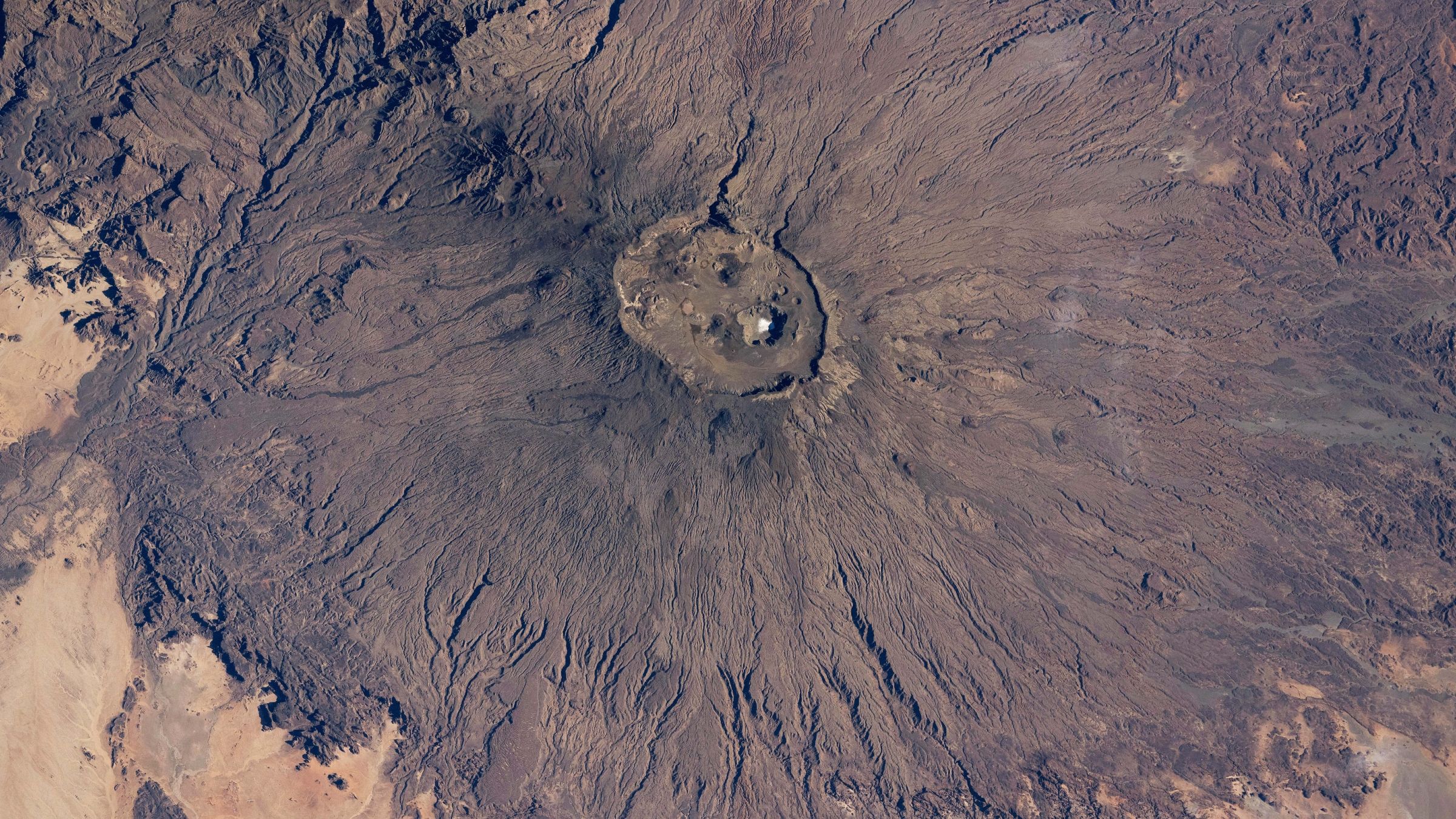
A 2024 image from the International Space Station reveals an unusual salt slab at the summit of Chad's extinct Emi Koussi volcano.
What to know
- A 2024 astronaut photograph revealed a bright-white salt deposit, up to 3,300 feet across, at the summit of Emi Koussi, the Sahara's tallest volcano in northern Chad.
- The salt was left behind by an ancient lake that once filled the volcano's Era Kohor crater, marking an unexpected water feature in an extremely arid environment.
- Emi Koussi is classified as extinct with no historical eruptions, but its slopes are covered with ancient lava flows estimated at 2 million years old.
“more like motor oil than toothpaste”
Earth Observatory representatives · Live Science ↗ · Sep 21
Unnamed astronaut International Space Station crew memberNASA Earth Observatory Space agency research divisionSmithsonian Institution's Global Volcanism Program Volcanic research authority
How it unfolded 1 development · click the chart to see its coverage articlesposts
-
1
Live Science reports salt slab origin and volcanic geology
Live Science details that the salt deposit within the Era Kohor crater is up to 3,300 feet across and several feet thick, left behind by an ancient lake that once filled the caldera. The volcano is classified as extinct with no historical eruption records, though its slopes are covered with ancient lava around 2 million years old.
“The salty slab within the secondary Era Kohor crater is up to 3,300 feet (1,000 m) across and several feet thick. It was left behind by an ancient lake that once filled the caldera.”
— Live Science -
background
Astronaut captures salt deposit on Emi Koussi volcano summit — An unnamed astronaut aboard the International Space Station photographed a bright-white salt patch at the summit of Emi Koussi, the Sahara's tallest volcano in northern Chad.