Trump's ballroom legal fight stalls on standing, appropriations questions
Legal experts debate why courts may be unable to stop Trump's proposed ballroom and triumphal arch despite potential illegality.
What to know
- Trump's ballroom and triumphal arch project may violate law, but standing doctrine creates a legal barrier to courtroom challenges.
- Appropriations law and the power of the purse emerge as potential constraints, but their practical effectiveness remains unclear.
- Chief Justice Roberts' dissent hints at pathways for future legal challenges to presidential overreach.
- The case raises fundamental questions about whether institutional checks can meaningfully constrain a president intent on proceeding.
“why standing may be the biggest obstacle to stopping them and what John Roberts' dissent could be signaling to future challengers”
The Bulwark · The Bulwark ↗
 Donald Trump President; subject of legal challengeJonathan V. Last Columnist, The Bulwark
 Benjamin Wittes Lawfare editor; legal analystChief Justice John Roberts Supreme Court Chief Justice
How it unfolded 1 development · click the chart to see its coverage articlesposts
-
1
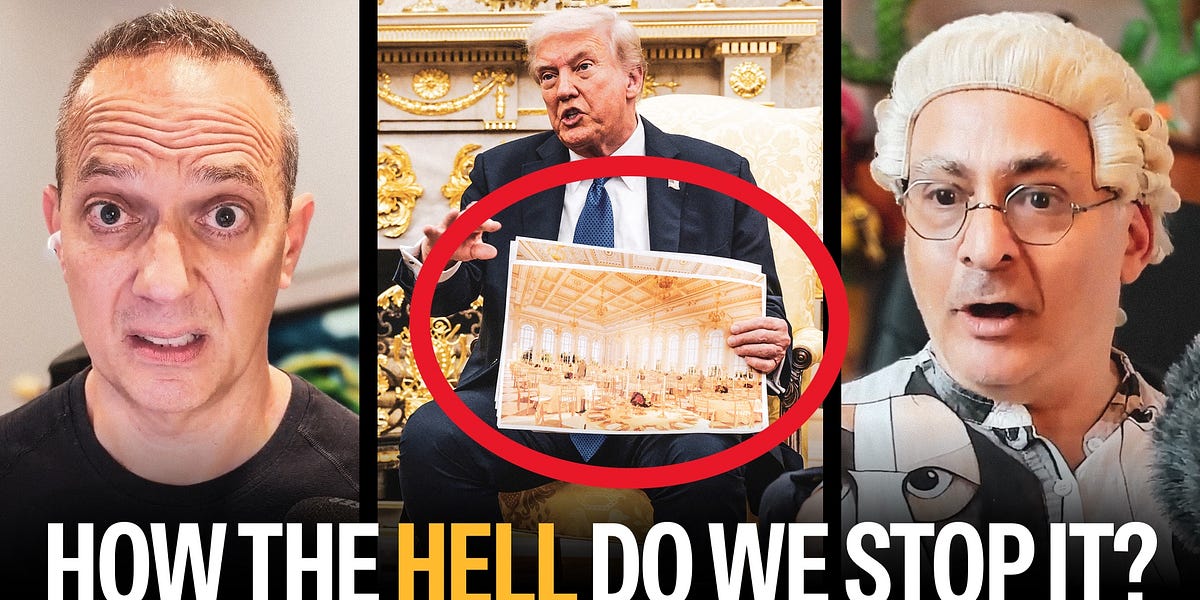
Last and Wittes examine legal obstacles to stopping Trump's ballroom
Jonathan V. Last and Benjamin Wittes of Lawfare publish an extended analysis of the legal fight over Trump's proposed ballroom and triumphal arch, focusing on why standing doctrine and appropriations law may prevent courts from intervening, and what Chief Justice John Roberts' dissent might signal to future challengers.
-
first by The Bulwark, 2d ago
-
So the Supreme Court said the organization that brought the previous lawsuit didn't have standing to sue as justification for allowing construction to continue. Should Democrats take both chambers of Congress next year, would they have standing to sue, or even halt the project?
-