Iranian President Pezeshkian calls for U.S. to accept staged framework to reopen Strait of Hormuz
In Face the Nation interview, Pezeshkian says Iran has proposed reopening shipping lanes within seven days if conditions are met, blaming the U.S. for blocking progress.
What to know
- Iran proposes reopening the Strait of Hormuz within seven days if conditions are met, with war and nuclear talks to follow.
- Pezeshkian invoked a June agreement with Trump that collapsed over shipping lane disputes, citing lack of U.S. coordination.
- The new framework breaks original requests into stages; Pezeshkian says both sides must unblock paths before negotiations resume.
- The U.S. has not yet responded to Iran's mediator-delivered proposal.
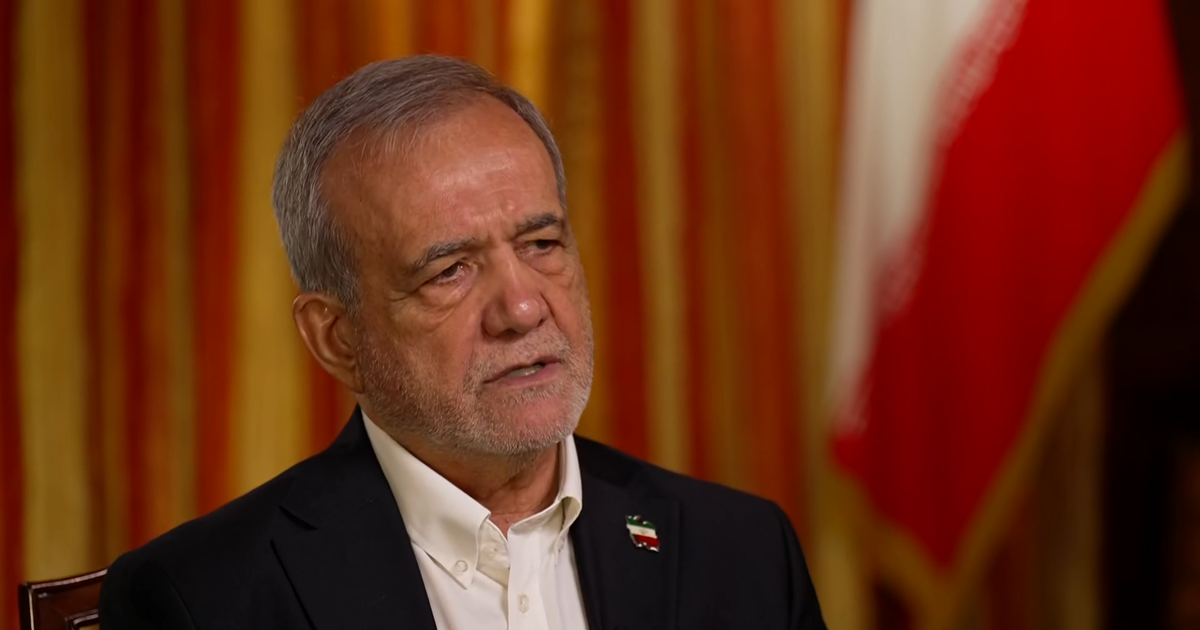
“We had previously reached an agreement based on the MOU that was signed in Pakistan. I signed it, and the President of the United States signed it, and we were proceeding based on that agreement.”
President Masoud Pezeshkian · CBS News / Face the Nation ↗
 Masoud Pezeshkian President of Iran
 Margaret Brennan CBS News interviewer
How it unfolded 0 developments, newest first · click a bar or a number to jump
-
background
Pezeshkian says U.S. has blocked progress, awaits U.S. response — Speaking to CBS News, Pezeshkian said the new framework follows the same path and objectives as the original MOU, with requests broken down into stages. He stated that both sides need to open their blocked paths before sitting down to negotiate other issues.
-
background
Iran presents staged proposal to reopen Strait of Hormuz — Iran's foreign minister presented a new proposal through mediators that would reopen the Strait of Hormuz after seven days if Tehran's conditions are met, followed by talks on ending the war and possibly the nuclear program.
-
background
Disagreement over shipping lanes causes agreement to collapse — The June agreement deteriorated due to disputes over shipping lanes, after which the IRGC began firing on ships using what Iran called unauthorized routes.
-
background
Trump and Pezeshkian sign Memorandum of Understanding in Pakistan — The two leaders reached an agreement based on an MOU signed in Pakistan that established the framework for negotiations. The deal later fell apart due to disagreements over shipping lanes.