US firm plans 50,000 mirror satellites to illuminate Earth's night side
Reflect Orbital aims to beam sunlight to dark regions for emergencies and construction, but scientists warn of catastrophic risks to astronomy, wildlife, and orbital debris.
What to know
- Reflect Orbital plans to deploy 50,000 mirror satellites by 2035 to bounce sunlight onto Earth's night side for emergency response, construction, and solar panel supplementation.
- Scientists warn of three catastrophic risks: severe light pollution destroying astronomy observations, orbital collision/debris hazard from crowded sun-synchronous orbit, and atmospheric pollution from satellite decay.
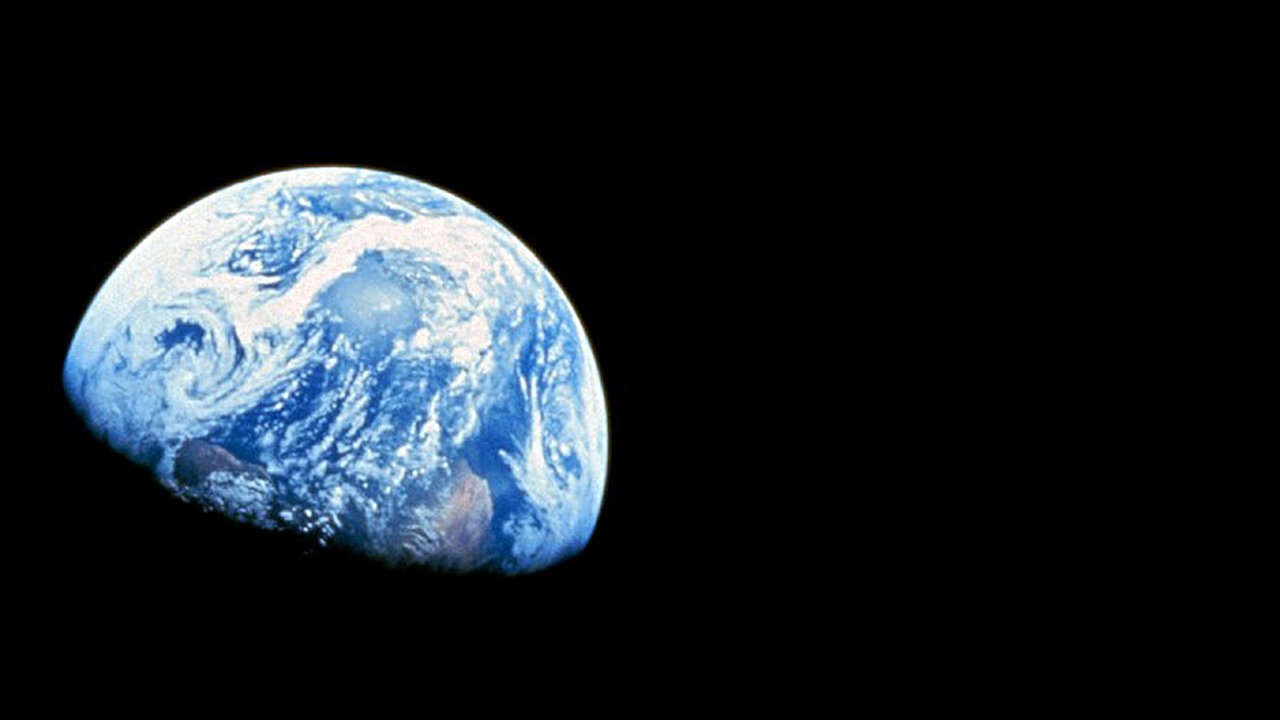
- A single satellite's reflected light would exceed full-moon brightness at 14 kilometers distance; at full deployment, the constellation would create artificial daylight, fundamentally disrupting the day-night cycle for wildlife.
The project is ecologically reckless and should be banned outright, not merely studied.
-
“Nein, einfach nein! Ich will nicht das so etwas geprüft wird, sondern einfach verboten. Was eine abartige, kranke Idee!”
2ndStar@astronomy.social · Mastodon ↗
The scheme represents environmental and atmospheric pollution and disrespects all organisms adapted to natural day-night cycles.
-
“Der Planet ist noch nicht genug verschmutzt, also ballern wir nachts Licht drauf”
frolleincortex.eurosky.social · Bluesky ↗
Reflect Orbital Company proposing mirror satellite constellationEnrico Stoll Space expert, TU BerlinAndreas Jechow Laser physicist, Technische Hochschule BrandenburgEuropean Southern Observatory (Garching) Research institutionSlovak Academy of Sciences Research institution
How it unfolded 3 developments, newest first · click a bar or a number to jump posts
-
2
Space expert questions solar energy benefit; questions orbital feasibility
TU Berlin space expert Enrico Stoll expresses skepticism about the project's central claim. Calculations show that even ignoring all losses, the solar output would be in the milliwatt range—negligible. Additional challenge: the satellite travels at 7 kilometers per second, making it extremely difficult to maintain focus on a five-kilometer target area. The crowded sun-synchronous orbit already hosting many Earth observation satellites makes deployment problematic.
“Wenn man das alles durchrechnet ohne irgendwelche Verluste, kommt man in den Milliwatt-Bereich…”
— Enrico Stoll -
P
Hätten wir vielleicht die Güte, nicht noch mehr unnötigen Müll in den Orbit zu jagen? Bitte. UND LASST GEFÄLLIGST EURE DRECKSGRIFFEL VON DER NACHT!!
2 more of the top 3 · 4 posts in this stretch
-
 2
2
Nein, einfach nein! Ich will nicht das so etwas geprüft wird, sondern einfach verboten. Was eine abartige, kranke Idee! "Ein US-Unternehmen will Tausende Satelliten ins All schicken, um mit Spiegeln die Nachtseite der Erde zu beleuchten. Forschende warnen vor Gefahren für Astronomie, Natur - und den Menschen." https://www…
-
 D
D
Früher als Jungspund mit Arthur C. Clarke unterm Arm hatte ich Sorge, dass das Kessler-Syndrom uns vom Fortschritt abschneiden könnte, aber irgendwie klingt es aktuell gar nicht mehr so furchteinflößend. https://www. tagesschau.de/wissen/technolog ie/satellitenspiegel-nacht-100.html
-
-
3
European Southern Observatory and Slovak Academy confirm light pollution calculations
Scientists from ESO Garching and the Slovak Academy of Sciences release findings: a single mirror satellite's light would exceed full-moon brightness levels when observed from 14 kilometers away. Laser physicist Jechow confirms atmospheric scattering will spread light widely—even the initial 0.1 Lux target achieves full-moon level visibility, with later phases reaching daylight brightness.
“Die haben doch vollkommen den Arsch offen!”
— zbiochristine.bsky.social, Bluesky user · source -
1
Researchers identify multiple hazards: orbital congestion, space debris, light pollution
Space experts and astronomers publish analysis showing sun-synchronous orbit is already overcrowded with Earth observation satellites, raising collision risk and space debris concerns. The large satellite surfaces will require constant fuel to maintain orbit or will decay and burn up, polluting the atmosphere. Laser physicist Andreas Jechow warns artificial night-time illumination represents a massive alteration of Earth's day-night cycle affecting wildlife dependent on circadian rhythms.
“Die künstliche Aufhellung der Erde bei Nacht eine massive Veränderung der Lebensbedingungen bedeute. Viele Tierarten sind an den Wechsel von Tag und Nacht…”
— Andreas Jechow -
C
Wie bitte, was? 😠 Eine US-Fa. will mit Hilfe von Satelliten Sonnenlicht auf die Nachtseite der Erde leiten. Ziel: 50.000 Satelliten bis 2035! Die Nacht wird zum Tag! Haben alle, die seit Millionen von Jahren an den Tag-Nacht-Rhythmus gewöhnt sind, ein Mitspracherecht? #KeineEingriffeInDieNatur
1 more of the top 2 · 2 posts in this stretch
-
F
Der Planet ist noch nicht genug verschmutzt, also ballern wir nachts Licht drauf 🙈 Was für ein beknacktes Vorhaben.
-
-
background
Reflect Orbital launches test satellite with orbital mirror — US company Reflect Orbital plans to send its first satellite into orbit at approximately 600 kilometers altitude this year. The satellite will deploy an 18-meter reflector (324 square meters) designed to redirect sunlight to the night side of Earth, targeting an area five kilometers in diameter with brightness of 0.1 Lux—approximately full moonlight intensity.
What people are saying 1 voices from 1 site · best of 7 · verbatim
- Today
-
 F
F
https://www. tagesschau.de/wissen/technolog ie/satellitenspiegel-nacht-100.html