Halloween costume swaps grow as 80% of costumes end up in landfills
As Americans spend $4.4 billion on Halloween costumes, swaps and thrift stores offer an alternative to the environmental cost of single-use fast fashion.
What to know
- Over 80% of Halloween costumes end up in landfills annually; this year Americans will spend $4.4 billion on them.
- Most costumes are made from synthetic plastics, heat-bonded (not sewn) to break apart easily, and deliberately designed as single-use items not intended for resale or thrifting.
- Costume manufacturing contributes to global carbon emissions (4–10% of clothing sector) and microplastic pollution of water sources and human tissues.
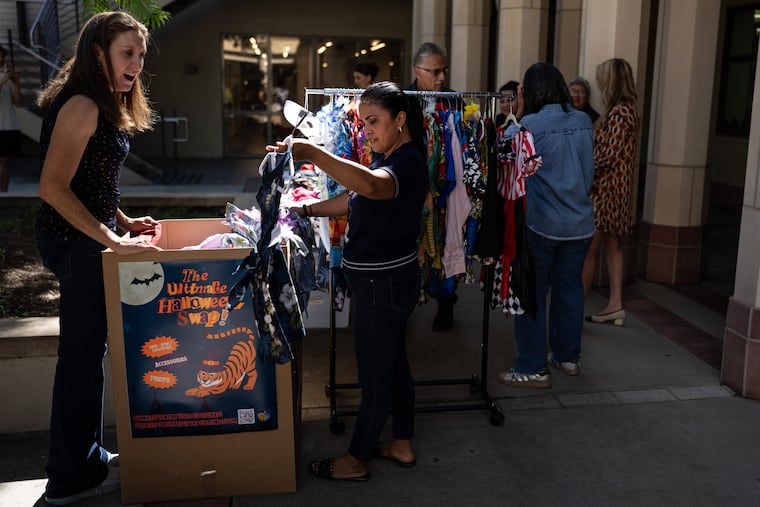
- Costume swaps and thrift stores across the U.S. offer an alternative, allowing people to donate and exchange costumes while reducing waste and manufacturing emissions.
“Clothing accounts for 4% to 10% of global carbon emissions, while textile dyeing contributes about 20% of wastewater emissions from industrial sources worldwide.”
Shelie Miller, University of Michigan environmental researcher · Philadelphia Inquirer ↗
Braddock Sandoval Chemistry professor, Occidental CollegeShelie Miller University of Michigan environmental researcherZack Bowersox Political science lecturer, Washington University in St. LouisLexy Silverstein Sustainable-fashion advocate
How it unfolded 3 developments, newest first · click a bar or a number to jump articlesvideos
-
3
Broadcast segment profiles costume swap organizers
An AP video segment highlights sustainable-fashion advocate Lexy Silverstein organizing costume swaps in Southern California as part of a national movement to keep costumes out of landfills by collecting and redistributing them.
- 2 days quiet
-
2
University experts detail manufacturing and pollution impacts
Shelie Miller, University of Michigan environmental impacts researcher, explains that costumes shed microplastics during washing, contaminating water sources. Zack Bowersox, Washington University political science lecturer, notes costumes are heat-bonded to break apart easily and are deliberately not designed for resale or thrifting.
“After the season, they're not meant to even be thrifted or returned, they're just meant to be thrown away. And that's where most of them end up, it's in the landfill. Something like 80% of those suits end up in the landfill.”
— Zack Bowersox -
1
AP reports on environmental impact of disposable Halloween costumes
An AP investigation documents that Halloween costumes, mostly made from synthetic plastics and heat-bonded rather than sewn, are designed as single-use items with over 80% ending in landfills annually. The article cites the National Retail Federation estimate that Americans will spend $4.4 billion on costumes this year.
“I think there's too much cheap plastic waste in this world. So the idea that people are recycling costumes is fantastic, both for budgets, like me, but also just for the planet.”
— Braddock Sandoval -
5 outlets first by Philadelphia Inquirer, 14d ago · also Orlando Sentinel, Mercury News, Baltimore Sun, Boston Globe · read ↗
-
