Half the world breathed unhealthy air in 2026, CAMS study finds
Extreme heat and wildfires drove ozone pollution to record levels across the Northern Hemisphere.
What to know
- A Copernicus Atmosphere Monitoring Service report found more than half the world's population breathed dangerously high ozone levels between January and September 2026, with North America and Europe most severely affected.
- Extreme heat waves and wildfires — particularly in France, Spain, and North America — created perfect conditions for ground-level ozone formation by releasing nitrogen oxides and volatile organic compounds.
- CAMS director Laurence Rouil warned that climate change makes ozone reduction difficult because high temperatures outweigh emission-cutting gains, requiring greater policy effort to address the problem.
“More than half of the world's population was exposed to very high or extremely high levels of ground-level ozone pollution, or smog, between January and September”
Copernicus Atmosphere Monitoring Service · Philadelphia Inquirer ↗
Copernicus Atmosphere Monitoring Service (CAMS) Research organizationLaurence Rouil CAMS director
How it unfolded 1 development · click the chart to see its coverage articles
-
1
CAMS director warns climate change makes ozone reduction difficult
CAMS director Laurence Rouil explained that ozone concentrations remain stable despite emission cuts because heat waves outweigh progress; climate change will require policymakers to make significantly more effort to combat the pollutant.
“Ozone concentrations stay stable, and one of the reasons why is that we have those heat waves.”
— Laurence Rouil -
background
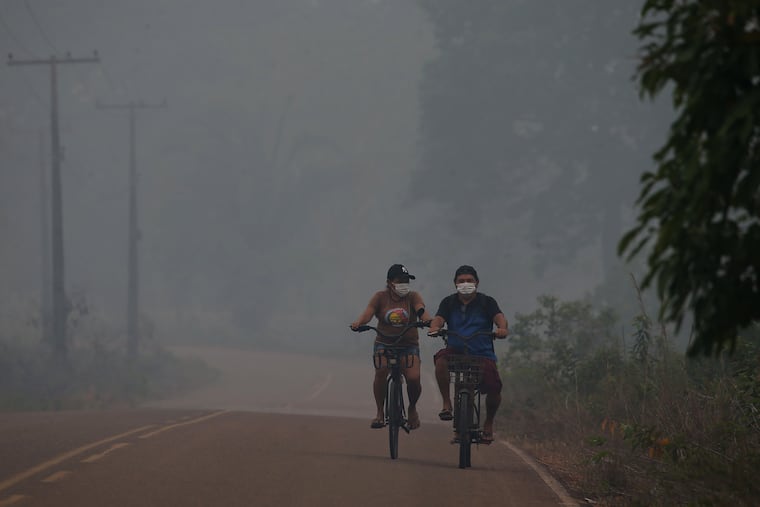
Heat waves and wildfires drive ozone pollution surge globally — Extreme heat waves and wildfires contributed to unhealthy levels of smog and smoke around the world. In North America, more than a quarter of the population was exposed to extremely or very poor air quality for ozone, with another 41 percent exposed to poor air quality. Europe experienced intense wildfire smoke events from historic fires in France and Spain, compounded by smoke drifting in from North America.
-
background
CAMS releases air quality analysis showing record ozone exposure — The Copernicus Atmosphere Monitoring Service released a September report finding that more than half of the world's population was exposed to very high or extremely high levels of ground-level ozone pollution between January and September 2026, based on air-monitoring data, satellite data, and meteorological models.
Also covered reported alongside — the timeline has no entry for these yet
-
first by PennLive, 10d ago · also The Oregonian, MassLive
and 1 smaller piece