Southeast Asia's cloud-seeding efforts fail to curb El Niño-driven wildfires
Indonesia and Malaysia have conducted over 100 cloud-seeding operations this year with little lasting impact on regional haze and wildfires.
What to know
- Indonesia and Malaysia have launched over 100 cloud-seeding missions in 2026 with minimal lasting impact, casting doubt on weather modification's effectiveness during extreme climate events.
- El Niño-driven peat fires are releasing 175 million tonnes of carbon annually and generating PM2.5 concentrations 65+ times WHO safety limits, creating a severe public health emergency.
- Decades of deforestation and peatland drainage have made the region far more susceptible to fire spread, amplifying El Niño's impact on drought and haze.
- The regional crisis—disrupting agriculture, schools, and air quality across Southeast Asia—raises fundamental questions about adaptation strategy when weather modification alone proves inadequate.
Indonesia Regional actor conducting cloud-seeding operationsMalaysia Regional actor conducting cloud-seeding operationsWorld Health Organization (WHO) Health standard-setter
How it unfolded 2 developments, newest first · click a bar or a number to jump articlesposts
-
2
Peat fires release centuries of stored carbon as drought intensifies regional crisis
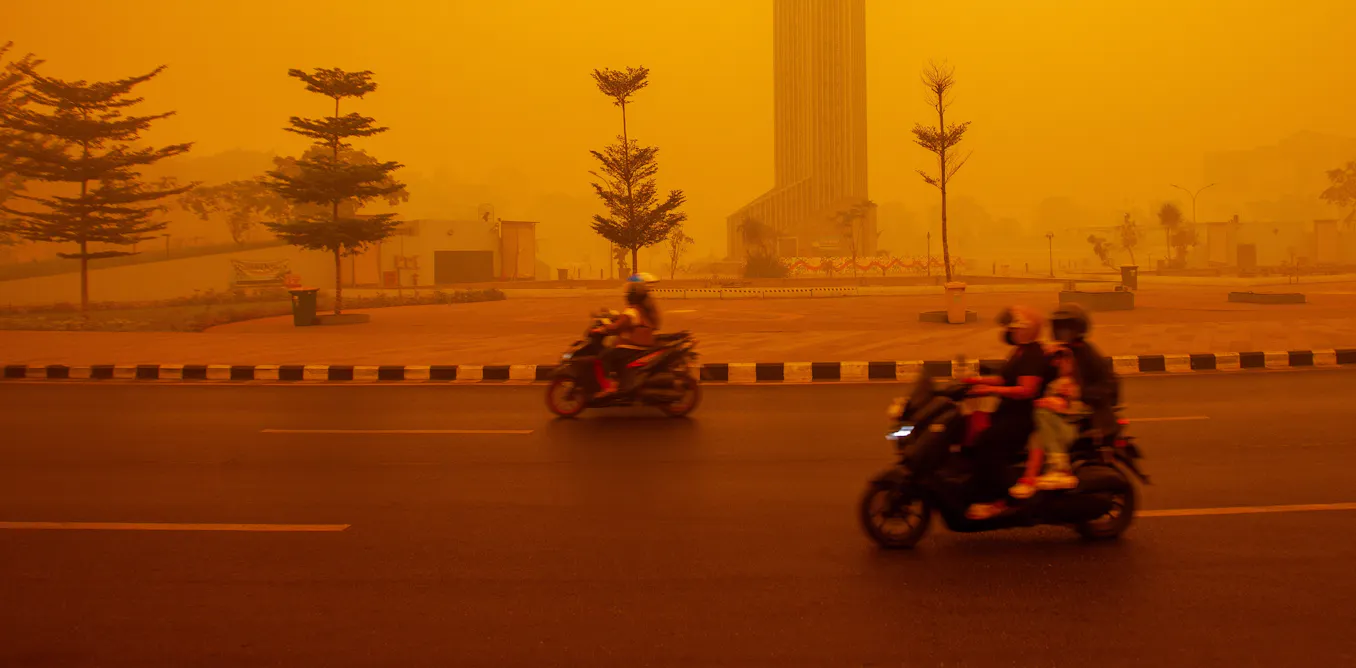
Indonesia's El Niño-driven peat fires are releasing estimated 175 million tonnes of carbon annually—equivalent to three-quarters of Indonesia's annual fossil-fuel CO₂ emissions. PM2.5 concentrations in affected areas have exceeded 500–1,000 micrograms per cubic metre, more than 65 times the WHO safe limit, creating a public health emergency.
“Right now, people in parts of Indonesia are inhaling what may be the most polluted atmosphere on Earth.”
— The Conversation -
first by inkl, 12d ago · also The Conversation
-
first by Phys.org, 11d ago
-
-
1
El Niño-driven fires expose limits of Southeast Asia's cloud-seeding strategy
Indonesia and Malaysia have conducted more than 100 cloud-seeding operations this year to combat extreme dryness exacerbated by El Niño. Despite these efforts—including the use of dry ice to disperse warm air trapping smog—the missions have delivered little in lasting results, raising questions about the payoff for such costly investments during extreme weather.
“Cloud-seeding missions in the skies above Southeast Asia have done little to snuff out wildfires or disperse the haze that's cloaked the region for months, exposing the limitations of attempts to modify the weather.”
— Japan Times -
2 outlets first by The Japan Times, 12d ago · also Japan Times · read ↗
-
 T
Cloud-seeding missions in the skies above Southeast Asia have done little to extinguish the wildfires or disperse the haze that's cloaked the region for months, exposing the limitations of attempts to change the weather. https://www. japantimes.co.jp/news/2026/10/ 27/asia-pacific/el-nino-cloud-seeding/?utm_medium=Social&utm_source=mastodon #…
-