Ancient Pompeii wardrobe uncovered with jewels, coins, and cosmetics
Archaeologists recover a woman's personal cabinet from house of Cornelius Maximus, revealing daily life before Vesuvius erupted in AD 79.
What to know
- A wooden cabinet in Pompeii's house of Cornelius Maximus preserved a woman's personal items including makeup tools, perfume, coins, and jewelry from AD 79.
- The discovery includes a necklace of 24 miniature protective amulets (crepundia) made from bone, glass, and crystal, originally given to children.
- The find provides direct evidence of daily life, commerce, and personal care practices among Pompeian women before Vesuvius's eruption.
Archaeologists at Parco Archeologico di Pompei Excavation team
How it unfolded 2 developments, newest first · click a bar or a number to jump articlesposts
-
2
Necklace of protective amulets identified as crepundia from ancient Pompeii
Among the finds is a necklace composed of at least 24 miniature objects in faïence, bone, glass paste and rock crystal, representing deities including Bes and Mercury, feet, hands, pine cones and bunches of grapes. Experts identify these as crepundia—protective amulets given to children but also kept by adults.
“such necklaces were sometimes regarded as "magical" objects used in spells and potions; in reality they are what are known as crepundia, literally 'rattles': necklaces with amulets that were given to children to protect them…”
— Archaeological experts -
 T
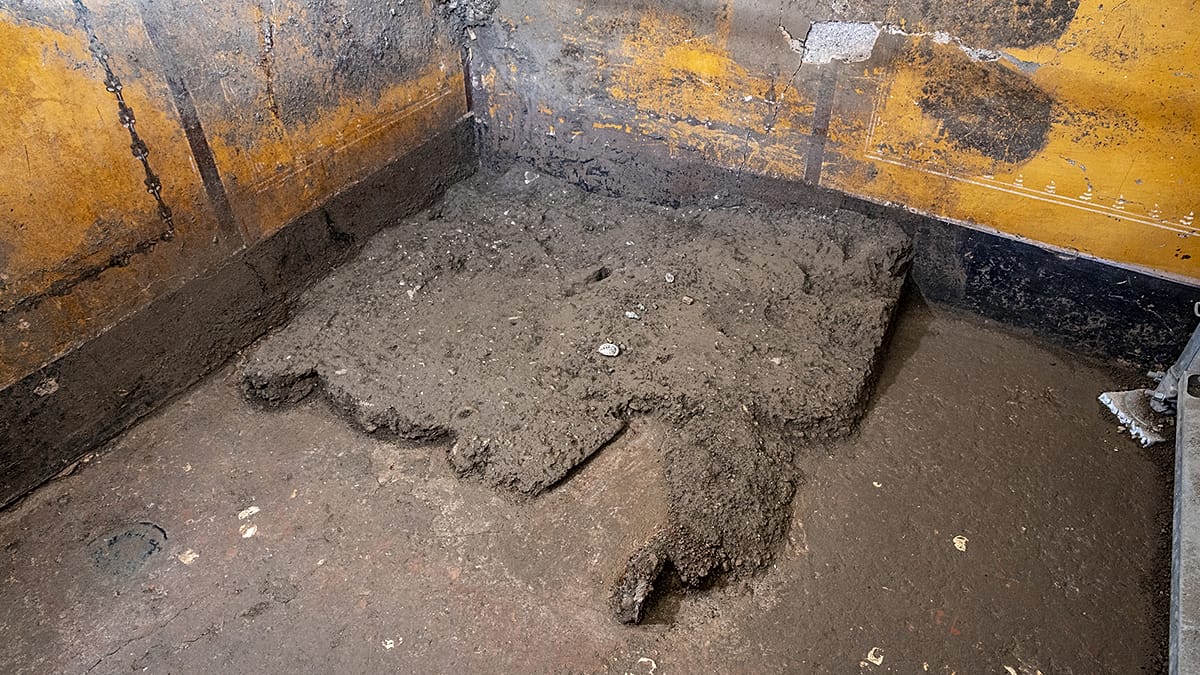
A preserved wooden cupboard has been uncovered inside a home on Via dell’Abbondanza in Pompeii, believed to belong to a man named Cornelius Maximus. Inside, they found a child’s amulet necklace made of bone, glass, and crystal charms, a basket filled with 38 bronze coins, perfume bottles, tweezers, an incense burner, lead weights, along with…
-
-
1
Archaeologists recover woman's wardrobe from preserved cabinet in Pompeii
A wooden cupboard containing everyday items and valuables belonging to a woman was excavated from house IX 11, 7 (the house of Cornelius Maximus) in Pompeii. The discovery includes makeup tools, cosmetics, perfume burners, bronze lamps, lead weights, vases, coins, and a necklace of miniature protective amulets.
“Looking at these objects, it is almost as if we can conjure up the life of a woman of Pompeii before the site was destroyed in AD 79.”
— Euronews -
first by AOL.co.uk, 14d ago · also Euronews
-
1 outlet Pompeii: A Woman’s Wardrobe, Lost in the Eruption of 79 A.D., Resurfaces—Here’s What It Contained
first by Finestre sull'Arte, 15d ago
-