Scientists discover heat-loving amoeba that shatters eukaryotic temperature record
Incendiamoeba cascadensis reproduces at 63°C, breaking the theoretical limit for complex cellular life and revealing how organisms adapt to extreme environments.
What to know
- A newly discovered amoeba, Incendiamoeba cascadensis, reproduces at 63°C (145°F), breaking the theoretical 62°C limit for eukaryotic life previously inferred from fungal studies.
- The organism's heat tolerance relies on multiple evolutionary adaptations, particularly an unusually large reserve of heat shock proteins, not a single genetic change.
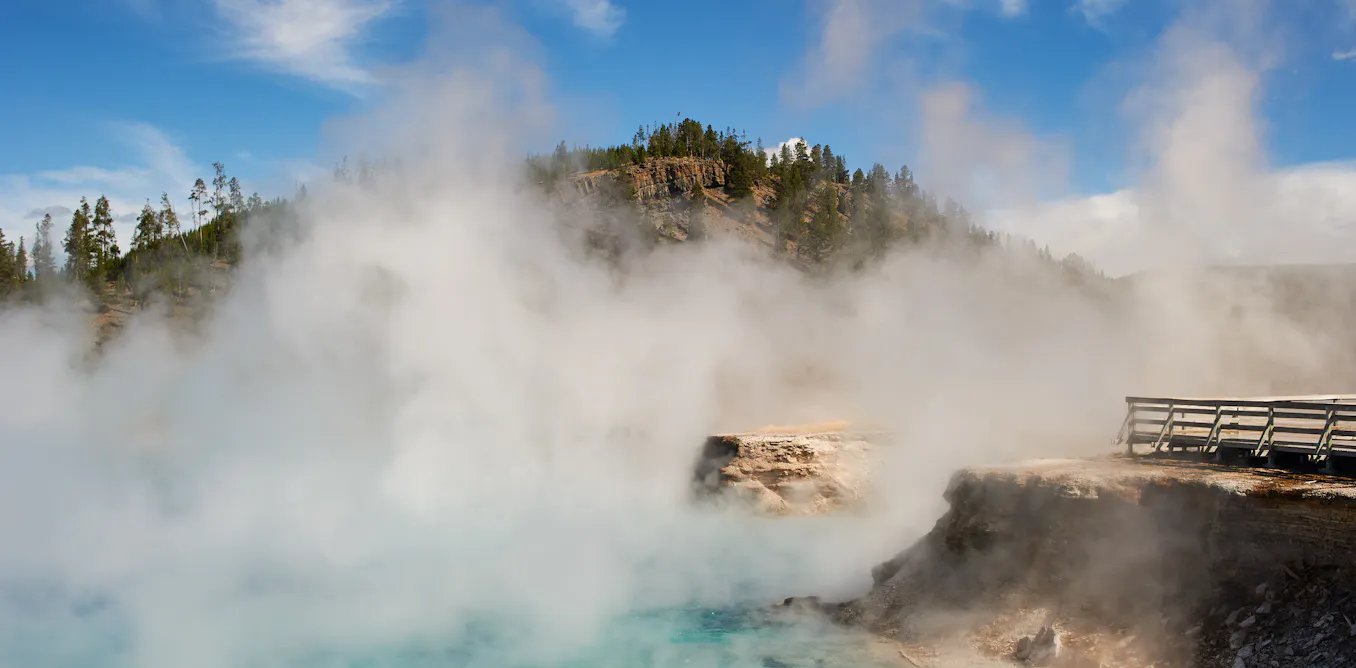
- Found in geothermal springs at Lassen Volcanic National Park, the discovery may expand understanding of where complex life can exist and suggests similar organisms could inhabit other extreme geothermal environments.
- The finding highlights gaps in current biology: researchers still do not fully understand which eukaryotic cellular structures limit heat tolerance compared to hardier bacteria.
“Like other eukaryotes, Incendiamoeba has organelles, an active cytoskeleton and a relatively large genome, so what allows it to persist where others cannot?”
Kristen Skruber, Assistant Professor of Biology, Gonzaga University · The Conversation ↗ · Oct 28
Kristen Skruber Lead researcher, Assistant Professor of Biology
How it unfolded 2 developments, newest first · click a bar or a number to jump articlesposts
-
2
Scientific community shares research findings on social platforms
The discovery gains traction on Mastodon, where science communicators highlight that the organism's heat resistance stems from multiple evolutionary changes—including heat shock proteins and unusual protein building blocks—rather than a single genetic mechanism.
-
 T
🦠 NEW: Researchers isolated a single-celled # amoeba , Incendiamoeba cascadensis, from # geothermal springs in # Lassen Volcanic National Park. It reproduces at 63º C (145º F), the highest temperature recorded for any eukaryotic life. Its survival relies on many evolutionary changes, including heat shock # proteins and unusual protein building…
-
-
1
Skruber explains organism's heat tolerance mechanisms in peer article
Kristen Skruber publishes a detailed analysis explaining that Incendiamoeba's survival relies on multiple molecular adaptations, including abundant heat shock proteins that detect and refold unfolding proteins at high temperatures. The organism was isolated from geothermal springs in Northern California and may exist in other geothermal areas worldwide.
“Incendiamoeba cascadensis, which is able to reproduce at 145 F (63 C). This finding marks the highest temperature yet recorded for eukaryotic life.”
— Kristen Skruber, Gonzaga University -
background
Research team publishes discovery of heat-tolerant amoeba — A study published in September 2026 by Kristen Skruber's team at Gonzaga University identifies Incendiamoeba cascadensis, a unicellular eukaryote capable of reproducing at 145°F (63°C), exceeding the previously theorized maximum temperature for eukaryotic life.
Also covered reported alongside — the timeline has no entry for these yet
-
first by The Conversation, 10d ago · also The Conversation US
and 2 smaller pieces