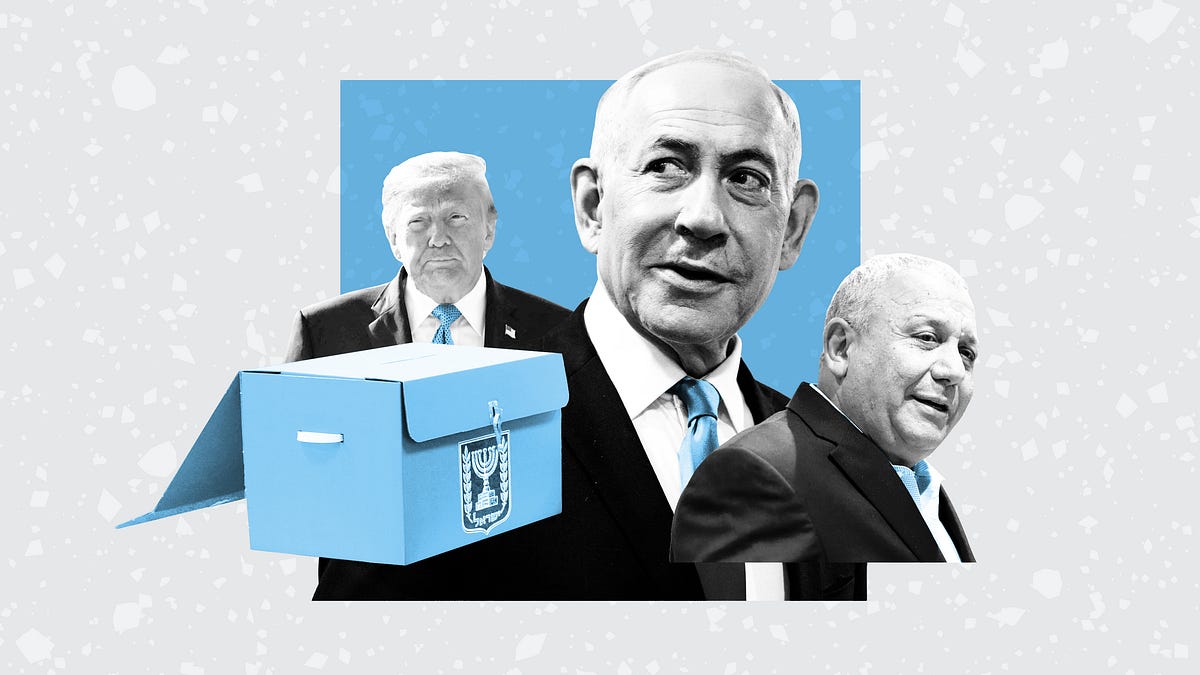
Israeli Election Leaves Netanyahu Weakened but Unseated as Blocs Split Near Evenly
A fractured vote cuts Netanyahu's coalition to about 53 seats while an Eisenkot-led opposition nets roughly 48, leaving Israel's political and US-relationship questions unresolved.
What to know
- Netanyahu's coalition is projected to fall from 68 to roughly 53 of 120 Knesset seats, while an Eisenkot-led opposition bloc of four parties nears 48 seats.
- Domestic issues — accountability for October 7th failures, ultra-Orthodox conscription exemptions, and rule of law — drove the demand for change more than the Gaza or Iran wars.
- Arab-sector turnout hit record levels, with two Arab parties projected to win 18–19 seats combined.
- Likud remains the single largest party with about 27 seats, showing Netanyahu retains a committed base even as his broader coalition weakens; no clear path to a new government has emerged.
 Benjamin Netanyahu Israeli Prime Minister
 Gadi Eisenkot Former IDF chief of staff, opposition leaderDaniel B. Shapiro Author, The Bulwark
How it unfolded 1 development · click the chart to see its coverage articlesposts
-
1
Shapiro argues the vote leaves Israeli democracy and US ties in limbo
Writing in The Bulwark, Daniel B. Shapiro concludes the election produced no resolution on judiciary, war management, ultra-Orthodox/settler status, or the US relationship, calling the outcome more logjam and uncertainty rather than a clear mandate.
“No answers, no new questions, no good options.”
— Daniel B. Shapiro -
first by The Bulwark, 9d ago
-
"In Hebrew, they call this a 'plonter': a complete entanglement with no solution." Daniel B. Shapiro on Netanyahu, the Israeli elections, and the mire of Israeli politics:
2 more of the top 3 · 4 posts in this stretch
-
"For the opposition to join a Netanyahu-led government would be seen outside Israel as a submission—and not unreasonably. Many Europeans and Americans would conclude that Netanyahu represented the Israeli political consensus."
-
"In Hebrew, they call this a 'plonter': a complete entanglement with no solution." ICYMI Daniel B. Shapiro on the state of Israeli politics:
-
-
background
Likud remains largest single party as Netanyahu claims security credit — Netanyahu's Likud stays the biggest party with about 27 seats; in his election-night speech he listed Hamas, Hezbollah, and Iranian leaders killed during the war, drawing on continued support from loyalists who credit him for military successes despite the October 7th failures.
-
background
Eisenkot-led opposition bloc nets around 48 seats on record Arab turnout — Gadi Eisenkot, former IDF chief of staff, led a four-party opposition bloc united mainly around ousting Netanyahu; Arab-sector turnout set new records, with two Arab parties projected to hold 18–19 seats combined.
-
background
Netanyahu's coalition projected to shrink from 68 to about 53 seats — While counting continues, the parties in Netanyahu's governing coalition are set to decline sharply, reflecting a clear majority demand for change driven mainly by domestic grievances over leadership, accountability, and rule of law.
-
background
Israelis vote in national elections amid war fatigue and graft allegations — The election was framed around judiciary reform, management of the war with Iran and its proxies, the role of ultra-Orthodox and settler communities, and Israel's relationship with the United States.