NASA's Swift telescope set to fall to Earth after failed robotic rescue
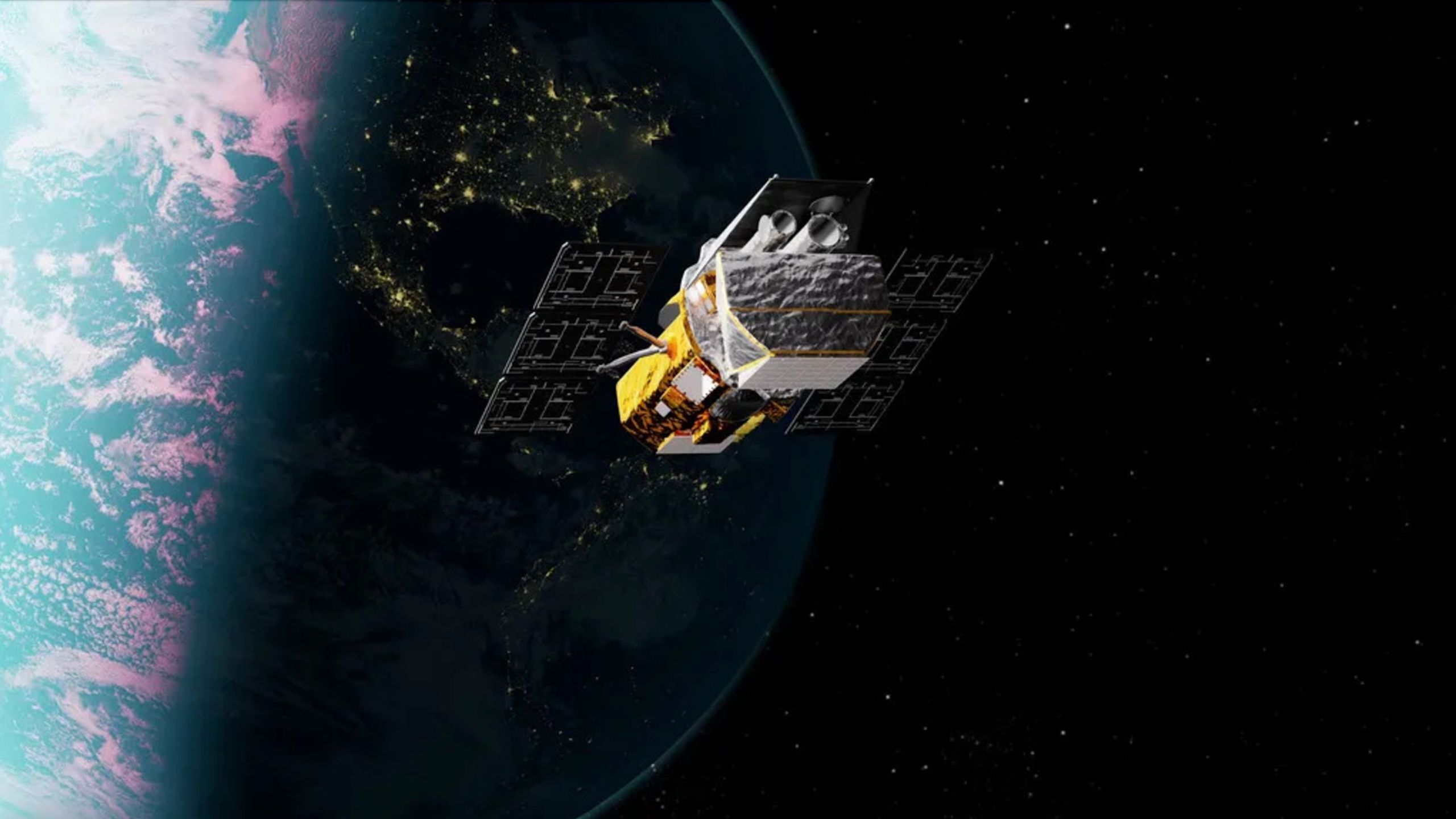
The U.S. Space Force predicts the 22-year-old gamma-ray telescope will reenter the atmosphere around Friday after a robotic repair mission failed to save it.
What to know
- The Swift Observatory, launched in 2004, is predicted by the U.S. Space Force to reenter Earth's atmosphere on or around Friday after 22 years in orbit.
- A NASA-funded rescue by Katalyst Space's robot Link failed in 2026, with the robot never getting closer than 7-9 miles to the telescope before itself falling to Earth in September.
- Most of the 1.5-ton spacecraft will burn up, but dense tungsten and mirror pieces could survive; surviving debris will most likely fall into the ocean, though parts of Africa, Australia, India, Southeast Asia, and Central/South America lie within the reentry zone.
- Over its mission, Swift detected more than 2,000 gamma ray bursts and 1,400 exploding stars, and NASA is still working out how to fill the observational gap it leaves.
“Our fervent hope is that the lessons learned by the successes of Swift can be applied to new generations of space missions to accelerate our discoveries about the universe.”
John Nousek, Penn State astronomer, Swift control team lead · AP News (via Philadelphia Inquirer) ↗ · Oct 30
John Nousek Penn State astronomer, led Swift control teamBrad Cenko NASA, Swift mission chief scientistKatalyst Space Private company hired by NASA for rescue missionU.S. Space Force Tracks orbital debris and reentry predictions
How it unfolded 1 development · click the chart to see its coverage articlesposts
-
1
Space Force predicts Swift reentry around Friday
The U.S. Space Force forecasts Swift will reenter the atmosphere on or around Friday; most of the telescope will burn up, though dense tungsten and mirror components could survive, likely falling into the ocean, with Africa, Australia, India, Southeast Asia, and Central/South America within the reentry zone.
“We’ve known this day would come since before Swift was launched. At least in low-Earth orbit, what goes up must come down. And that end is catastrophic.”
— John Nousek -
first by AP News, 8d ago · also Newsweek, ITVX, Globe and Mail, The Hindu, CBC, Global News +24
13 more headlines
- NASA telescope could drop debris on Earth after failed rescue mission Newsweek · 8d ago
- NASA telescope is predicted to come crashing down after failed rescue mission | ITV News ITVX · 8d ago
- NASA telescope about to plunge back to Earth after 22 years in orbit, failed rescue mission The Globe and Mail · 8d ago
- NASA telescope on verge of plunging back to Earth after failed rescue mission The Hindu · 8d ago
- NASA telescope predicted to plunge back to Earth after failed rescue mission CBC · 8d ago
- NASA telescope on the verge of plunging back to Earth after failed rescue mission Global News · 8d ago
- NASA's Swift spacecraft is on the verge of plunging back to Earth after failed rescue mission Yahoo News New Zealand · 8d ago
- Aging NASA telescope sinks toward Earth after failed rescue attempt LiveNOW from FOX · 8d ago
- NASA telescope is on the verge of plunging back to Earth after failed rescue mission - ABC News Breaking News, Latest News and Videos · 8d ago
- NASA telescope expected to plunge to Earth next week after rescue mission failed Mercury News · 8d ago
- NASA’s Swift telescope expected to crash to Earth after failed rescue mission KTLA · 7d ago
- NASA telescope is on the verge of plunging back to Earth after failed rescue mission KXAN Austin · 6d ago
- Aging NASA telescope crashing to Earth after rescue mission fails USA Today · 6d ago
-
first by IFLScience, 9d ago · also Interesting Engineering, The Daily Beast, Independent UK, Space, Hindustan Times
6 more headlines
- NASA’s Swift telescope to fall back to Earth after 21 years in orbit Interesting Engineering · 8d ago
- Aging NASA Telescope Expected to Crash Back to Earth in Days The Daily Beast · 8d ago
- Aging NASA telescope heading back to Earth The Independent · 7d ago
- NASA's Swift space telescope is about to crash to Earth. Where will it fall? Space.com · 7d ago
- Decades-old NASA telescope heading back to Earth — to crash Independent UK · 6d ago
- The science of re-entry, as Nasa’s Swift telescope is set to fall back to Earth this week Hindustan Times · 6d ago
-
It's unclear at the moment exactly when and where the Swift observatory will plunge to Earth. But researchers definitely have their eyes peeled. View article View summary #^ NASA's Swift space telescope is about to crash to Earth. Where will it fall? NASA's Swift space telescope is expected to crash back to Earth in the next few days. The Neil…
2 more of the top 3 · 5 posts in this stretch
-
They will probably crash it at the Nemo Point in the Pacific Ocean they did it before with other large spacecrafts like the Russian 🇷🇺 station Mir and they will also do it with the ISS in 2031
-
 M
After nearly 22 years studying some of the universe's most powerful explosions, NASA's Swift Observatory is approaching a fiery end. A failed robotic rescue mission has left the 1.5-tonne telescope falling towards Earth, with reentry expected around Friday. https:// english.mathrubhumi.com/news/w…
-
-
background
Swift resumes brief observations before shutdown — After the rescue attempt ended, Swift resumed observations and discovered more gamma ray bursts and ultrahigh-energy events, but by late October it was too low to remain steady, and its systems were shut down.
-
background
Rescue robot Link falls back to Earth, mission scrapped — The failed rescue attempt was called off and Link itself plunged back to Earth in September, leaving Swift to continue its uncontrolled orbital decay.
-
background
Robot Link launches to attempt Swift repair/rescue — Katalyst Space's three-armed robot, named Link, launched to approach and service Swift but ran into trouble and never got closer than 7 to 9 miles (12 to 15 kilometers) to the telescope.
-
background
NASA hires Katalyst Space for a rush rescue of Swift — After intense solar activity over several years dragged Swift's orbit down faster than expected, NASA hired Katalyst Space about a year before the telescope's reentry to attempt a rescue.
-
background
Swift Observatory launches to study cosmic explosions — NASA's Swift blasted off to search for gamma ray bursts, supernovas and other high-energy cosmic events, serving for years as a first responder that alerted Hubble and Webb to erupting events.
Also covered reported alongside — the timeline has no entry for these yet
-
first by SatNews Publishers, 7d ago
1 more headline
- NASA Swift Telescope Reentry: $30m Rescue Fails [2026] tech-insider.org · 7d ago
and 1 smaller piece
What people are saying 2 voices from 2 sites · best of 5 · verbatim
- Nov 2
-
My understanding is it will start to breakup as soon as it starts to reenter the atmosphere. Without a heat shield it’ll quickly turns into a stream of debris.
- Nov 1
-
 B
# USPol # NASA # SwiftObservatory From ABC News.com: NASA telescope on the verge of plunging to Earth after failed rescue mission https:// abcnews.com/Technology/wireSto ry/nasa-telescope-verge-plunging-back-earth-after-failed-137731577