Astronomers spot two different gamma-ray bursts 4 minutes apart, defying known theory
A short and long-duration burst detected in 2016 but only now published challenges existing models of how these cosmic explosions form.
What to know
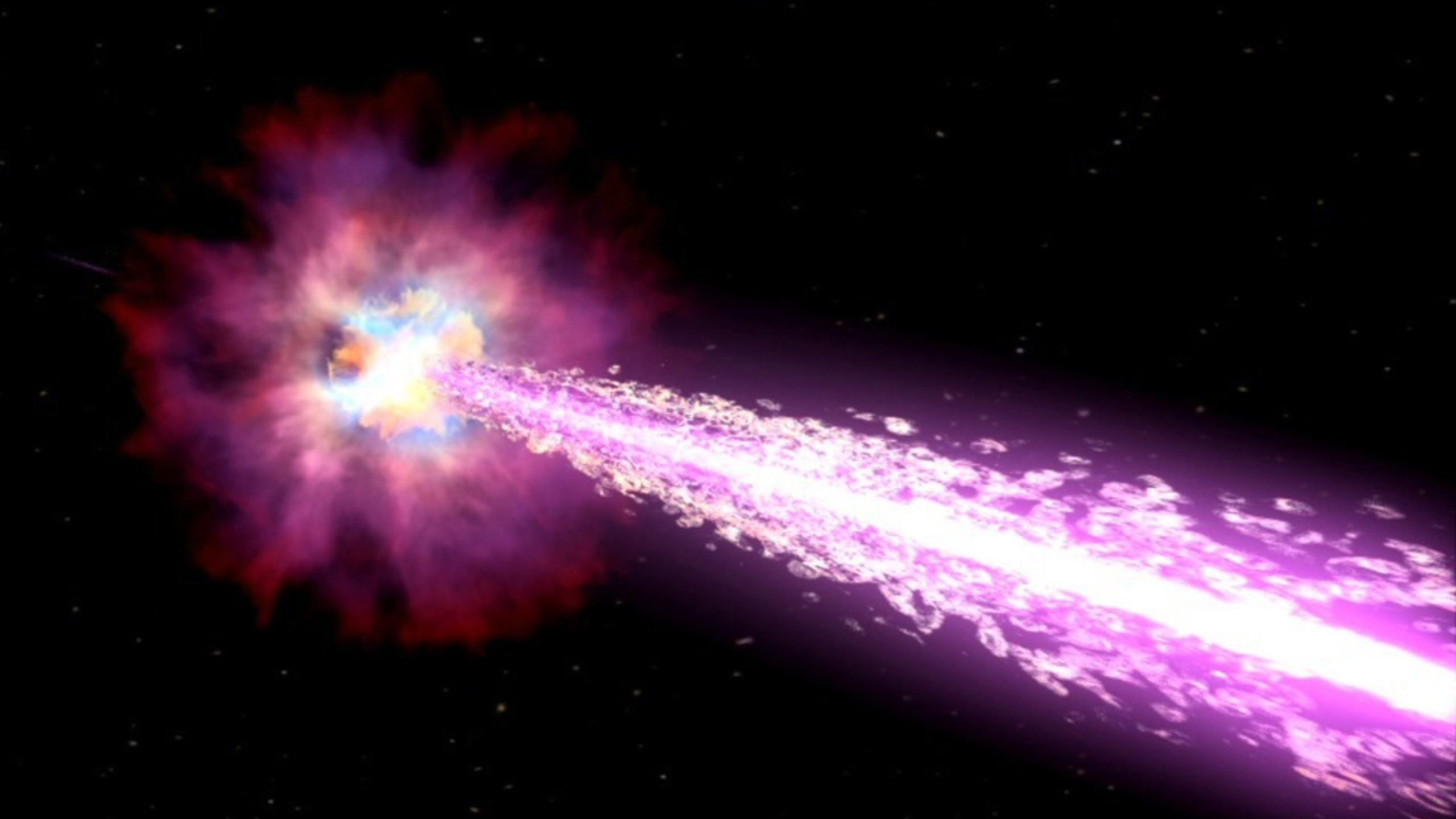
- A 2016 gamma-ray burst event (GRB 160425A) combined two different burst types—a short 1.7-second burst and a long 51.2-second burst—separated by only four minutes, never before observed together.
- Short-duration bursts typically originate from compact object mergers (neutron stars, black holes), while long-duration bursts stem from collapsing massive stars, making their simultaneous occurrence from the same source extraordinarily difficult to explain.
- Researchers calculate the odds of two independent bursts aligning by chance at 1 in 100,000 to 1 in 10 million, forcing them to conclude they shared a common origin despite having different progenitor signatures.
- The discovery may require fundamental revision to how gamma-ray bursts are classified and the mechanisms by which they form.
“The total energy emitted by the Sun throughout the entire lifetime is not enough to account for the second component.”
Bing Zhang, Astrophysicist, University of Hong Kong · ScienceAlert ↗
Bing Zhang Astrophysicist, University of Hong Kong; corresponding author Neil Gehrels Swift Observatory Space-based gamma-ray detector
How it unfolded 1 development · click the chart to see its coverage articlesposts
-
1
Researchers outline five possible explanations for the paired bursts
Zhang explains that while the most straightforward interpretation is that these are two independent GRBs, the statistical probability of two separate events aligning in direction and time is extraordinarily low—roughly 1 in 100,000 to 1 in 10 million across all Swift observations. Alternative explanations include the bursts originating from the same galaxy in different locations or through an unknown progenitor system.
“I'd think that these are two independent GRBs, but the chance of having them happen together (in the same direction and around the same time) is so low [that] we have to admit that the pair has the same origin.”
— Bing Zhang -
 U
https://www. europesays.com/us/1156031/ Two Different Kinds of Gamma-Ray Bursts Erupted 4 Minutes Apart. Astronomers Have Never Seen This Before. : ScienceAlert # MSFTContent # Science # UnitedStates # UnitedStates # US
-
-
background
Research paper describing the unprecedented event published in Nature Astronomy — A peer-reviewed study led by Bing Zhang of the University of Hong Kong describes GRB 160425A as the first observed instance combining two separate bursts of different types with a quiet gap between them. The researchers note this is unprecedented and challenges existing gamma-ray burst classification and origin theories.
-
background
Two different gamma-ray bursts detected 4 minutes apart — The Neil Gehrels Swift Observatory in space detected a short-duration burst (G1, lasting 1.7 seconds) followed four minutes later by a long-duration burst (G2, lasting 51.2 seconds). The event is catalogued as GRB 160425A and originated from a host galaxy or merging galaxies approximately 5.5 billion light-years away.
Also covered reported alongside — the timeline has no entry for these yet
-
2 outlets Two Different Gamma-Ray Bursts Struck Four Minutes Apart, and Nobody Can Fully Explain Why
first by Around Prague, 9d ago · also ScienceAlert
2 more headlines