Johns Hopkins finds vitamin A, thyroid hormones shape fetal vision
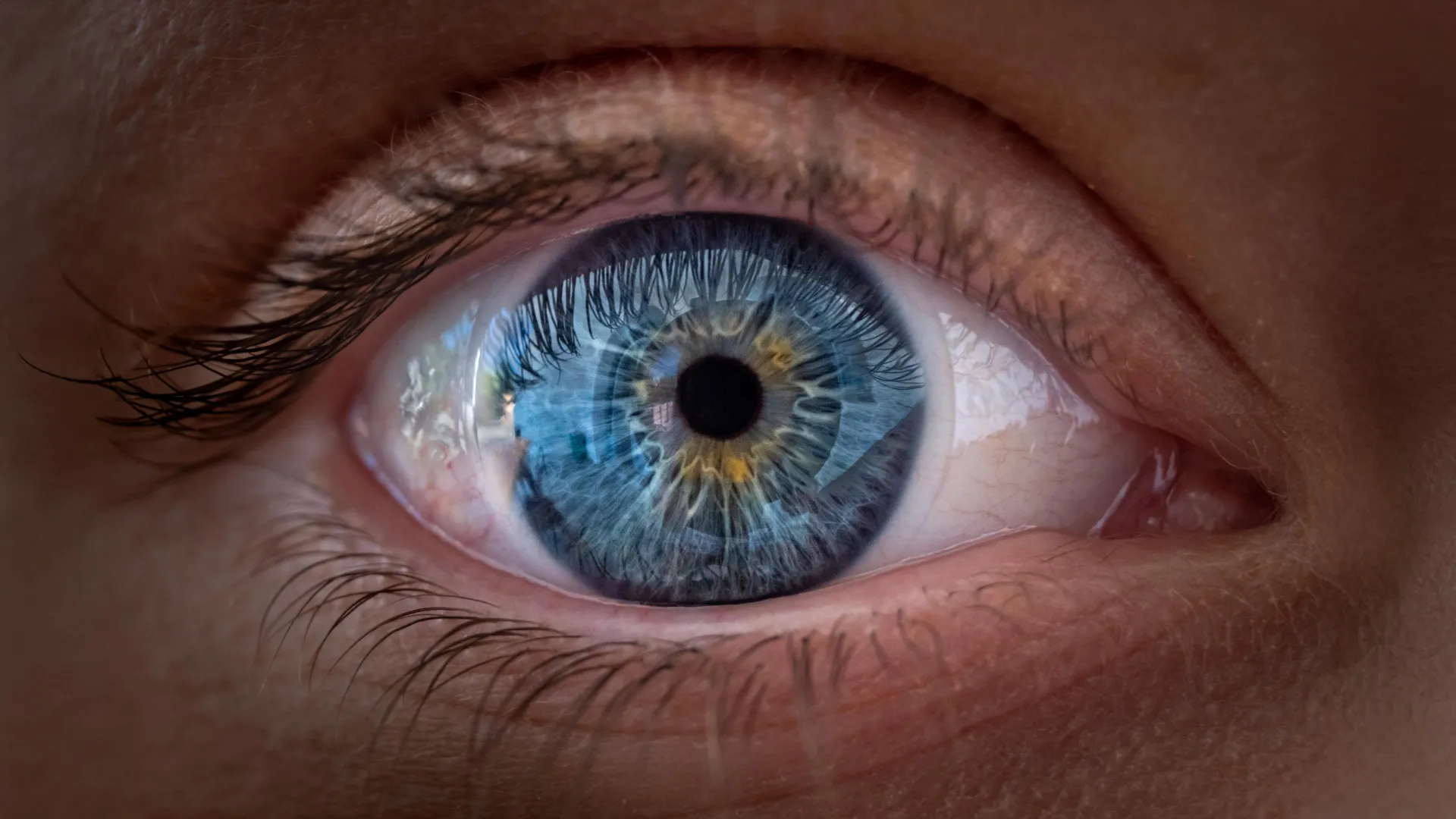
Lab-grown retinas reveal how two molecules work together to form the eye's sharpest-vision center before birth.
What to know
- Johns Hopkins researchers discovered that vitamin A derivatives and thyroid hormones work together to shape the foveola—the retina's center region responsible for sharp vision—during fetal development.
- The study used lab-grown human retinal organoids to observe cellular changes that would be difficult to study during pregnancy, revealing that blue-light-detecting cells transform into red and green light-sensitive cells.
- The findings overturn 30 years of scientific consensus and could advance treatments for macular degeneration, glaucoma, and other vision-loss conditions.
- The foveola, though occupying a tiny fraction of the retina, accounts for approximately 50% of human visual perception.
“By better understanding this region and developing organoids that mimic its function, we hope to one day grow and transplant these tissues to restore vision.”
Robert J. Johnston Jr., Associate professor of biology, Johns Hopkins University · Science Daily ↗
Robert J. Johnston Jr. Associate professor of biology, Johns Hopkins University; study leadJohns Hopkins University Research institution
How it unfolded 1 development · click the chart to see its coverage articlesposts
-
1
Science media outlets amplify Johns Hopkins vision research
Science Daily and Google News circulated the Johns Hopkins findings on vitamin A and vision development, signaling the study's broader scientific impact.
“This is a key step toward understanding the inner workings of the center of the retina, a critical part of the eye and the first to fail in people with macular degeneration.”
— Robert J. Johnston Jr., Associate professor of biology, Johns Hopkins University · source -
 U
https://www. europesays.com/us/1157330/ A surprising vitamin A discovery is changing what scientists know about vision # EyeCare ;HealthyAging;HormoneDisorders;PregnancyAndChildbirth;DiseasesAndConditions;PersonalizedMedicine;Menopause;Today'sHealthcare # Health # UnitedStates # UnitedStates # US
-
-
background
Study reveals unexpected cell transformation in developing foveola — The discovery challenges decades of scientific assumptions about how the eye forms and was made possible by studying lab-grown retinal tissue organoids rather than relying entirely on animal experiments.
-
background
Johns Hopkins researchers reveal vitamin A's role in fetal vision development — Scientists at Johns Hopkins University published findings in Proceedings of the National Academy of Sciences showing that a vitamin A derivative and thyroid hormones work together to shape the foveola, the region at the center of the retina responsible for sharpest vision. The research used miniature human retinas grown in the lab to discover this process.