NASA's CHAPEA 2 crew completes 378-day Mars habitat simulation
Four volunteers emerged from Johnson Space Center's simulated Mars habitat after spending more than a year testing systems and crew dynamics.
What to know
- Four NASA volunteers spent 378 days in a simulated Mars habitat at Johnson Space Center, emerging on October 31, 2026, after more than a year of isolation and resource constraints.
- The mission tested crew health, behavioral adaptation, food systems, communications delays, and practical operations including simulated spacewalks in a confined 1,700-square-foot environment.
- NASA will use data from this second CHAPEA mission to inform designs for future lunar bases and Mars exploration missions, including crew-time allocation and life-support planning.
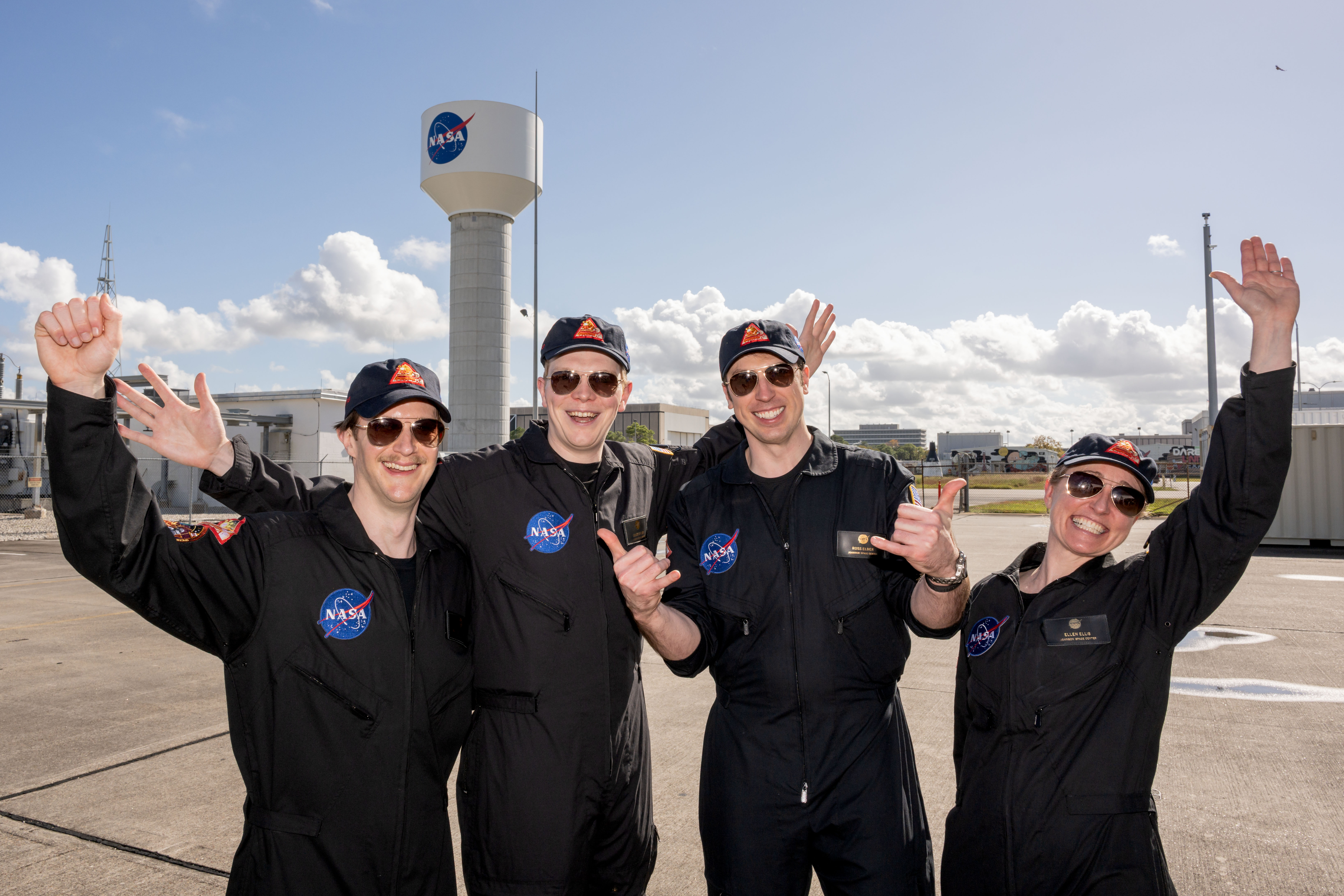
“Crew members Matthew Montgomery (left), James Spicer (middle left), Ross Elder (middle right), and Ellen Ellis (right) spent more than a year testing systems, maintaining crops, managing limited resources and communication delays, conducting extravehicular activities and more”
NASA, Space agency · NASA official announcement ↗
Ross Elder CHAPEA 2 crew commanderEllen Ellis CHAPEA 2 medical officerMatthew Montgomery CHAPEA 2 science officerJames Spicer CHAPEA 2 flight engineerNASA Space agency conducting research
How it unfolded 1 development · click the chart to see its coverage articlesposts
-
1
NASA releases completion details and crew photos
NASA released images and details of the crew's return, noting this was their first time outside the habitat in more than a year. The mission studied crew health, performance, and adaptation to isolation to inform future lunar and Mars exploration planning.
“The four-member Crew Health and Performance Exploration Analog (CHAPEA) crew poses outside for the first time in more than a year following the end of their simulated Mars journey on Oct. 31, 2026.”
— NASA -
3 outlets NASA's CHAPEA 2 crew 'returns' to Earth after 378 days in Mars habitat: "It's been a hell of a year"
first by Starlust.org, 6d ago · also NASA, NASA (.gov)
1 more headline
- NASA’s CHAPEA Crew “Returns” to Earth NASA breaking · 5d ago
-
 N
NASA’s Second CHAPEA Crew Completes a 378-Day Mars Simulation NASA’s second Crew Health and Performance Exploration Analog mission, known as CHAPEA, ended on October 31, 2026, when four volunteers emerged from their simulated Mars habitat at Johnson Space Center in Houston. Ross Elder, Ellen Ellis, Matthew Montgomery, and James Spicer had spent…
-
-
background
CHAPEA 2 crew exits habitat after 378 days — The four crew members emerge from the simulated Mars habitat, completing their year-plus mission of testing systems, growing crops, managing limited resources, and conducting simulated spacewalks.
-
background
CHAPEA 2 mission begins at Johnson Space Center — Four crew members—Ross Elder (commander), Ellen Ellis (medical officer), Matthew Montgomery (science officer), and James Spicer (flight engineer)—enter the 1,700-square-foot 3D-printed habitat to begin their 378-day simulated Mars mission.