Extreme El Niño intensifies Southwest flooding as Pacific warms
Scientists say a record-breaking natural warming cycle is amplifying storms across the region, with peak impacts expected through spring.
What to know
- An exceptionally intense El Niño is amplifying storms and heavy rains across the Southwest, with over 20 trillion gallons of water falling in two weeks.
- The phenomenon combines natural Pacific warming with baseline ocean temperature increases from human-caused climate change, making extremes more severe.
- The El Niño is expected to peak in December and sustain impacts through spring; scientists warn of continued heavy storms and flooding in the coming months.
- While El Niño can bring beneficial rainfall and reservoir recharge, its current intensity poses serious danger to people and property in affected regions.
“We're not at the peak of the heating in the Pacific Ocean. So yes, we will see more of these particular events”
Randy Cerveny, Meteorologist, Arizona State University · PBS NewsHour / AP ↗
Jeff Masters Meteorologist, Yale Climate ConnectionsDaniel Swain Climate scientist, UC Agriculture and Natural ResourcesRandy Cerveny Meteorologist, Arizona State UniversityRyan Maue Former NOAA chief scientistPark Williams Researcher, UC San Diego Scripps Institution
How it unfolded 2 developments, newest first · click a bar or a number to jump articlesposts
-
upcoming
El Niño expected to peak in December with continued impacts — The extreme El Niño event is forecast to reach its maximum intensity in December and sustain severe weather impacts into the following months. The phenomenon is already reshaping weather patterns globally, with record flooding in Peru and Ecuador and drier conditions in Southeast Asia.
-
2
Human climate change compounds El Niño effects
Scientists emphasize that baseline ocean warming from human-caused climate change is making El Niño-driven extremes even more intense, as warmer oceans amplify the phenomenon's atmospheric impacts.
“The fact that the ocean temperatures are already warmer than they were, say, 100 years ago, makes these El Niño situations even more intense…”
— Randy Cerveny, meteorologist -
A
A chaotic climate phenomenon called El Nino is intensifying heavy rains and floods in the Southwest.
-
-
background
Scientists explain El Niño's storm-amplifying mechanisms — Experts describe how the extreme El Niño is adding moisture to the air and shifting wind patterns toward the Southwest, creating conditions for heavier storms. Climate scientists note this severity is unprecedented in recent observation.
-
background
Over 20 trillion gallons of water falls on Southwest in two weeks — Calculations by former NOAA chief scientist Ryan Maue document the scale of recent precipitation across the Four Corners states and Nevada, reflecting intensified storm activity.
-
1
Experts link extreme Southwest flooding to record El Niño
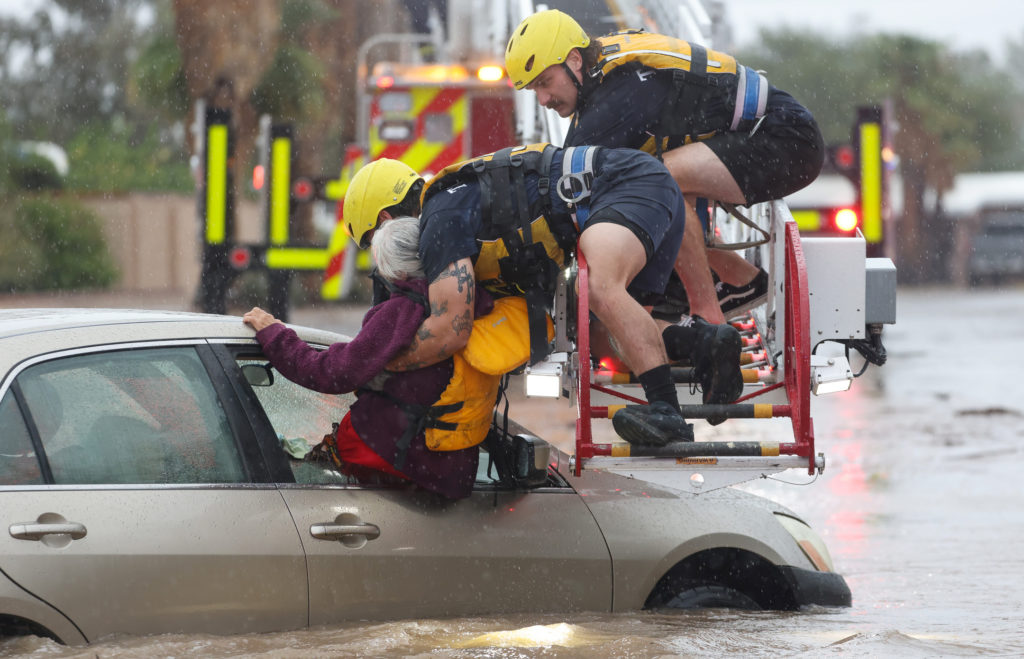
Scientists report that a particularly intense El Niño warming cycle is intensifying heavy rains and floods across the Southwest. Flash floods prompted evacuations in northern New Mexico and central Arizona on Sunday, and a Colorado ski town braced for catastrophic river rises.
“We've had super El Niños in the past, but this is a super duper El Niño…”
— Jeff Masters, meteorologist -
first by Orlando Sentinel, 5d ago · also Mercury News, PBS, Philadelphia Inquirer
-