Study: human climate change halted imminent ice age
Canadian researchers find warming reversed glacial expansion that had continued for 2,000 years.
What to know
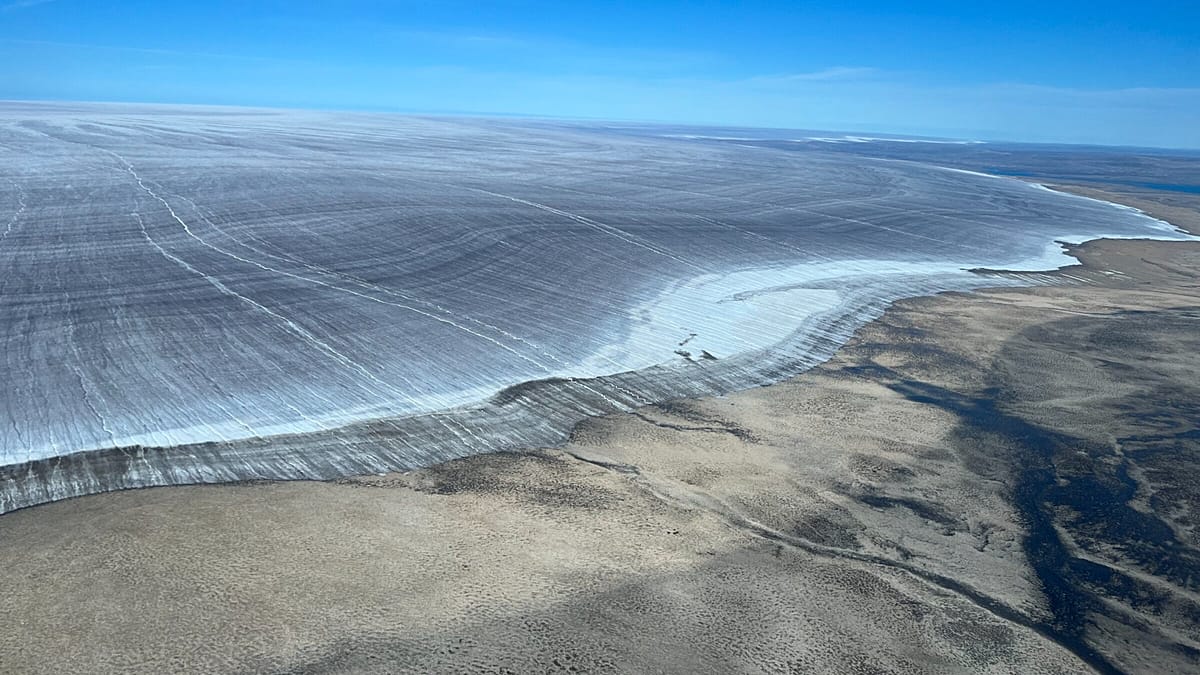
- A Canadian glacier that expanded for 2,000 years reversed course around 1960 as summer temperatures surged, coinciding with the start of modern warming.
- Researchers conclude human-driven climate change may have prevented the onset of a new ice age that appeared inevitable before the rapid warming began.
- Canadian temperatures have risen 2.1°C since the 1960s baseline, with northern regions warming three times faster than the global average.
Nicolás Young Geochemist, Lamont-Doherty Earth Observatory
How it unfolded 1 development · click the chart to see its coverage articlesposts
-
1
Canadian researchers publish study on climate reversal of glacial expansion
Researchers from Canada, including Nicolás Young from Columbia Climate School's Lamont-Doherty Earth Observatory, released a study concluding that human-driven climate change halted the Barnes Ice Cap's expansion and may have prevented a new ice age. Canadian summer temperatures have risen approximately 2.1 degrees Celsius since the 1960s baseline, with the north warming roughly three times faster than the global average.
“this is a very striking example of how humanity has knocked the system out of balance…”
— Nicolás Young -
first by Euronews.com, 5d ago · also Euronews
-
I
More on the age-old question: are we heading for another ice age?
1 more of the top 2 · 2 posts in this stretch
-
 C
Human-driven climate change may have halted the onset of a new ice age Climate researchers in the 1970s claimed a new ice age could be imminent. Their controversial assertions are now backed by a new study https://www. euronews.com/2026/11/03/study- suggests-human-driven-climate-change-may-have-halted-onset-of-a-new-ice-age
-
-
background
Summer 1961 recorded as one of hottest of 20th century — Weather archives recorded the summer of 1961 as one of the hottest of the 20th century, with daily maximum temperatures comparable to 2021. This marked the beginning of sustained warming in Canadian summers.
-
background
Barnes Ice Cap stops expanding, begins retreating — The Barnes Ice Cap in northeastern Canada, which had been expanding for approximately 2,000 years, ceased its growth around 1960 and reversed course. This coincided with a sharp increase in summer temperatures.