Webb finds lava planet with reflective atmosphere defying theory
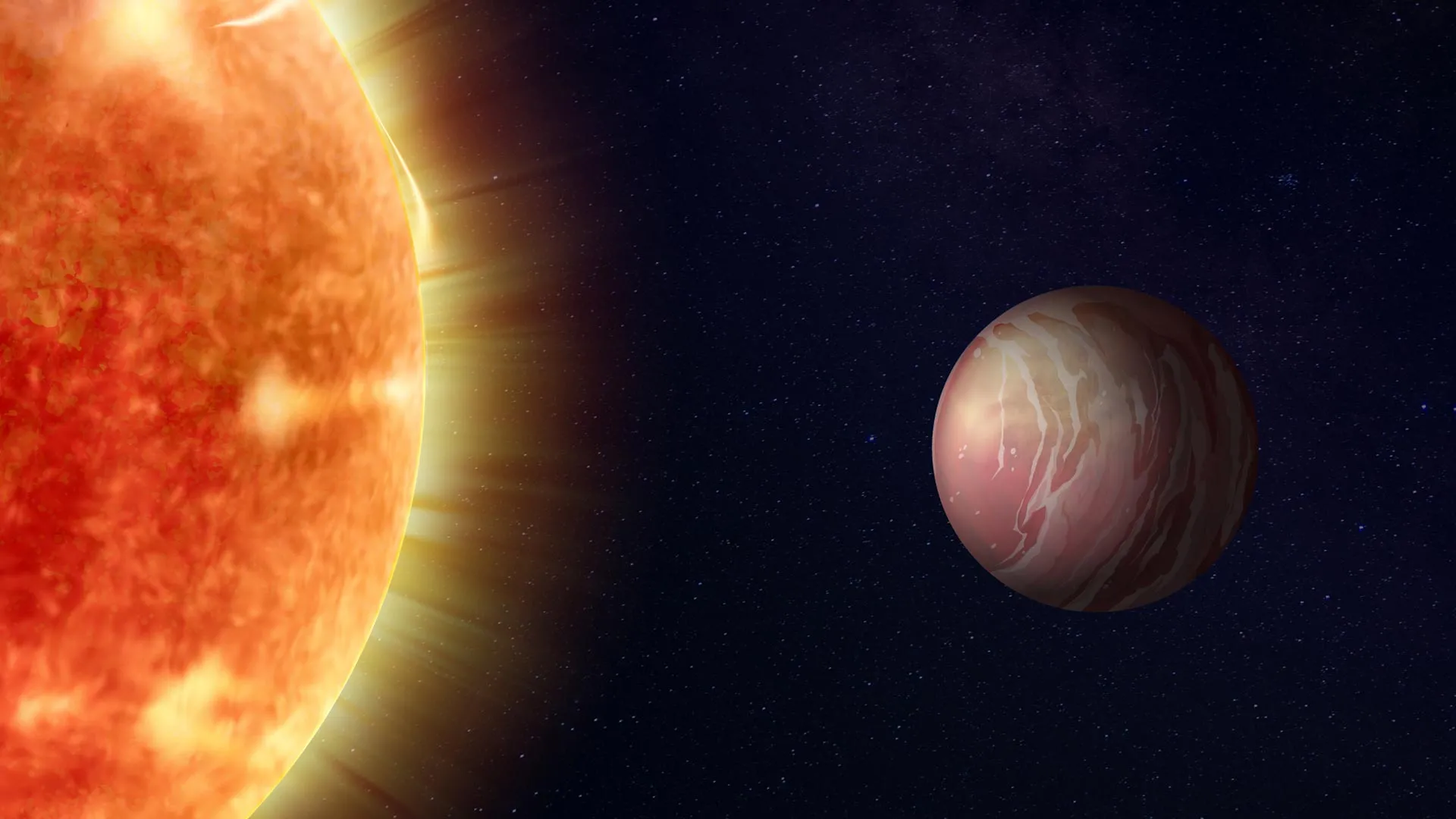
TOI-561 b, a molten rock world 280 light-years away, maintains a thick atmosphere and reflects 75% of starlight despite conditions expected to strip it bare.
What to know
- TOI-561 b, a molten-rock exoplanet 280 light-years away, unexpectedly retains a thick atmosphere and reflects 75% of starlight—contradicting predictions it should have lost its atmosphere long ago.
- Silicate mineral clouds likely act as a reflective shield, while the planet's global molten ocean may function as a continuous volcanic outgassing source, replenishing atmospheric gases.
- The findings challenge current atmospheric theory for heavily irradiated rocky exoplanets and raise new questions about planetary survival under extreme stellar radiation.
“Instead, the evidence suggests it still has a significant atmosphere today. This raises major questions such as whether the planet started with an unusually large supply of gases or if the ocean of molten rock covering its surface, acts as a planet-wide volcano that is constantly feeding its atmosphere.”
Dr. Anjali Piette, Lead researcher, University of Birmingham · Science Daily ↗ · Oct 25
Dr. Anjali Piette Lead researcher, University of BirminghamJames Webb Space Telescope team International research collaboration
How it unfolded 2 developments, newest first · click a bar or a number to jump articlesposts
-
2
Silicate clouds and molten ocean explain atmospheric survival
Researchers propose that reflective silicate mineral clouds (silicon dioxide and magnesium silicate) form over the dayside and act as a sunscreen, preventing extreme surface heating. Simultaneously, the planet's global ocean of molten rock may function as a planet-wide volcano, continuously releasing gases to replenish the atmosphere—solving the puzzle of why it has not dissipated.
“This raises major questions such as whether the planet started with an unusually large supply of gases or if the ocean of molten rock covering its surface, acts as a planet-wide volcano that is constantly feeding its atmosphere.”
— Dr. Anjali Piette -
1
Webb observations reveal TOI-561 b maintains thick atmosphere despite extreme conditions
An international research team using the James Webb Space Telescope observed the exoplanet TOI-561 b over 37 hours across nearly four complete orbits. The observations indicate the planet maintains a substantial atmosphere and reflects approximately 75% of starlight reaching it—a reflectivity comparable to Venus and far higher than expected for a dark rocky planet in extreme radiation.
“Our discovery challenges current theories. We would expect a heavily irradiated rocky planet like TOI-561 b to have lost its atmosphere billions of years ago.”
— Dr. Anjali Piette