Sheffield scientists recreate 1,600-year-old Lycurgus Cup glass recipe
Researchers reproduce the dichroic glass formula Romans used to create color-shifting effects with gold and silver nanoparticles.
What to know
- University of Sheffield researchers have successfully recreated the 1,600-year-old recipe for the Lycurgus Cup, a Roman artifact that shifts color from green to red depending on viewing angle.
- The optical effect results from gold and silver nanoparticles embedded in glass during the melting process—a technique Roman artisans mastered but modern scientists had not consistently replicated until now.
- The breakthrough achieved through experimentation with furnace types, materials, oxygen levels, and additives provides the first replicable formula, surpassing a 2020 Dutch attempt that used 3D-printable nanocomposite material.
- The research demonstrates how nanotechnology principles—similar to iridescence in butterfly wings and opals—were unknowingly applied by ancient Roman glassmakers.
“I've studied and worked with glass for over 25 years, so I used the knowledge and experience I've gained, coupled with a modern scientific understanding of what I was trying to achieve—although if the Romans could have seen me experimenting, they'd probably laugh and ask: 'Why does she not know how to make this?'”
Lisa Hollands, Researcher, University of Sheffield · Ars Technica ↗
Lisa Hollands Researcher, University of SheffieldCaroline Jackson Roman glass expert, University of SheffieldUniversity of Sheffield Research institution
How it unfolded 1 development · click the chart to see its coverage articlesposts
-
1
Sheffield team develops replicable recipe for dichroic glass
University of Sheffield scientists Lisa Hollands and Caroline Jackson devise the first consistent, replicable formula for creating the Lycurgus Cup's optical effects in traditional glass. Through experimentation with furnace types, materials, oxygen levels, and additives including sugar, Hollands produces glass with the desired green-to-red color shift.
“I knew that making a glass of this type was likely to be a complex task, as it is not just a case of adding nanoparticles to glass.”
— Lisa Hollands -
first by Ars Technica, 12d ago · also Ars Science
1 more headline
- Sculpture re-creates odd optical effects of famed Lycurgus Cup Ars Technica · 12d ago
-
 A
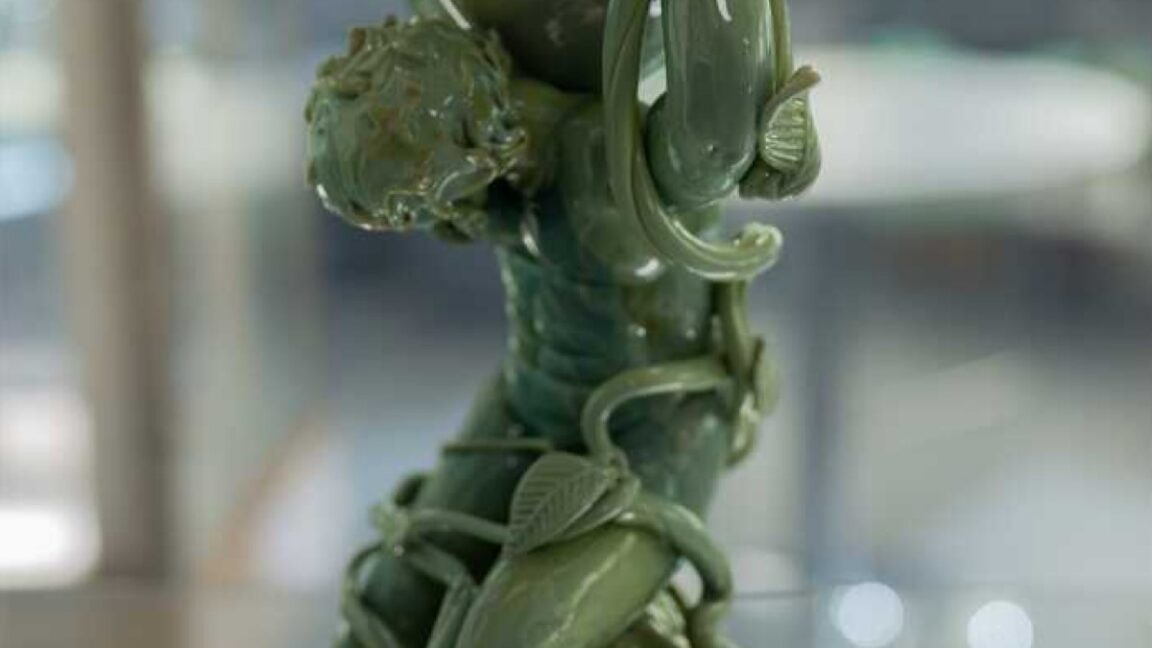
Scientists recreate the 1,600-year-old recipe of Lycurgus Cup New contemporary sculpture replaces the globe in the original Roman artifact with a cup as a tribute. https:// arstechnica.com/science/2026/1 0/scientists-recreate-the-1600-year-old-recipe-of-lycurgus-cup/?utm_brand=arstechnica&utm_social-type=owned&utm_source=mastodon&utm_medium=social
1 more of the top 2 · 3 posts in this stretch
-
 U
https://www. europesays.com/us/1148709/ Sculpture re-creates odd optical effects of famed Lycurgus Cup # Science # UnitedStates # UnitedStates # US
-
-
background
Dutch researchers reproduce dichroic effect in 3D-printable material — Dutch scientists successfully recreate the green-to-red color shift using a 3D-printable nanocomposite material with embedded silver and gold nanoparticles, but do not establish a consistent recipe for traditional glass.
-
background
Scientists identify nanoparticles as source of color-shifting effect — A research team discovers that the Lycurgus Cup's optical properties result from gold and silver nanoparticles embedded in the glass, which alter electron vibrations in response to light.